By Sevasannidhi LLP·Updated 22 May 2026Reviewed: Temple sequence and legends cross-checked against Tirumurugaatruppadai (Sangam text) and Kandha Puranam
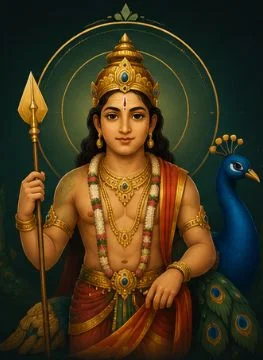
Arutpadai Veedu (அருள்படை வீடு) in Tamil means "six divine abodes that bestow grace" - arul (divine grace), padai (abode, army / the army of grace), veedu (home / house). These are the six holiest temples of Lord Murugan (Skanda / Subramanya / Kartikeya), all in Tamil Nadu, each associated with a specific episode in Murugan's cosmic biography.
The principal source text is the Tirumurugaatruppadai (திருமுருகாற்றுப்படை) - one of the Ten Idylls (Pattu-pattu) of Sangam literature (c. 100–300 CE), composed by the poet Nakkirar. It sings of Murugan's six abodes in sequence, guiding the pilgrim like a literary travel guide. The text is part of the Sangam corpus that predates many Puranas, establishing Murugan's deep antiquity in Tamil culture.
The six abodes in sacred order are: Thiruparankundram · Thiruchendur · Palani · Swamimalai · Pazhamudircholai · Tiruttani. Completing darshan of all six is the paramount Murugan pilgrimage.
1
Thiruparankundram
Subramanyeswara
6 km from Madurai, Tamil Nadu (Madurai district)
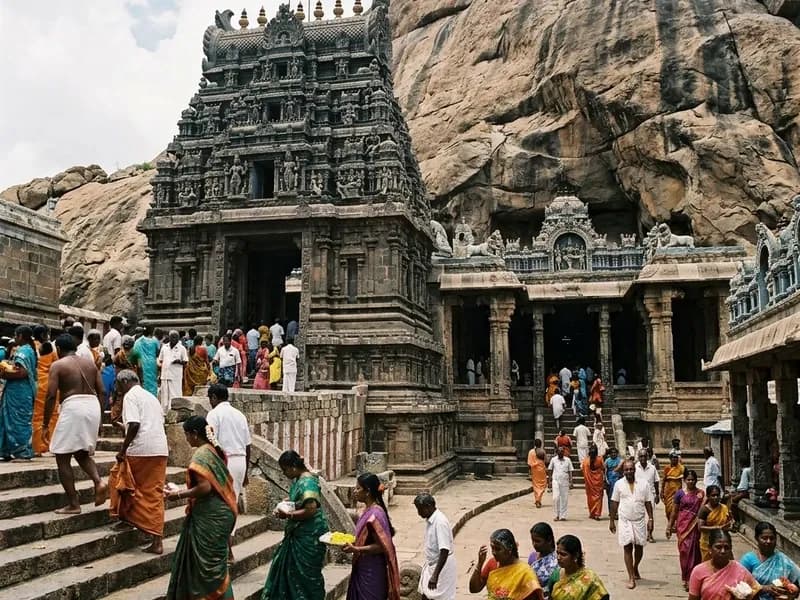
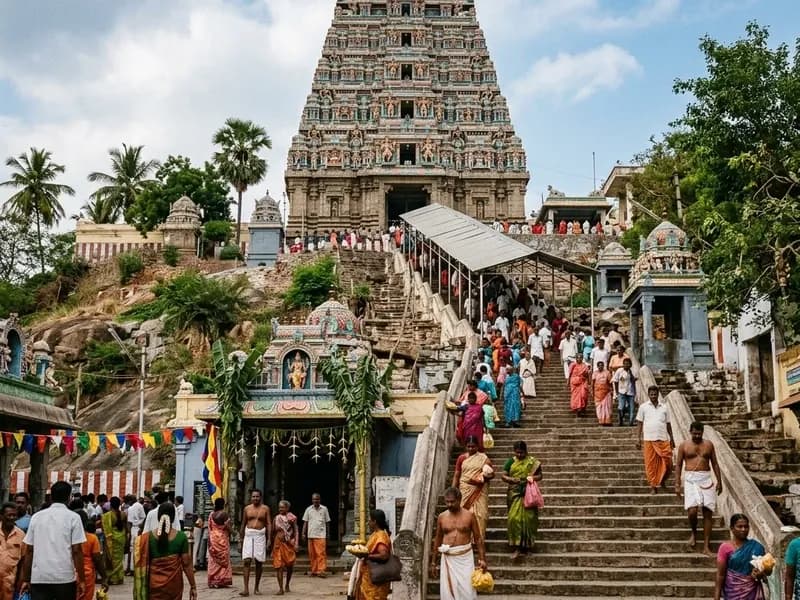
Legend - First among the six. Murugan's celestial wedding to Devayani (daughter of Indra) took place at this rock-cut cave temple. This event is celebrated as the Thirukalyanam (divine wedding). The temple is among the oldest in Tamil Nadu - a rock-cut cave shrine more than 2,000 years old, with Pallava, Pandya, and Nayaka-period additions. The presiding deity is also linked to Murugan's victory over Soorapadman.
Grant - Grants auspicious marriage, removal of obstacles to matrimony, and overall well-being.
2
Thiruchendur
Kavadi Festival and Skanda Sashti
Thaipusam (Thai Purnima, Jan-Feb) - the most important Murugan festival. Devotees carry kavadi (physical penance-structure, sometimes with vel-piercings) to Palani, Thiruchendur, and other abodes. Hundreds of thousands of kavadi carriers at Palani alone.
Skanda Sashti (6 days after Navratri ends, Karthigai month, Oct-Nov) - the 6-day war of Murugan against Soorapadman, culminating in Soorasamharam (the victory ceremony). Thiruchendur and Palani have the grandest Skanda Sashti celebrations.
Panguni Uttiram (Panguni / Phalguna Purnima, Mar) - Murugan's wedding festivals at Thiruparankundram and Swamimalai.
Karthigai Deepam (Karthigai Purnima, Nov-Dec) - lamp-festival, especially at all six abodes. Murugan is the son of fire (Agni carried his seed).
Coastal town, Thoothukudi district, Tamil Nadu (on the Bay of Bengal shore)
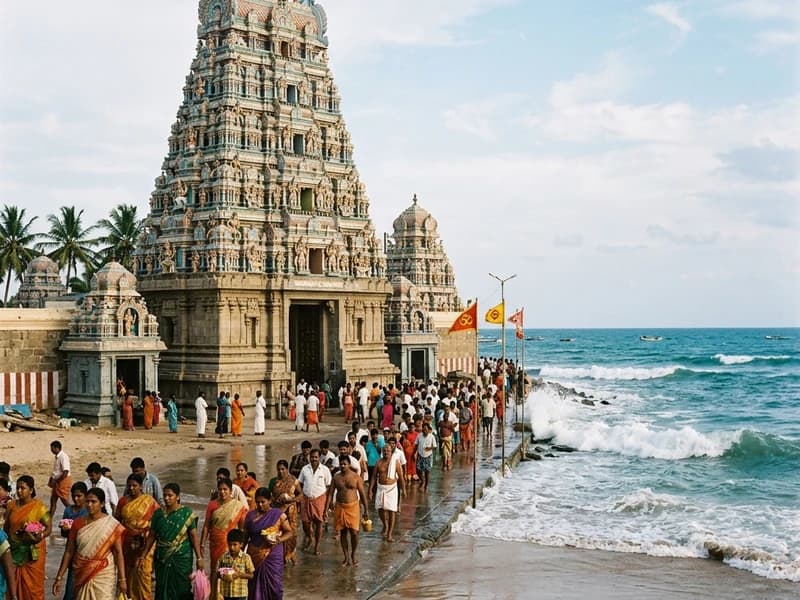
Legend - Second of the six. Murugan gathered his army here and defeated the great asura Soorapadman (Surapadman) at the seashore - the pivotal battle of the Skanda Purana's Tamil tradition. Senthilandavar ('the Red One of the shore') remains here as a mark of his supreme victory. This is the ONLY Arutpadai Veedu facing the sea directly. The temple is carved into a natural rock promontory overlooking the ocean.
Grant - Victory over enemies, removal of fear, courage in the face of adversity.
Note - Only sea-facing Arutpadai Veedu. The gopuram is visible from the sea.
3
Palani
Dandayudhapani (Murugan as the ascetic with a staff)
Palani, Dindigul district, Tamil Nadu (120 km from Madurai)
Legend - Third. After a dispute with Shiva and Parvati over a divine mango (the fruit of jnana - wisdom - given as prize for the one who circumambulated the universe first; Ganesha won by circling his parents), Murugan, angered, renounced all royal possessions and retired to the Palani hills as a yogi - dressed only in a loincloth, carrying a staff (danda), meditating. The Nayanmars (Tamil Shaiva saints) sang Murugan's glory at Palani. The murti was fashioned by Bhogar, a Siddha, from nine herbal navapaashanam compounds.
Grant - Liberation, renunciation, moksha - and reversal of fortune for those who surrender their ego.
Note - The Palani murti is made from navapaashanam (nine herbal-mineral compounds) - the abhisheka milk is believed to have medicinal properties.
4
Swamimalai
Swaminatha (Lord of Lords)
Swamimalai, Kumbakonam, Thanjavur district, Tamil Nadu (8 km from Kumbakonam)
Legend - Fourth. Murugan taught the meaning of the sacred pranava mantra OM to his own father Shiva and to Brahma himself - who had forgotten or could not expound it. Because the son taught the father, Murugan is called 'Swaminatha' (the teacher who is lord of his own father). This event, celebrated as Murugan's triumph of wisdom, makes Swamimalai the Jnana-kshetra among the six.
Grant - Supreme knowledge, wisdom, clarity of understanding, and grace in teaching and learning.
5
Tiruvavinankudi (Pazhamudircholai)
Pazhamudircholai Murugan
Alagar Hills, Madurai district, Tamil Nadu (21 km from Madurai)
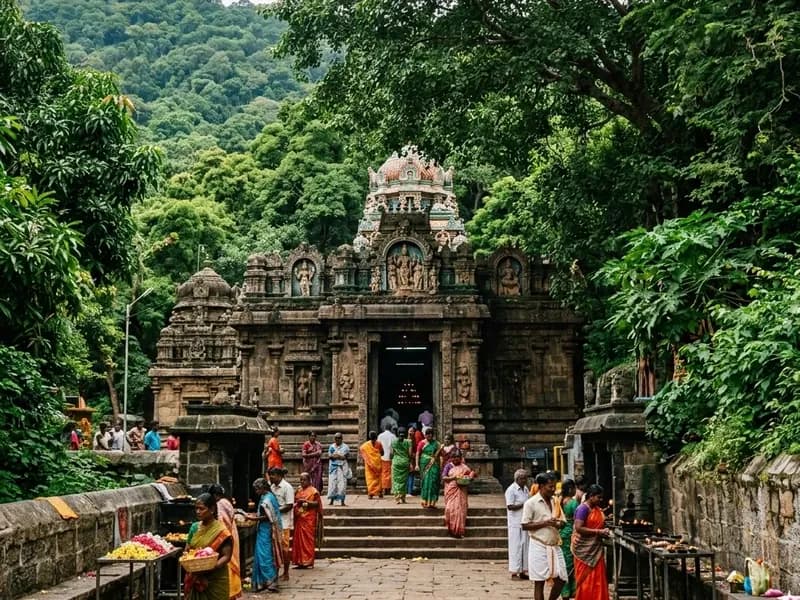
Legend - Fifth. A forest shrine in a sacred grove (cholai). Murugan is worshipped here in the company of both his consorts - Valli and Devasena - making this kshetra the only one where both wives are present with the deity simultaneously. The ancient sthala-vriksham (sacred tree) is revered. The grove is considered inseparable from the deity.
Grant - Divine grace encompassing both worldly prosperity (Devasena's realm) and spiritual devotion (Valli's realm).
6
Tiruttani
Tanikaimalayan (Lord of Thanika hill)
Tiruttani, Tiruvallur district, Tamil Nadu (84 km from Chennai)
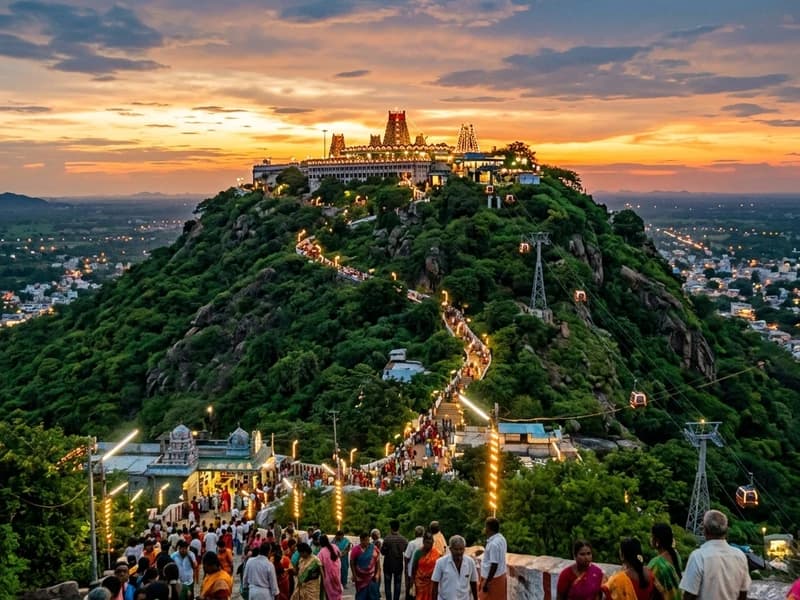
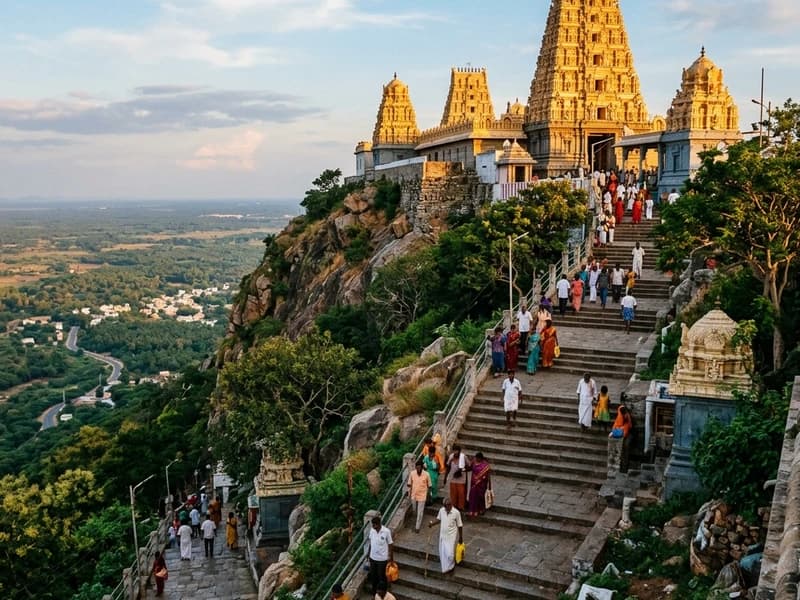
Legend - Sixth and final. After the great war with Soorapadman and his victory, Murugan retired to the Thanika hill to meditate in peace. The hill has 365 steps - one for each day of the year. The legend says serpents (nagas) are the devotees who guard the hill. Murugan married Valli here after his cosmic mission was complete - making Tiruttani also a wedding kshetra.
Grant - Peace after turbulence, removal of Sarpa dosha (serpent-curse), removal of sins accumulated over lifetimes.
Note - 365 steps to the temple - pilgrims climb barefoot as tapas.