Dana is one of the three required components of a dharmic life (with yajna + tapas). It is the householder's primary mode of karma-yoga. The 10 classical dana categories are catalogued in Manu Smriti + the Mahabharata + the Bhagavata. Each has its specific recipient, occasion, phala, and modern equivalent. The Bhagavad Gita (17.20-22) additionally classifies all dana into sattvik, rajasik, and tamasik by the giver's state of mind.
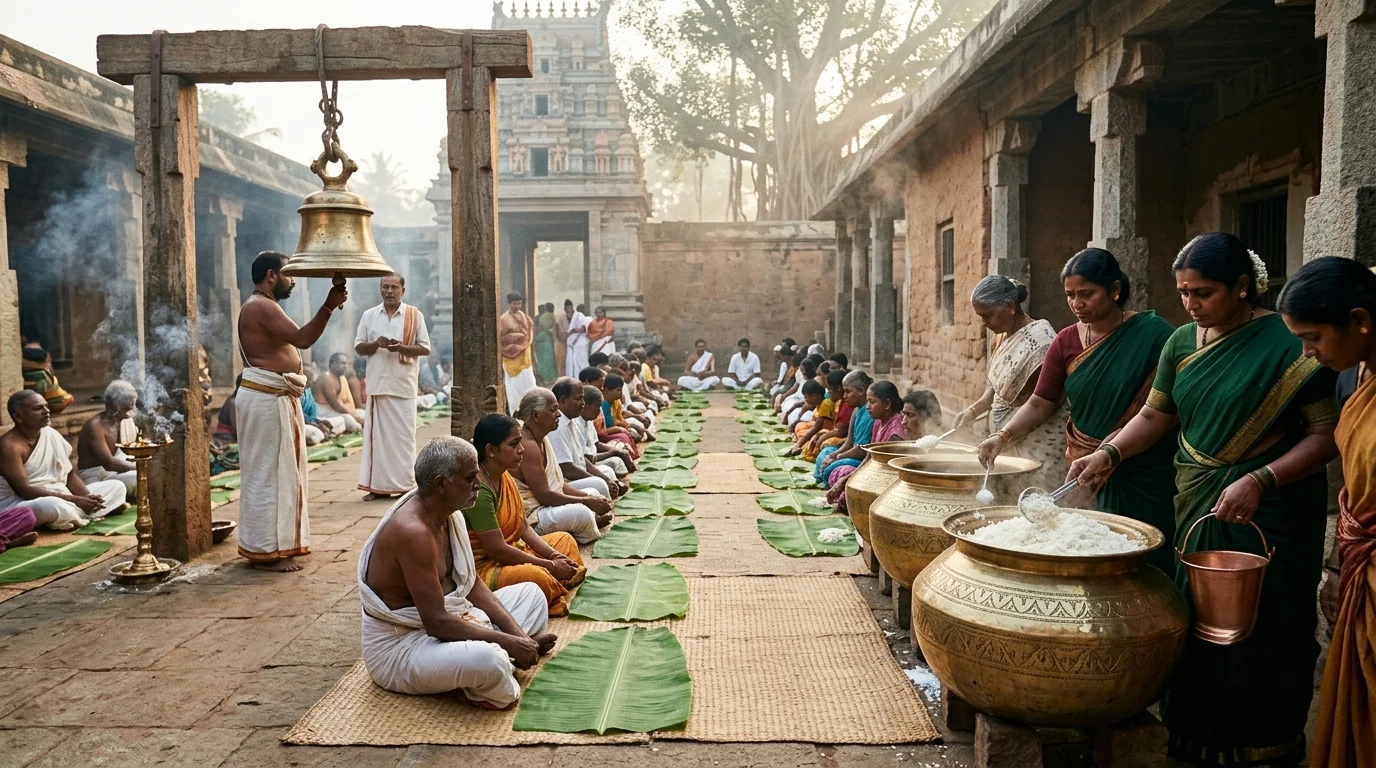
What - Food. Especially cooked food served hot. Annapurna (Goddess of food) considered the supreme dana-recipient.
Recipient - Hungry person, brahmana, sadhu, child, pregnant woman. Cannot be denied to ANY hungry person regardless of caste, religion, or status.
Occasion - Every day at meal-time (the first bhojan of the cook must be set aside for atithi-devo-bhava). On Ekadashi (Atithi-bhojan for brahmanas). At any shraddha. At any temple festival.
Phala - The supreme dana - "Annadana-samam dana na bhuto na bhavishyati" (No charity equals food-gift, none has been or will ever be). Removes all karmas. Brings prosperity to the giver's household.
Source: Mahabharata Anushasana Parva, Bhagavata, Anna-suktam (Rig Veda), Annapurna Stotram.
Modern equivalent - Food-temple programs (Akshaya Patra at ISKCON, langar at gurudwaras, annadanam at every major temple, mid-day meal programs). SevaCart's anna-dana commissioning at Tirupati / Tirumala / Sabarimala.
What - Knowledge. Teaching the Vedas, shastras, music, dance, crafts, modern academic subjects. Books also count as vidya-dana.
Recipient - Sincere student. Daridra (poor) student particularly meritorious. Cannot be denied based on caste once teaching begins.
Occasion - Continuous - daily, ongoing student-teacher relationship. Especially powerful when funded as endowment for ongoing schools.
Phala - Considered ABOVE anna-dana by Shankaracharya + Vidyaranya. "Anna-dana fills one day; vidya-dana fills generations." The recipient lifts their entire lineage.
Source: Manu Smriti, Mahabharata Shanti Parva, Adi Shankara's teaching at Sringeri.
Modern equivalent - Scholarships, school-building donations, library funding, book donations, online education platforms (Khan Academy, NPTEL), funding gurukulas.
What - Refuge / freedom from fear. Protecting the threatened. Giving sanctuary. Forgiving an enemy.
Recipient - Any being in fear - human, animal, or even insect.
Occasion - Immediate, whenever danger arises. Hospital chaplaincy. Refugee assistance. Animal rescue.
Phala - According to Mahabharata: "Of all danas, abhaya-dana is supreme - for it includes the gift of life itself." Frees the giver from all his fears in turn.
Source: Mahabharata Karna Parva, Bhagavad Gita 18.3, Ramayana (Vibhishana receives abhaya from Rama).
Modern equivalent - Refugee shelter, animal protection (PETA, Beauty Without Cruelty), domestic violence shelter, suicide-prevention hotlines, witness protection programs, legal aid.
What - Medicine. Free medical treatment. Funding hospitals. Distributing essential medicines.
Recipient - The sick - particularly those without ability to pay.
Occasion - Continuous. Especially powerful on Dhanvantari Jayanti (Kartika Trayodashi) + Vasanta Panchami.
Phala - Healer-karma - "aroga" (good health) for the giver across multiple lives. Removes karmic-illness (chronic-disease patterns from past lives).
Source: Charaka Samhita (Sutra Sthana 30.49), Dhanvantari Stotram, Mahabharata.
Modern equivalent - Hospital donations, funding clinics, medicines-for-poor programs, blood donation, organ donation (organ-dana now widely accepted as dana-shastra-aligned).
What - Giving one's daughter in marriage. The supreme dana within the grihastha ashrama. The father formally "gives" the daughter to the groom in a special ritual.
Recipient - A worthy groom - chosen carefully for compatibility (gotra, kuladevata, family, character).
Occasion - At her marriage muhurtam. Has its own specific sub-rituals: panigrahana, sapta-padi, vivah-homa.
Phala - Greatest punya the householder can earn. Per Manu Smriti: "Through kanya-dana, the giver crosses the ocean of samsara." The bride's and groom's families are united across 7 generations.
Source: Manu Smriti, all grihya-sutras, Ramayana (Janaka's kanya-dana of Sita to Rama).
Modern equivalent - Still performed at all Hindu marriages. The father places the daughter's right hand in the groom's right hand and accepts a sankalpa promise of protection.
What - Gifting a cow. Cow with calf preferred. The cow must be healthy, full-grown, and accompanied with its requirements (fodder, ghee for ahuti at the dana).
Recipient - A brahmana family that will care for the cow. Or a goshala (cow-shelter).
Occasion - Most powerful: at the antyeshti (before death). Also on solar / lunar eclipses, Akshaya Tritiya, Diwali, Magha-snana.
Phala - The cow is said to ferry the giver across Vaitarani (the river of suffering after death). Per Garuda Purana, the dying person should hold a cow's tail at death - the cow carries the jiva to Vaikuntha. Hence "vaitarani-dana".
Source: Garuda Purana, Manu Smriti, Mahabharata Anushasana Parva.
Modern equivalent - Funding goshalas (Sri Krishna Goshala at Vrindavan, Pathmeda Goshala in Rajasthan). Adopting a cow. Cow-protection legal advocacy.
What - Land. The supreme dana of the kshatriya / householder class. From a square-foot patch to thousands of acres.
Recipient - A brahmana for vedic-school (gurukula land). A village community. A temple. The poor (Vinoba Bhave's Bhoodan Movement 1951-69 distributed 4.4 million acres).
Occasion - Particularly meritorious during eclipses + at marriage of children + at any sankalpa for moksha.
Phala - "Yo dadati eka-bhumim sarva-paapaih pramuchyate" - "He who gives one piece of land is freed from all sins" (Vishnu Purana). The giver receives equivalent land in the deva-loka.
Source: Vishnu Purana, Brahma Purana, Vinoba Bhave's Bhoodan movement scripture-citations.
Modern equivalent - Donating land for school / hospital / temple. Endowment trusts. Wakaf in Islamic equivalent - sadqa-jariya. Vinoba's Bhoodan ledger (still active in some districts).
What - Gold. Symbol of Lakshmi. Coins, jewelry, gold-bar - but the form must be intact (not broken).
Recipient - Brahmana for daughter's marriage. Newly-married couple. Bride at the time of vidaai.
Occasion - Dhanteras (Krishna Trayodashi of Kartika), Akshaya Tritiya, the day of one's daughter's marriage, ratha-saptami (Surya in Makara).
Phala - Removes pitri-dosha. Establishes the family's wealth across generations. The gold-giver attracts Lakshmi to his home - but the gold must come from righteously-earned income.
Source: Manu Smriti, Lakshmi Hridayam, Hema-dana stotras.
Modern equivalent - Buying gold for daughter's wedding. Donating gold ornaments to Tirupati Balaji (the temple has accumulated 9 metric tons of gold from devotees). Sankalpa donation of gold jewelry on Dhanteras.
What - Clothing. New clothes ideal (do not give worn clothes). Saree for a married woman, dhoti for a brahmana, blanket for the elderly.
Recipient - Poor people, widows (white saree), brahmacharis (saffron), brahmanas (cotton), monks.
Occasion - Winter months. Daughter's wedding. Sister-in-law's upanayanam. Aksharabhyasa for children. Annual Mahalaya pitru-paksha.
Phala - Per Bhagavata: "Vastra-dana brings beauty + good marriage prospects in the next life." Closes karmic loops of garment-related vows (made + broken in past lives).
Source: Bhagavata 10.71, Skanda Purana, Mahabharata Shanti Parva.
Modern equivalent - Goodwill / Salvation Army clothing drives. Saree-distribution programs (many temples do Akshaya Tritiya saree-dana). Blanket-dana for the homeless in winter (Sevamandir, etc).
What - Labour. Donating one's time + effort. Building wells, digging tanks, helping at temples, kar-seva (kar = hand, seva = service).
Recipient - Community project - village well, temple construction, festival logistics, hospital maintenance.
Occasion - Specific projects. Pre-Diwali temple cleanings. Kumbha-mela seva. Antarjatika ashrama renovations.
Phala - Shrama-dana is considered superior to mere monetary dana for it teaches humility + connects giver to receiver directly. Per Vivekananda: "Service to man is service to God" - shrama-dana is the practical karma-yoga.
Source: Vivekananda's practical Vedanta, Ramakrishna Mission seva-tradition, modern reform tradition.
Modern equivalent - Volunteering. Habitat for Humanity. Temple-building kar-seva. Disaster relief volunteer work. Pro-bono professional services.