Loading content…
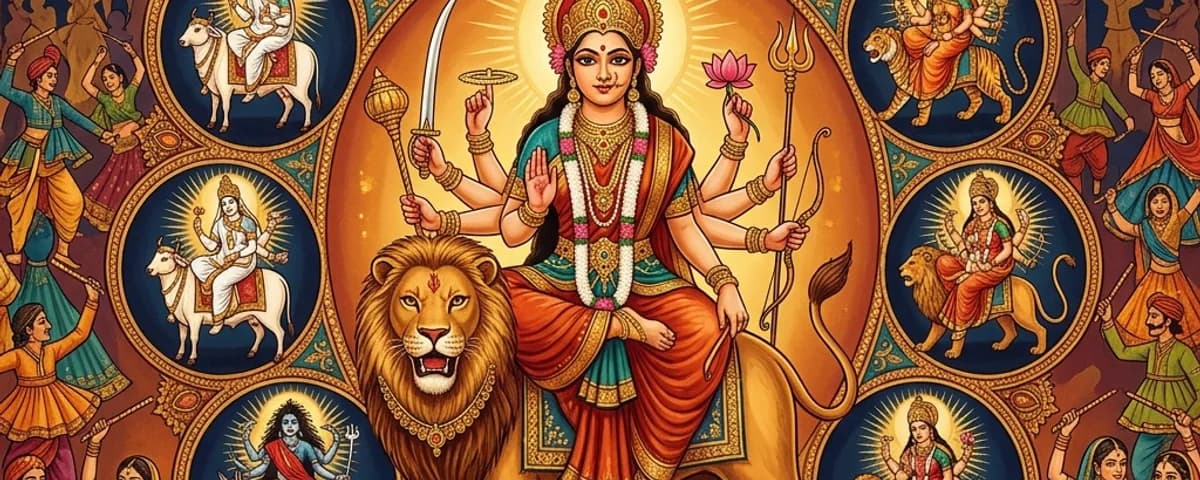
Dasha Mahavidya - The Ten Great Wisdom Goddesses
The Dasha Mahavidyas (दश महाविद्या) are ten tantric manifestations of the Supreme Goddess (Adi-Shakti). Each represents a unique dimension of divine power - from Kali the dissolver of time to Kamala the giver of abundance. This page presents all ten with bija mantras, dhyan mantras, yantra descriptions, stotras, and sadhana guidance.
Tantric Sadhana DisclaimerTantric sadhanas require initiation from a qualified guru. The information here is for study and devotion. SevaCart does not endorse unsupervised tantric practice. The sadhana vidhi presented here is for educational understanding only. Never attempt advanced Mahavidya sadhana without proper diksha (initiation), guru oversight, and an unbroken parampara.
The Dasha Mahavidya - Overview
Introduction - The Dasha Mahavidyas (दश महाविद्या - Ten Great Wisdom-Goddesses) are ten tantric aspects of the Supreme Goddess (Adi-Shakti / Para-Shakti) as described in the Shakta Tantra tradition. They represent ten ways in which the cosmic feminine principle manifests - from the terrifying (Kali, Chhinnamasta) to the luminously beautiful (Tripura Sundari, Kamala). Together they form a complete map of the goddesses power - dissolution, protection, liberation, and supreme grace.
Origin - The Dasha Mahavidyas appear most fully in the Mahabhagavata Purana, the Shakta Mahapurana, the Devi Bhagavata, and numerous tantric texts. The origin story: when Daksha's yajna excluded Sati (Shiva's wife), she decided to attend against Shiva's wishes. Shiva barred all ten directions. Sati manifested the ten Mahavidyas - one in each direction - to indicate that no direction is free of the Goddess, and that Shiva himself is enveloped by her power.
Classification - The 10 Mahavidyas are divided into two groups - the Ugra (fierce/transformative) forms: Kali, Tara, Chhinnamasta, Bagalamukhi, Dhumavati; and the Saumya (benign/luminous) forms: Tripura Sundari (Shodashi), Bhuvaneshvari, Bhairavi, Matangi, Kamala (Lakshmi).
Significance - Each Mahavidya represents a specific shakti (power) and a specific area of liberation. The Dasha Mahavidya sadhana, when performed under proper guru guidance, is said to be the most comprehensive and rapid path to liberation in the Shakta tradition.
Quick Navigation - All 10 Mahavidyas
1Kaliकाली2Taraतारा3Tripura Sundariत्रिपुर सुन्दरी4Bhuvaneshvariभुवनेश्वरी5Bhairaviभैरवी6Chhinnamastaछिन्नमस्ता7Dhumavatiधूमावती8Bagalamukhiबगलामुखी9Matangiमातंगी10Kamalaकमला
1 / 10
Kali काली
The First and the Fiercest - Adya Kali, destroyer of time, liberator from the illusion of death
BIJA MANTRA
KRIM (क्रीं)
Meaning - KRIM is the primary bija of Kali - K = Kali herself (the destroyer), R = Brahman (absolute consciousness), I = Maya (the creative power), M = the bindu (the point of dissolution back into the one). Together: the power that dissolves the limited self back into unlimited consciousness.
DHYAN MANTRA
करालवदनां घोरां मुक्तकेशीं चतुर्भुजाम्। कालिकां दक्षिणां दिव्यां मुण्डमालाविभूषिताम्॥ सद्यश्छिन्नशिरःखड्गवामाधोर्ध्वकराम्बुजाम्। अभयं वरदं चैव दक्षिणोर्ध्वाधरे स्थिताम्॥
Meaning - Meditate on Kali - with a terrifying face, fierce, with loose hair, four-armed. She is the divine Dakshina Kali adorned with a garland of skulls. Her upper left hand holds a freshly severed head, her lower left hand a sword; her upper right hand grants fearlessness (abhaya), her lower right bestows boons (vara).
YANTRA
The Kali Yantra consists of concentric triangles (typically a Shatkona - two interlocked triangles forming a six-pointed star) within a circle of eight petals, enclosed in a bhupura (square earth-frame with four gates). The central triangle points downward, representing the yoni (source of creation-dissolution). The bindu (point) in the center represents the absolute consciousness of Kali beyond all form.
STOTRA VERSES
जय काली जय काली जय काली, ब्रह्माण्ड तारिणी माँ। कालि का काल भी तुम हो, मृत्यु की मृत्यु तुम माँ॥
Victory to Kali, victory to Kali - the deliverer of the universe. You are even the death of Kala (time), you are the death of death itself, O Mother.
नमामि त्वां महाकाली रुधिराक्षि भयंकरि। खड्गखेटकरे देवि नरमुण्डधरे नमः॥
I bow to you, Mahakali - with eyes red as blood, the terrible one. O goddess holding sword and shield, wearing a garland of human skulls - salutations.
त्वं कालरात्रिस्त्वं महाकाली, दुर्गा दुर्गतिनाशिनी। भवाब्धिपारगां धात्रीं सर्वसिद्धिप्रदायिनीम्॥
You are Kalaratri, you are Mahakali, Durga the destroyer of adversity. You carry us across the ocean of worldly existence - the upholder, the bestower of all attainments.
काली काली महाकाली कालिके पापहारिणि। धर्मार्थकाममोक्षेषु सर्वदा सहसा देहि॥
Kali, Kali, Mahakali, Kalika the destroyer of sin - in the four goals of life (dharma, artha, kama, moksha), always swiftly bestow your grace.
आद्या काली महाकाली महिषासुरमर्दिनी। शुम्भनिशुम्भसंहर्त्री महिषासुरघातिनी॥
You are Adya Kali, Mahakali, slayer of Mahishasura, the destroyer of Shumbha and Nishumbha, the one who killed Mahishasura - salutations.
SADHANA VIDHI
Disclaimer - Tantric sadhanas require initiation from a qualified guru. The information here is for study and devotion. SevaCart does not endorse unsupervised tantric practice. The sadhana vidhi presented here is for educational understanding only. Never attempt advanced Mahavidya sadhana without proper diksha (initiation), guru oversight, and an unbroken parampara.
Preparatory practice
Bathe before sunrise. Wear black or dark-red clothing. Sit on a red or black asana, facing south (Kali's direction). Light a sesame-oil lamp.
Mantra Japa
Japa of KRIM - traditionally 10,000 times for a single anushthana. Daily practice: 108 repetitions of the dhyan mantra. The Kali Sahasranama (1000 names of Kali) may be recited after japa.
Best time for worship
Amavasya (new moon) and the night of Deepavali (Kali Pooja - the most important Kali festival, especially in Bengal). Also: every Friday and Tuesday. Navratri (especially the Shyama Pooja on the Ashtami night).
FRUITFUL OCCASIONS FOR WORSHIP
- Kali Pooja (Deepavali Amavasya) - principal festival, especially in Bengal and Odisha
- Chaitra and Ashvina Navratri (Ashtami night - Sandhi Pooja)
- Every Amavasya (new moon night)
- Tuesday and Friday evenings
- Kalaratri (the 7th night of Navratri)
What this Mahavidya bestows
Liberation from fear of death, destruction of negative forces and enemies, spiritual courage, severance of ego-identification, and ultimately the supreme state of Kaivalya - pure unattached consciousness.
2 / 10
Tara तारा
The Star - Ugra Tara, who guides across the ocean of existence, and Neela Tara (Blue Tara)
BIJA MANTRA
TRIM (त्रीं)
Meaning - TRIM is the bija of Tara - it combines the syllable TA (the crossing, the star-light) with the energizing RI and the anusvara M. It invokes the power that guides across dangerous terrain - the star in the night sky that does not waver.
DHYAN MANTRA
नीलवर्णां त्रिनेत्रां च खड्गखर्परधारिणीम्। कपालशिरसा युक्तां व्याघ्रचर्मावृतां तनुम्॥ शवस्थितां महाघोरां जटाभारविभूषिताम्। ताराभिध्यानमेवं हि कुर्याद् भक्त्या विशेषतः॥
Meaning - Meditate on the blue-colored, three-eyed Tara, holding a sword and skull-cup, adorned with a garland of heads. Her body is covered with tiger skin. She stands on a corpse (symbolic - standing on the ego), is greatly fearsome, and is adorned with matted hair. Thus meditate on Tara with especial devotion.
YANTRA
The Tara Yantra features a central downward-pointing triangle (the yoni of the universe) within a series of concentric triangles forming the star-pattern, enclosed in an eight-petal lotus, within a square bhupura. The blue color predominates - representing the vast sky of consciousness in which the star Tara shines.
STOTRA VERSES
ओं तारे तुत्तारे तुरे स्वाहा। नीलवर्णे महादेवि तारे तारयसि प्रभो॥
Om Tare Tuttare Ture Svaha. O blue-colored great goddess Tara - you carry us across, O luminous one.
नमस्ते तारे देवेशि नमस्ते भक्तवत्सले। नमस्ते तारिणि माँ, उग्रतारे नमोस्तु ते॥
Salutations to you, Tara, queen of the gods. Salutations to you who are affectionate to devotees. Salutations to you the ferry-woman across existence, O Mother - and salutations to the fierce Ugra Tara.
त्रिनेत्रे नीलदेहे च व्याघ्राजिनधरे नमः। तारिणि दुःखसंसारात् तारे त्वां शरणं गते॥
Salutations to the three-eyed one with a blue body who wears tiger skin. O Tara who carries us across the ocean of suffering existence - I take refuge in you.
उग्रतारे महादेवि त्राहि त्राहि कृपार्णवे। भवाब्धितारणं कुर्यात् तारेण स्वाहयैव हि॥
O fierce Tara, great goddess, ocean of compassion - protect, protect! Ferry us across the ocean of worldly existence by Tara with the svaha of surrender.
नीलसरस्वती स्वामिनि, विद्यादायिनि तारिणि। वाग्देवताधिनाथे च नमस्ते परमेश्वरि॥
Salutations to Neela Sarasvati (Blue Tara as goddess of speech-knowledge), the bestower of learning, the ferry across existence, the ruling deity of speech, the supreme goddess.
SADHANA VIDHI
Disclaimer - Tantric sadhanas require initiation from a qualified guru. The information here is for study and devotion. SevaCart does not endorse unsupervised tantric practice. The sadhana vidhi presented here is for educational understanding only. Never attempt advanced Mahavidya sadhana without proper diksha (initiation), guru oversight, and an unbroken parampara.
Preparatory practice
Wear blue or dark blue clothing. Sit on a blue or black asana facing east. Light a mustard-oil lamp. Place the Tara Yantra or a blue-colored image of Tara.
Mantra Japa
Japa of TRIM (the bija) - 10,000 repetitions for an anushthana. The Om Tare Tuttare Ture Svaha (Buddhist-Hindu shared mantra) may also be used - 108 times daily. The Tara Sahasranama and Tara Stotra from the Mahabhagavata may be added.
Best time for worship
Every Thursday. Navratri (third night - associated with Tara). Full-moon nights. The festival of Durga Ashtami. In the Shakta tradition of northeast India, Tara Pooja is major in Tarapeeth (West Bengal) throughout the year.
FRUITFUL OCCASIONS FOR WORSHIP
- Tara Pooja at Tarapeeth (Birbhum, West Bengal) - the most important Tara shrine in India
- Every Thursday throughout the year
- Navratri (third day)
- Purnima (full moon) in any month
- Sarasvati Pooja (as Neela Sarasvati aspect of Tara)
What this Mahavidya bestows
Liberation, mastery of speech, knowledge, protection from all dangers, fearlessness, success in studies and communication, and ultimately the grace that carries one across the ocean of samsara.
3 / 10
Tripura Sundari त्रिपुर सुन्दरी
The Beautiful One of the Three Worlds - also called Shodashi (the sixteen-year-old), Lalita, Sri Chakra Devi
BIJA MANTRA
SHRIM (श्रीं) + HRIM (ह्रीं) + KLIM (क्लीं) - the Panchadashi and Shodashi mantras are secret, revealed only in initiation
Meaning - SHRIM = Lakshmi-bija (beauty, abundance, grace); HRIM = Maya-bija (the power of illusion, the cosmic womb); KLIM = Kama-bija (the power of attraction, cosmic love). These three together invoke the triple power of the Goddess as beauty, illusion, and attraction. The full Shodashi (16-syllable) mantra is among the most sacred and secret in all of Tantra - it is never to be recited without initiation.
DHYAN MANTRA
बालार्कमण्डलाभासां चतुर्बाहुं त्रिलोचनाम्। पाशांकुशधरां देवीं वरदाभयहस्तकाम्॥ सर्वाभरणसंयुक्तां रक्तवस्त्रां मनोरमाम्। त्रिपुरां सुन्दरीं वन्दे ब्रह्मविष्णुशिवात्मिकाम्॥
Meaning - I worship Tripura Sundari - radiant as the morning sun, four-armed, three-eyed, holding noose (pasha) and goad (ankusha), with hands in the gestures of granting boons and fearlessness, adorned with all ornaments, dressed in red, enchanting - embodying Brahma, Vishnu, and Shiva.
YANTRA
The Sri Chakra (also called Sri Yantra) is the yantra of Tripura Sundari and is considered the most sacred yantra in the Hindu tradition. It consists of nine interlocked triangles - five pointing downward (shakti) and four pointing upward (shiva) - forming 43 smaller triangles. These are enclosed in two lotuses (8 and 16 petals) and three concentric circles, all enclosed in a square bhupura with four gates (T-shaped openings). The central point (bindu) represents the goddess herself in her supreme state.
STOTRA VERSES
त्रिपुरे त्रिगुणे देवि त्रिलोक्यत्रासहारिणि। त्रिशूलधारिणि नित्यं त्रिस्वरे च नमोस्तु ते॥
Salutations to Tripura, the goddess of three qualities (gunas), the remover of the afflictions of the three worlds, the bearer of the trident, the eternal one, the one of three melodies.
लक्ष्मीर्विद्या महाशक्तिः सर्वसौभाग्यदायिनी। सुन्दरी शोभना देवी ललिता परमेश्वरी॥
She is Lakshmi, knowledge, the great Shakti, the bestower of all auspiciousness. Sundari, the beautiful one, the shining goddess, Lalita the playful one - the supreme ruler.
श्रीविद्याये नमो नित्यं परमानन्दरूपिणि। चिदानन्दमयि माँ श्रीशोडशी प्रणमाम्यहम्॥
Daily salutations to Sri Vidya (the supreme knowledge-goddess), who is of the form of absolute bliss. I bow to Shodashi the mother made of consciousness and bliss.
भुवनेश्वर्याः पुत्री त्वं, त्रैलोक्यसुन्दरी शिवे। श्रीचक्रस्थे महादेवि नमस्ते परमेश्वरि॥
You are the daughter of the world-mother Bhuvaneshvari, the beautiful one of the three worlds, O auspicious one. O great goddess who dwells in the Sri Chakra - salutations, O supreme ruler.
षोडशारे महाचक्रे षोडशी परमेश्वरी। पञ्चदशाक्षरी विद्या सर्वसिद्धिप्रदायिनी॥
In the great sixteen-petalled chakra, Shodashi the supreme ruler. The Panchadashi (fifteen-syllable) mantra bestows all attainments.
SADHANA VIDHI
Disclaimer - Tantric sadhanas require initiation from a qualified guru. The information here is for study and devotion. SevaCart does not endorse unsupervised tantric practice. The sadhana vidhi presented here is for educational understanding only. Never attempt advanced Mahavidya sadhana without proper diksha (initiation), guru oversight, and an unbroken parampara.
Preparatory practice
Wear red or golden-yellow clothing. Sit facing east on a red silk asana. Light a ghee lamp. Place the Sri Yantra at the center of worship. Sri Chakra Navavarana Pooja (nine-enclosure worship of the Sri Yantra) is the fullest form of Tripura Sundari worship.
Mantra Japa
The Shrim Hrim Klim sequence (bija japa) - 108 times daily for devotional practice. The Panchadashi and Shodashi mantras require initiation in the Sri Vidya parampara. The Lalita Sahasranama (1000 names) is recited daily in the Sri Vidya tradition.
Best time for worship
Every Friday. Navratri (fifth day - Lalita Jayanti). Varalakshmi Vrata (Friday in Shravan month). Shravan month generally. Diwali to the next full moon (the 15-day period of Saubhagya).
FRUITFUL OCCASIONS FOR WORSHIP
- Lalita Jayanti (Vaishakha Purnima / Phalguna Purnima depending on tradition)
- Navratri (fifth tithi - Lalita / Skandamata day)
- Every Friday
- Varalakshmi Vrata (Shravan month)
- Navaratna puja on any Purnima
What this Mahavidya bestows
Supreme beauty, all forms of auspiciousness and prosperity, harmonious relationships, spiritual bliss, attainment of the highest state of Sri Vidya sadhana, liberation through grace (anugraha).
4 / 10
Bhuvaneshvari भुवनेश्वरी
The Ruler of the World - she whose body IS the universe, the world-mother, the goddess of infinite space
BIJA MANTRA
HRIM (ह्रीं)
Meaning - HRIM is the Maya-bija - H = space/sky (akasha), R = energy/light, I = creative power, M = bindu (the unmanifest point). HRIM is the mantra of the entire manifest universe - it invokes the goddess as the very substance of which the universe is made.
DHYAN MANTRA
उद्यद्भानुसहस्राभां चतुर्बाहुं त्रिलोचनाम्। वरदाभयहस्तां च पाशांकुशधरीं शुभाम्॥ त्रिशूलशोभितकरां, स्मितवक्त्रां च सुन्दरीम्। भुवनेश्वरीमाराध्ये सर्वज्ञां सर्वमंगलाम्॥
Meaning - Meditate on Bhuvaneshvari - as bright as a thousand rising suns, four-armed, three-eyed, with hands in the gestures of granting boons and fearlessness, holding noose and goad, auspicious, adorned with a trident, with a smiling face, beautiful. She is all-knowing, the source of all auspiciousness.
YANTRA
The Bhuvaneshvari Yantra has a central triangle pointing upward (symbol of Mount Meru and the cosmic axis) within a lotus of eight petals. The central bindu represents the goddess as the core of all space. The outer square bhupura has gates in all four directions - signifying that all four directions of space are her body.
STOTRA VERSES
भुवनेश्वरि महामाये सर्वसृष्टिविधायिनि। नमस्ते जगदाधारे नमस्ते परमेश्वरि॥
O Bhuvaneshvari, the great Maya, the one who arranges all of creation - salutations. Salutations to the support of all worlds, salutations to the supreme ruler.
या देवी सर्वभूतेषु शक्तिरूपेण संस्थिता। नमस्तस्यै नमस्तस्यै नमस्तस्यै नमो नमः॥
To the goddess who is established in all beings in the form of power - salutations to her, salutations to her, salutations to her, salutations again and again.
ह्रीं भुवनेश्वरि नमो नित्यं विश्वरूपधारिणि। जगदम्बे महामाये सृष्टिस्थितिलयात्मिके॥
Hrim - salutations daily to Bhuvaneshvari, the wearer of the form of the universe. O mother of the world, the great Maya, the one whose nature is creation, sustenance, and dissolution.
त्रिलोकाधीश्वरि माँ, भक्तान्तर्यामिनि सदा। भुवनेश्वरि भगवति सर्वदा रक्ष मां प्रभो॥
O ruler of the three worlds, O Mother who always dwells within the hearts of devotees - O Bhuvaneshvari, O Bhagavati, O Lord, always protect me.
SADHANA VIDHI
Disclaimer - Tantric sadhanas require initiation from a qualified guru. The information here is for study and devotion. SevaCart does not endorse unsupervised tantric practice. The sadhana vidhi presented here is for educational understanding only. Never attempt advanced Mahavidya sadhana without proper diksha (initiation), guru oversight, and an unbroken parampara.
Preparatory practice
Wear yellow or golden clothing. Sit facing east. Light a ghee lamp. Offer yellow flowers. The Bhuvaneshvari puja may be performed at any auspicious sunrise.
Mantra Japa
Japa of HRIM - 1008 times for an anushthana. Daily: 108 repetitions. The Bhuvaneshvari Ashtottara (108 names) is recited on Fridays and Navratri.
Best time for worship
Every Friday. Purnima (full moon). Navratri (fourth day). The month of Chaitra (when the day and night are equal - the cosmic balance is best felt). Sunrise on any auspicious day.
FRUITFUL OCCASIONS FOR WORSHIP
- Every Friday throughout the year
- Navratri (fourth tithi)
- Purnima (full moon) in Chaitra and Ashvina months
- Sunrise on any major Hindu festival
- Bhuvaneshvari Jayanti (varies by tradition)
What this Mahavidya bestows
Mastery over space and the physical world, abundance, dominion, leadership, fulfillment of desires, expansion of consciousness to encompass all creation, and liberation through recognition of the world as the goddess's own body.
5 / 10
Bhairavi भैरवी
The Terrifying One - Tripura Bhairavi, the shakti of Bhairava, fire-goddess of dissolution
BIJA MANTRA
HSRAIM HSKLRIM HSRAUH (ह्स्रैं ह्स्क्लीं ह्स्रौः)
Meaning - The three bija-syllables of Bhairavi are among the most complex in the tantric system - they represent: Hsa = the union of Shiva (Ha) and Shakti (Sa), the fire of consciousness; KLIM = the attraction-power; RAUH = the forceful ejection of the limited self. Together they invoke the fierce transformative fire of Bhairavi.
DHYAN MANTRA
उद्यद्भानुकोटिप्रभां रक्तवर्णां त्रिलोचनाम्। रक्तवस्त्रां रक्तमाल्यां रक्तगन्धानुलेपनाम्॥ पुस्तकं स्फटिकमालां च रुद्राक्षं विविधायुधाम्। त्रिपुरां भैरवीं ध्याये नित्यं तत्सिद्धये नमः॥
Meaning - Meditate on Tripura Bhairavi - as radiant as millions of rising suns, red-complexioned, three-eyed, clad in red garments and red garlands, anointed with red sandal. She holds a book, a crystal rosary, rudraksha beads, and various weapons. I always meditate on Tripura Bhairavi for her attainment - salutations.
YANTRA
The Bhairavi Yantra features a central downward-pointing triangle (the blazing yoni of cosmic fire) within concentric circles, enclosed in a lotus of eight petals and an outer square. The dominant color is red (the color of Bhairavi's garments and her fire-nature). The yantra represents the activation of the kundalini fire.
STOTRA VERSES
भैरवी त्रिपुरे देवि त्रिगुणे त्रिनयने नमः। रक्तवस्त्रे महाशक्ते सर्वसिद्धिप्रदायिनि॥
Salutations to Bhairavi Tripura, the goddess of three qualities, three-eyed. O great power clad in red, bestower of all attainments.
नित्यकालि कपालिनि कुलामृतपायिनि। कुरुकुल्ले विरोधिनि त्रिपुराभैरवि नमः॥
Salutations to the Nitya-Kali, Kapalini, who drinks the nectar of the Kula tradition, Kurukulla, Virodhini - salutations to Tripura Bhairavi.
कुण्डलिन्यै नमो नित्यं शिवशक्त्यात्मने सदा। मूलाधारे स्थितां देवीं प्रणमामि भैरवीम्॥
Salutations always to the Kundalini, who is always of the nature of Shiva-Shakti. I bow to Bhairavi who dwells in the Muladhara (root chakra).
षट्चक्रभेदिनी देवि ब्रह्मनाडीविहारिणि। सुषुम्नासंचरी शक्ते भैरवि त्वां नमाम्यहम्॥
O goddess who pierces the six chakras, who moves through the Brahma-nadi. O Shakti who traverses the Sushumna channel - I bow to you, Bhairavi.
प्रकाशरूपे चिद्रूपे आनन्दरूपिणि नमः। त्रिपुरभैरवि सदाशिवप्रिये च नमोस्तु ते॥
Salutations to the form of light, the form of consciousness, the form of bliss. Salutations to Tripura Bhairavi, the beloved of Sada-Shiva.
SADHANA VIDHI
Disclaimer - Tantric sadhanas require initiation from a qualified guru. The information here is for study and devotion. SevaCart does not endorse unsupervised tantric practice. The sadhana vidhi presented here is for educational understanding only. Never attempt advanced Mahavidya sadhana without proper diksha (initiation), guru oversight, and an unbroken parampara.
Preparatory practice
Wear red clothing. Sit on a red asana facing east or north. Light a sesame or castor-oil lamp. Offer red hibiscus flowers. The Bhairavi upasana is connected to the activation of kundalini - it should ONLY be done under direct guru supervision.
Mantra Japa
Japa of the Bhairavi bijas - under guru instruction only. The Nitya-Kadi Mala (garland of 16 Nitya goddesses headed by Bhairavi) is the advanced practice. Daily devotional: Bhairavi Ashtottara (108 names) or Bhairavi Stotram.
Best time for worship
Tuesday and Friday evenings. Navratri (especially Ashtami). Full moon nights. The festival of Holi (Bhairavi is associated with fire and transformation - Holika represents this energy).
FRUITFUL OCCASIONS FOR WORSHIP
- Navratri (Ashtami - the great night of the fierce goddesses)
- Every Tuesday and Friday
- Holi (the fire festival)
- Mahashivaratri (Bhairavi as Shiva's companion)
- The first day of any kundalini-activation retreat under a qualified guru
What this Mahavidya bestows
Activation of the kundalini, mastery of speech and sound, destruction of obstacles, power to pierce through the six chakras in sadhana, mastery of fire-energy, and liberation through the transformative fire of divine consciousness.
6 / 10
Chhinnamasta छिन्नमस्ता
The Self-Decapitated Goddess - who severed her own head, representing the dissolution of the individual mind into supreme consciousness
BIJA MANTRA
SHRIM HRIM KLIM AIM VAJRA-VAIROCHANIYE HRIM HRIM PHAT SVAHA
Meaning - The complex mantra of Chhinnamasta combines SHRIM (beauty-grace), HRIM (maya), KLIM (kama-attraction), AIM (Sarasvati-wisdom) with the Vajra-Vairochana (thunderbolt-radiant) invocation. It represents the severing of the limited mind (chhinnamasta = severed head) to reveal the unbounded consciousness beneath.
DHYAN MANTRA
विकीर्णकेशां प्रेतोपरि स्थितां वरत्रासिकाम्। स्वयं छिन्नशिरःखड्गधारिणीं शवसंस्थिताम्। रक्तधारात्रयोद्गारां विकटां शवसंस्थिताम्। चिन्तये छिन्नमस्तां तां सिद्धयोगिनीमाश्रिताम्॥
Meaning - Meditate on Chhinnamasta - with disheveled hair, standing on the couple (Rati and Kama, symbolizing desires), holding her own severed head and a sword, standing on a corpse, with three streams of blood flowing from her severed neck (feeding her two attendants and herself), fearsome - the perfected yogini, she who is taken refuge in.
YANTRA
The Chhinnamasta Yantra features a central triangle with the yantra-bija within, enclosed in a hexagram (shatkona), within a lotus of 8 and 16 petals, enclosed in a square. The unusual feature is that the yantra is not centered on the central point (bindu) in the usual way - it represents decentralization, the dissolution of the ego-center.
STOTRA VERSES
छिन्नमस्ते महादेवि खड्गखर्परधारिणि। स्वशिरच्छेदकर्त्रि त्वं नमो वज्रवैरोचनि॥
Salutations to Chhinnamasta, the great goddess, holder of sword and skull-cup, the one who severed her own head - salutations, O Vajra-Vairochani.
आत्मशिरश्छेदकारि, अहंकारविमोचनि। ज्ञानमुक्तिप्रदे देवि प्रणतोस्मि छिन्नमस्तके॥
O one who severed the head of the self (ego), O liberator from the ego. O goddess who bestows knowledge and liberation - I bow to you, Chhinnamasta.
प्रचण्डचण्डिके देवि प्रचण्डाचण्डरूपिणि। महाभयंकरि माँ ते नमस्ते परमेश्वरि॥
O terribly fierce Chandika, who is of furiously fierce form. O greatly terrifying Mother - salutations to you, O supreme ruler.
रक्तपानप्रिये देवि रक्तपुष्पप्रिये शिवे। छिन्नमस्तायै नमो नित्यं ब्रह्मज्ञानविधायिनि॥
O goddess fond of drinking blood, fond of red flowers, O auspicious one. Daily salutations to Chhinnamasta, the one who bestows knowledge of Brahman.
SADHANA VIDHI
Disclaimer - Tantric sadhanas require initiation from a qualified guru. The information here is for study and devotion. SevaCart does not endorse unsupervised tantric practice. The sadhana vidhi presented here is for educational understanding only. Never attempt advanced Mahavidya sadhana without proper diksha (initiation), guru oversight, and an unbroken parampara.
Preparatory practice
This is among the most advanced and rare sadhanas. The preparation requires complete brahmacharya (celibacy) during the sadhana period, sattvic diet, and continuous guru supervision. Wear red clothing. The sadhana is typically performed at a Shakti Peetha.
Mantra Japa
The Chhinnamasta Mantra is given only in initiation. Daily devotional practice: Chhinnamasta Ashtottara (108 names). The Stotra from the Shakta Pramoda or the Sammohana Tantra.
Best time for worship
Navratri (sixth tithi - Katyayani). Amavasya nights under guru guidance only. The month of Margashirsha. Any Tuesday falling on Ashtami.
FRUITFUL OCCASIONS FOR WORSHIP
- Navratri (sixth tithi)
- Ashtami tithi in any month
- Tuesday coinciding with Ashtami (rare and especially potent)
- Margashirsha Krishnapaksha (any night)
- Never independently - always at a qualified kshetra or under guru instruction
What this Mahavidya bestows
Dissolution of the ego (the most fundamental gift), liberation from the cycle of rebirth, mastery of prana (the life-force), the power of self-sacrifice as cosmic love, and the direct experience of consciousness as the ground that survives even the destruction of the mind.
7 / 10
Dhumavati धूमावती
The Smoky One - the widow-goddess, the goddess of inauspiciousness, who represents what remains after all else has been consumed
BIJA MANTRA
DHUM (धूं)
Meaning - DHUM - the smoke bija. It represents the residue that remains when everything auspicious has been burned away. Dhumavati is invoked through this bija to dispel illusion, remove the fear of the inauspicious, and to protect the devotee in the darkest circumstances.
DHYAN MANTRA
विवर्णां चञ्चलां रूक्षां दीर्घां च मलिनाम्बराम्। विधवां विरलद्दन्तां काकध्वजरथस्थिताम्॥ दीर्घविस्तारिताश्रोत्रां शूर्पहस्तां भयानकाम्। प्रवृद्धघोणां तु स्थूलां धूमावतीं च चिन्तयेत्॥
Meaning - Meditate on Dhumavati - pale-complexioned, restless, harsh, tall, wearing dirty clothes, a widow, with scattered teeth, seated in a chariot with a crow flag. She has long and spread-out ears, holds a winnowing basket (shurpa), is terrifying, with a large nose, corpulent - thus contemplate Dhumavati.
YANTRA
The Dhumavati Yantra is unusual - it uses an octagon (ashtakona) as its primary form rather than triangles. The octagon represents the eight quarters of space filled with smoke. Within is a circle and a square with gates. The color associated is grey or smoky - she is the goddess who does not shine but who protects through obscuring the negative.
STOTRA VERSES
नमो देव्यै महादेव्यै, धूमावत्यै नमो नमः। शान्त्यै सर्वशुभायै च नमो देव्यै नमोस्तु ते॥
Salutations to the Devi, the great Devi, salutations, salutations to Dhumavati. Salutations to peace, to all auspiciousness - salutations to the goddess, salutations to you.
अमंगलस्वरूपायै, मंगलदायै नमो नमः। धूमावत्यै सदा नित्यं प्रणमामि पदाम्बुजे॥
Salutations to she who is of inauspicious form yet grants auspiciousness - salutations, salutations. I always bow to the lotus feet of Dhumavati forever.
विधवाधारिणी माँ च, विधवानां तु रक्षिणि। सर्वारिष्टनिवारिणि धूमावति नमोस्तु ते॥
O Mother who is the support of widows, who protects widows. O remover of all inauspiciousness - salutations to you, Dhumavati.
काकवाहने महाशक्ते, काकध्वजविभूषिते। धूमावत्यै नमो नित्यं सर्वसिद्धिप्रदायिनि॥
Salutations to the great power mounted on a crow, adorned with the crow-banner. Daily salutations to Dhumavati, the bestower of all attainments.
SADHANA VIDHI
Disclaimer - Tantric sadhanas require initiation from a qualified guru. The information here is for study and devotion. SevaCart does not endorse unsupervised tantric practice. The sadhana vidhi presented here is for educational understanding only. Never attempt advanced Mahavidya sadhana without proper diksha (initiation), guru oversight, and an unbroken parampara.
Preparatory practice
Wear grey or dark blue clothing. Sit facing northwest (Dhumavati's direction). Light a mustard-oil lamp. Offer grey flowers or dried flowers. Dhumavati puja is typically performed at midday and at the transition between day and night (sandhya).
Mantra Japa
Japa of DHUM - 10,000 times for an anushthana (this is a potent and somewhat rare undertaking). Daily: 108 repetitions of the dhyan mantra followed by the Dhumavati Stotra.
Best time for worship
Navratri (seventh day). The solar and lunar eclipse periods (under guru guidance only). The period from Ashtami of the dark fortnight to Amavasya - especially in the months of Ashadha and Margashirsha. Widow-protection rites and Pitru-paksha are also associated with her.
FRUITFUL OCCASIONS FOR WORSHIP
- Navratri (seventh tithi)
- Ashtami to Amavasya in the dark fortnight
- Solar or lunar eclipse periods (under guru guidance)
- Pitru-Paksha (ancestor-fortnight)
- Thursday in Dhumavati temples (she is worshipped especially at the Dhumavati temple in Varanasi - the only goddess in Kashi who is worshipped as a widow)
What this Mahavidya bestows
Protection from inauspiciousness and misfortune, relief from grief and poverty, dissolution of attachments to what has been lost, mastery over hunger (she represents cosmic hunger that destroys everything), and ultimately the recognition that what appears inauspicious is part of the same divine play.
8 / 10
Bagalamukhi बगलामुखी
The Crane-Faced One - who paralyzes and stuns enemies and negative forces, the goddess of stambhana (immobilization)
BIJA MANTRA
HLIM (ह्लीं)
Meaning - HLIM - the bija of Bagalamukhi. H = Shiva (consciousness), L = the power of stambhana (immobilization), I = the creative energy, M = the dissolving bindu. The mantra has the power to paralyze, silence, and immobilize any negative force directed at the devotee.
DHYAN MANTRA
मध्ये सुधाब्धि मणिमण्डपरत्नवेद्यां सिंहासनोपरिगतां परिपीतवर्णाम्। पीताम्बराभरणमाल्यविभूषिताङ्गीं देवीं स्मरामि धृतमुद्गरवैरिजिह्वाम्॥
Meaning - I contemplate the goddess who sits in the middle of an ocean of nectar on a jeweled altar in a gem-studded pavilion, seated on a lion throne, of golden complexion - adorned with yellow garments, ornaments, and garlands. She holds a mace (mudgara) and holds the tongue of the enemy (pulling it out - the classic iconographic feature of Bagalamukhi).
YANTRA
The Bagalamukhi Yantra uses an equilateral central triangle pointing upward (representing her victorious, stabilizing power) within a hexagram, enclosed in a lotus of 8 petals and an outer square with four gates. The color is entirely yellow (her sacred color) - representing the stilling and solidifying power of her divine energy.
STOTRA VERSES
ॐ ह्लीं बगले माँ पीतांबरे, शत्रुनाशिनि देवि। जिह्वाग्राहणि विजयदे, बगलामुखि नमोस्तु ते॥
Om Hlim - Bagala, Mother in yellow garments, the destroyer of enemies. O goddess who grasps the tongue (of opponents), O bestower of victory - salutations to Bagalamukhi.
सर्वदुष्टनिहन्त्री त्वं, स्तम्भिनी सर्वशत्रुणाम्। वाक्स्तम्भकारिणि देवि बगले नमो नमः॥
You destroy all wicked ones, you are the immobilizer of all enemies. O goddess who paralyzes speech - salutations, salutations to Bagala.
पीतवर्णे महादेवि पीताम्बरविभूषिते। सर्पशत्रुं च दुष्टं च हन हन बगलामुखि॥
O golden-complexioned great goddess adorned with yellow garments - strike down, strike down the serpent-like enemy and the wicked one, O Bagalamukhi.
विजयदायिनि देवि, सर्वजयप्रदायिनि। न्यायाधिपते माँ ते नमस्ते परमेश्वरि॥
O goddess who bestows victory, the bestower of all victory. O lord of justice, Mother - salutations to you, O supreme ruler.
बगलामुखि प्रसीद माँ रिपुजिह्वाग्रहे रत। शत्रुसंहारिणि स्तम्भे बगले ह्रीं नमो नमः॥
O Bagalamukhi, be gracious, O Mother engaged in grasping the tongue of the enemy. O immobilizer, O destroyer of enemies - Bagala, HLIM - salutations, salutations.
SADHANA VIDHI
Disclaimer - Tantric sadhanas require initiation from a qualified guru. The information here is for study and devotion. SevaCart does not endorse unsupervised tantric practice. The sadhana vidhi presented here is for educational understanding only. Never attempt advanced Mahavidya sadhana without proper diksha (initiation), guru oversight, and an unbroken parampara.
Preparatory practice
Wear entirely yellow clothing. Sit on a yellow asana facing east. Light a ghee lamp. Offer yellow flowers (especially turmeric-smeared flowers). The Bagalamukhi puja requires yellow asana, yellow flowers, yellow food (turmeric rice), yellow beads (preferably turmeric-dyed rudraksha), and yellow sandalwood.
Mantra Japa
Japa of HLIM - the standard anushthana is 100,000 (one lakh) repetitions for full siddhana of the mantra. For protection: 108 repetitions of the Bagalamukhi Mool Mantra daily. The Bagalamukhi Stotram and Bagalamukhi Sahasranama are standard texts.
Best time for worship
Navratri (eighth day - Ashtami, the primary day for all fierce goddess worship). Every Tuesday. The yellow Navami (ninth day of any paksha). Purnima in Vaishakha month (associated with Bagalamukhi).
FRUITFUL OCCASIONS FOR WORSHIP
- Bagalamukhi Jayanti (Vaishakha Shukla Ashtami - her birth anniversary)
- Navratri Ashtami
- Every Tuesday
- Legal disputes - praying before court appearances is a traditional use
- Before any competitive examination or debate
What this Mahavidya bestows
Victory over enemies and opponents, protection from slander and false accusations, success in legal battles, immobilization of negative forces, mastery of speech and debate, and ultimately the silence of all mental chatter that constitutes the true enemy of the meditating mind.
9 / 10
Matangi मातंगी
The Outcaste Goddess - the tantric Sarasvati, goddess of the margins, of speech, arts, and the sacred power in what society rejects
BIJA MANTRA
AIM (ऐं) + OM HRIM AIM HRIM SHRIM MATANGYAI PHAT SVAHA (full mantra)
Meaning - AIM is the Sarasvati-bija and the mantra-bija - the foundational sound of all speech, music, and learning. It represents the vibration that makes sound meaningful. Matangi as the tantric Sarasvati channels this primal power of sacred speech through the margins and outcastes - she demonstrates that the divine wisdom is not found only in purity but also in what society has pushed to the edge.
DHYAN MANTRA
श्यामांगीं चन्द्रशेखरां त्रिनयनां नीलोत्पलालंकृताम्। कर्पूरगौरां गलच्चरुखोदकाम् आर्द्रचम्पकमाम्। कर्णोत्पलां जपसरस्वतीं कदलीकुञ्जनिवासिनीम्। मातंगीं श्रीमतीं नमामि सततं सर्वार्थसिद्धिदाम्॥
Meaning - I always bow to Matangi - dark-complexioned, crescent-moon adorned, three-eyed, adorned with blue lotus, who is pale as camphor (in her benign aspect), dripping with beautiful water, with a fresh champaka flower, wearing a lotus at her ear, the Sarasvati of japa (mantra-worship), dwelling in a grove of plantain trees - the prosperous one, bestower of all accomplishments.
YANTRA
The Matangi Yantra uses a central seven-pointed star (hepta-gram) representing the seven musical notes (saptha svaras) and the seven lokas. Within a lotus of 8 petals and an outer square bhupura. The color is dark green or deep emerald - connecting her to the abundant, fertile power of nature and the margins of society.
STOTRA VERSES
मातंगि प्रणमाम्यम्बा, संगीतविद्यादायिनि। सरस्वती स्वरूपा त्वं वाग्देवते नमोस्तु ते॥
I bow to you, Matangi, O Mother, bestower of the science of music. You are of the form of Sarasvati - salutations to the goddess of speech.
उच्छिष्टचाण्डालिनि माँ, चाण्डालाचारसेविनि। सर्वविद्यामयि देवि मातंगि नमो नमः॥
O Ucchishta-Chandalini (the deity of ritual remnants, the outcaste's goddess), O Mother who delights in outcaste-conduct. O goddess containing all knowledge - salutations, salutations to Matangi.
वाग्वादिनी महादेवि सकलकलाधिपे। कविं करोति माँ भक्तं मातंगे परमेश्वरि॥
O great goddess of eloquent speech, the ruler of all arts. You make your devotee a poet, O Matangi, O supreme ruler.
त्रिपुरे मातंगि सकलसिद्धिप्रदे शिवे। श्यामवर्णे महाशक्ते सर्वविद्यास्वरूपिणि॥
O Tripura Matangi, granter of all attainments, the auspicious one. O dark-complexioned great power, embodiment of all knowledge.
कलाकौशलदायिन्यै, वाक्सिद्धिदायिनि नमः। मातंगि मधुमाधुर्ये नादरूपे नमोस्तु ते॥
Salutations to her who bestows skill in all arts, who grants mastery of speech. Salutations to Matangi of sweet sweetness, the one whose form is sacred sound (Nada).
SADHANA VIDHI
Disclaimer - Tantric sadhanas require initiation from a qualified guru. The information here is for study and devotion. SevaCart does not endorse unsupervised tantric practice. The sadhana vidhi presented here is for educational understanding only. Never attempt advanced Mahavidya sadhana without proper diksha (initiation), guru oversight, and an unbroken parampara.
Preparatory practice
Wear green clothing. Sit facing east on a green or white asana. Light a ghee lamp. Offer green fruits, flowers, and the ucchishta (ritual remnants of food) - Matangi is the only Mahavidya who accepts ucchishta (food-remnants). This is itself a teaching - she dwells in what is discarded.
Mantra Japa
Japa of AIM - 108 times daily for devotional practice. The Matangi Mool Mantra: Om Hrim Aim Hrim Shrim Matangyai Phat Svaha - given only in initiation. The Matangi Sahasranama and Sarasvati Sahasranama are also appropriate.
Best time for worship
Sarasvati Pooja (Navami of Ashvina Shukla-paksha - Mahanavami / Ayudha Pooja day). Vasanta Panchami (Sarasvati Pooja in the Vasanta school). Every Wednesday (day of Mercury, planet of speech and intelligence). Navratri (ninth day - Matangi and Kamala are associated with the ninth and tenth navratri tithis).
FRUITFUL OCCASIONS FOR WORSHIP
- Sarasvati Pooja (Mahanavami in Ashvina Navratri)
- Vasanta Panchami
- Every Wednesday
- Before important examinations, artistic performances, or public speaking
- Navratri ninth tithi
What this Mahavidya bestows
Mastery of all arts and sciences, eloquence and persuasion, musical and poetic ability, the sacred power of mantras, overcoming social discrimination and marginalization, and the unique gift of seeing the divine in what society has discarded.
10 / 10
Kamala कमला
The Lotus Goddess - the tantric Lakshmi, the fullness of creation, the ultimate grace of abundance
BIJA MANTRA
SHRIM (श्रीं)
Meaning - SHRIM is the Lakshmi-bija and the bija of Kamala - SH = the boundless (the one without limit), R = wealth (Sri = the beautiful, the abundant), I = the power of satisfaction, M = the sustaining bindu. It is the sound of beauty manifesting in the world.
DHYAN MANTRA
आपातुतुंगपयोधरद्वितयं वक्षोरुहेणावृतम्। कल्याणीं करपद्मयुग्मयुगलैः संशोभितां सुन्दरीम्। पद्मासीनां सुरेन्द्रैः स्फटिकनिकरमेघैरिव स्नापितां वन्देऽहं करुणामयीं भगवतीं श्रीवैष्णवीं कमलाम्॥
Meaning - I bow to the compassionate Bhagavati Shri Vaishnavi Kamala - whose two breasts are like high mountains, whose body is covered with a chest-ornament, the beautiful auspicious one adorned with four lotus hands, seated on a lotus, being bathed by Indra and other gods with water from crystal-clear clouds.
YANTRA
The Kamala (Shri) Yantra is the same as the Sri Yantra of Tripura Sundari - both goddesses share the supreme yantra. However, the Kamala Yantra is often represented simply as a lotus of sixteen petals with the SHRIM bija at the center - emphasizing the lotus nature of her grace and abundance.
STOTRA VERSES
नमस्ते कमले देवि, नमस्ते कमलालये। नमस्ते कमलनेत्रे, नमस्ते कमलाप्रिये॥
Salutations to you, Kamala the goddess. Salutations to the one who dwells in the lotus. Salutations to the lotus-eyed one. Salutations to the beloved of the lotus (Vishnu).
श्रिये जातश्रिये जन्म, श्रिये प्रभवसे च। श्रिये कर्मणि चित्तं, श्रिये सर्वं च भास्वरम्॥
For Sri you are born, for Sri you take form, for Sri you exist. The mind is centered on Sri in action - all things luminous are for Sri.
लक्ष्मीर्विष्णुप्रिये देवि, क्षीरोदतनये शुभे। कमले कमलाक्षी त्वं, विष्णुवक्षस्थलस्थिते॥
O Lakshmi, beloved of Vishnu, O auspicious daughter of the milky ocean. O lotus-eyed Kamala - you who dwell on the chest of Vishnu.
धनदे धनसंपूर्णे, सर्वसंपत्प्रदायिनि। कमले माँ प्रसीद त्वं, भक्तानाभीष्टसिद्धये॥
O wealth-giver, filled with wealth, the bestower of all prosperity. O Kamala, O Mother, be gracious - for the fulfillment of the wishes of your devotees.
श्रीविद्या महाशक्ति श्रीलक्ष्मि जगन्माते। कमला तंत्ररूपा त्वं ब्रह्मविद्यास्वरूपिणि॥
O Sri Vidya, the great Shakti, O Sri Lakshmi, mother of the world. O Kamala, you are the form of Tantra, the embodiment of Brahma-Vidya (knowledge of Brahman).
SADHANA VIDHI
Disclaimer - Tantric sadhanas require initiation from a qualified guru. The information here is for study and devotion. SevaCart does not endorse unsupervised tantric practice. The sadhana vidhi presented here is for educational understanding only. Never attempt advanced Mahavidya sadhana without proper diksha (initiation), guru oversight, and an unbroken parampara.
Preparatory practice
Wear red or golden yellow clothing. Sit on a red asana facing east. Light a ghee lamp. Offer lotus flowers (or lotus petals), rice, and sweets. Kamala puja is one of the most commonly performed of the Mahavidya pujas - it is close to everyday Lakshmi worship.
Mantra Japa
Japa of SHRIM - 108 times daily. The Sri Sukta (from the Rigveda Khila) is the most ancient and important text for Kamala worship. The Lakshmi Sahasranama (from the Skanda Purana) and the Kanakadharastava of Shankaracharya are also used.
Best time for worship
Every Friday. Diwali (the primary Lakshmi festival - Lakshmi Pooja on Amavasya). Dhan Teras (two days before Diwali). Navratri (tenth day - Vijaya Dashami and the Kamala day). Varalakshmi Vrata (Friday in Shravan month). Purnima in any month.
FRUITFUL OCCASIONS FOR WORSHIP
- Diwali Lakshmi Pooja (Kartika Amavasya)
- Varalakshmi Vrata (Shravan month, Friday)
- Every Friday throughout the year
- Dhan Teras (Dhantrayodashi)
- Navratri Dashami (Vijaya Dashami)
- Akshaya Tritiya
What this Mahavidya bestows
Wealth, abundance, prosperity, beautiful home, health, longevity, devotion to Vishnu (the divine masculine that sustains creation), and ultimately the recognition that all of creation is the play of the goddess's abundance - that poverty of any kind (material, spiritual, relational) can be dissolved by her grace.
References
- Mahabhagavata Purana - Traditional (c. 10th–12th century CE)
- Devi Bhagavata Mahapurana - Vyasa (compiled) (c. 600–1000 CE)
- Shakta Pramoda - Ramananda Tirth (Traditional compilation)
- Tantraraja Tantra - Traditional (c. 12th century CE)
- Kularnava Tantra - Traditional (c. 11th century CE)
- Tantric Visions of the Divine Feminine - David Kinsley (1997, University of California Press)
- The Ten Great Cosmic Powers (Dasa Mahavidya) - S. Shankaranarayanan (2002, Samata Books, Chennai)
- Dasha Mahavidya - Sadhana Evam Siddhi - Pandit Ramashankar Tripathi (Chaukhamba Prakashan, Varanasi)
- Lalita Sahasranama with Bhaskararaya commentary - Bhaskararaya Makhin (c. 18th century CE)
Disclaimer - Tantric sadhanas require initiation from a qualified guru. The information here is for study and devotion. SevaCart does not endorse unsupervised tantric practice. Mantra texts, yantra descriptions, and stotra verses presented here are drawn from traditional Sanskrit sources. The Panchadashi, Shodashi, and other secret mantras are NOT disclosed here - they require transmission from an initiated guru. For ritual worship, consult a qualified tantric pandit of the appropriate parampara.
Disclaimer + Sources
Sources:Sadhana details from classical tantric texts - Sat-Chakra-Nirupana, Mahanirvana Tantra, Kularnava, Kalika Purana, Lalita Sahasranama context.
Accuracy:Tantric / yogini / Bhairava sadhana is traditionally esoteric (Kaula tradition) and requires formal initiation (diksha) from a qualified guru.
Caution:Content here is EDUCATIONAL only - not a self-initiation manual. Improperly attempted tantric practices can cause physical or psychological imbalance. Seek qualified guru initiation before any formal sadhana.
Disclaimer:This tool is provided for educational + informational purposes only. Results should not be construed as professional astrological, medical, legal, financial, or architectural advice. Sevasannidhi LLP / SevaCart accepts no responsibility for decisions or actions taken based on the output of this tool. For ritually-precise or legally-binding decisions (marriage, property, medical, financial), please consult a qualified guru of an authentic sampradaya or other relevant licensed professional.
Privacy:Inputs are processed server-side to compute results. Birth details and location are not stored unless you choose to save the result.