Loading content…
Back to wisdom hub
Wisdom library
Stories from our tradition
Tales from the Itihasas, Puranas, and Bhakti movement alongside bedtime stories for children. Filter by category or search by title, source, or theme. Click any card to read the full story.
34 of 34
 6 min
6 minMarkandeya Purana
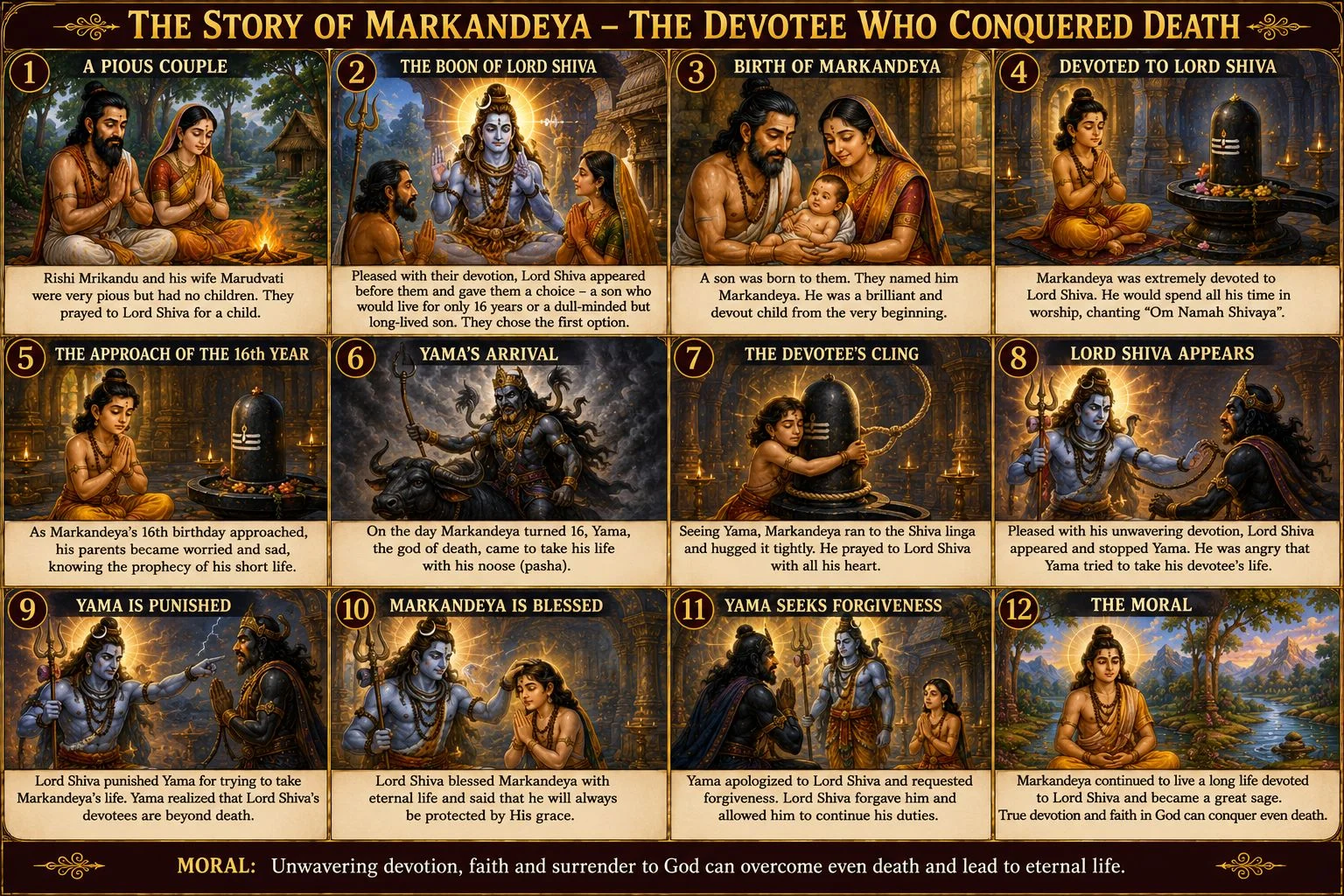
Markandeya - devotion that conquered death
Sage Mrikandu prayed long for a son. Shiva offered him a choice: a foolish son who would live long, or a brilliant son who would die at sixteen. He chose the second. Markandeya grew up wise and devoted. On his sixteenth birthday, as Yama came for him, the boy clung to the Shiva lingam. Yama threw his noose - it fell on the lingam itself. Shiva burst forth, kicked Yama away, and granted Markandeya eternal youth at sixteen.
Read story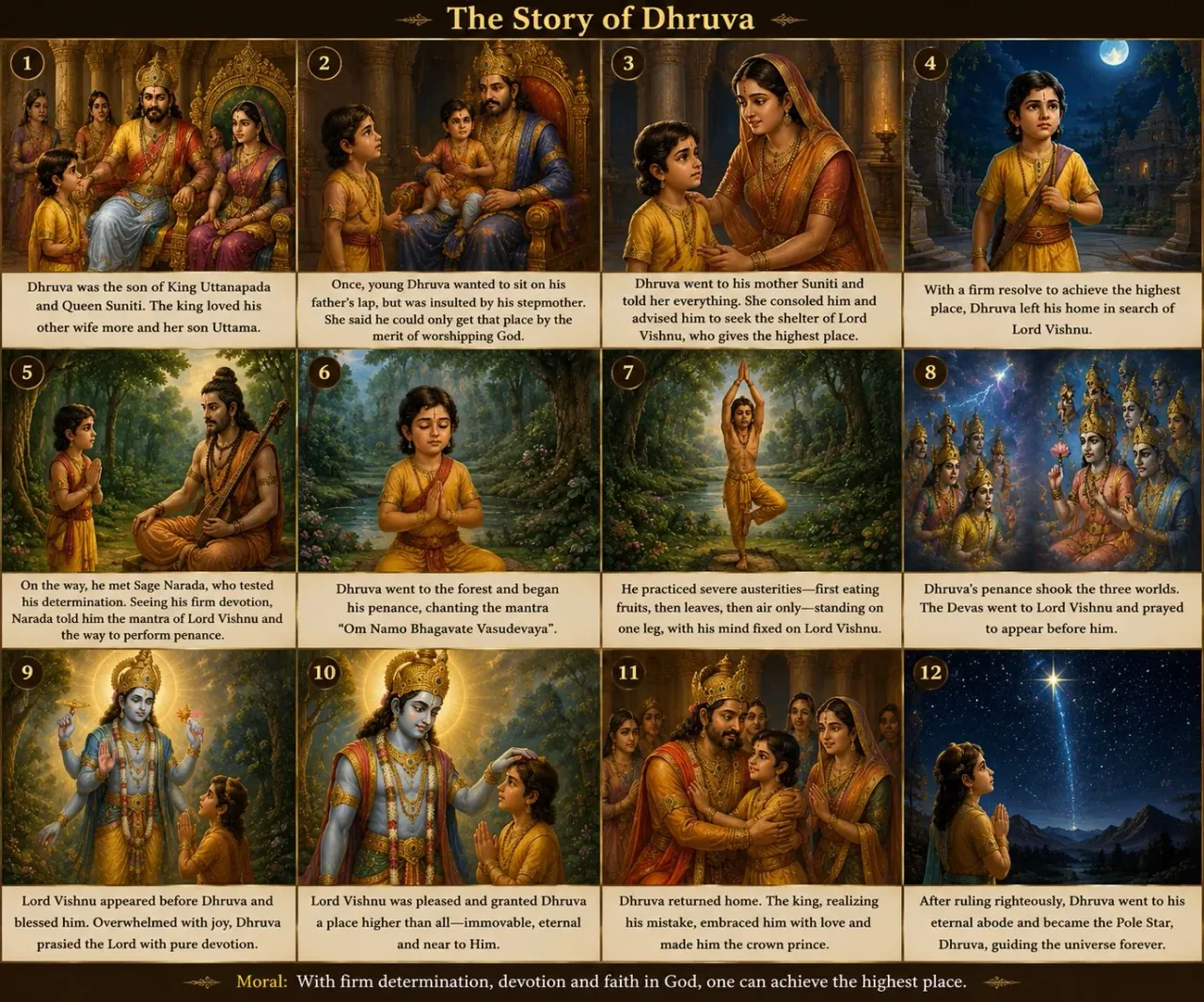 5 min
5 minVishnu Purana / Bhagavata Purana
Dhruva's tapasya - the boy who became the pole star
Dhruva, a child prince, was pushed off his father's lap by his stepmother. He asked his mother where he could find a lap that no one could take from him. She said - only the Lord's. The five-year-old walked into the forest, met Sage Narada, learned the mantra Om Namo Bhagavate Vasudevaya, and meditated standing on one leg. Vishnu appeared, blessed him, and fixed him eternally as the unmoving North Star.
Read story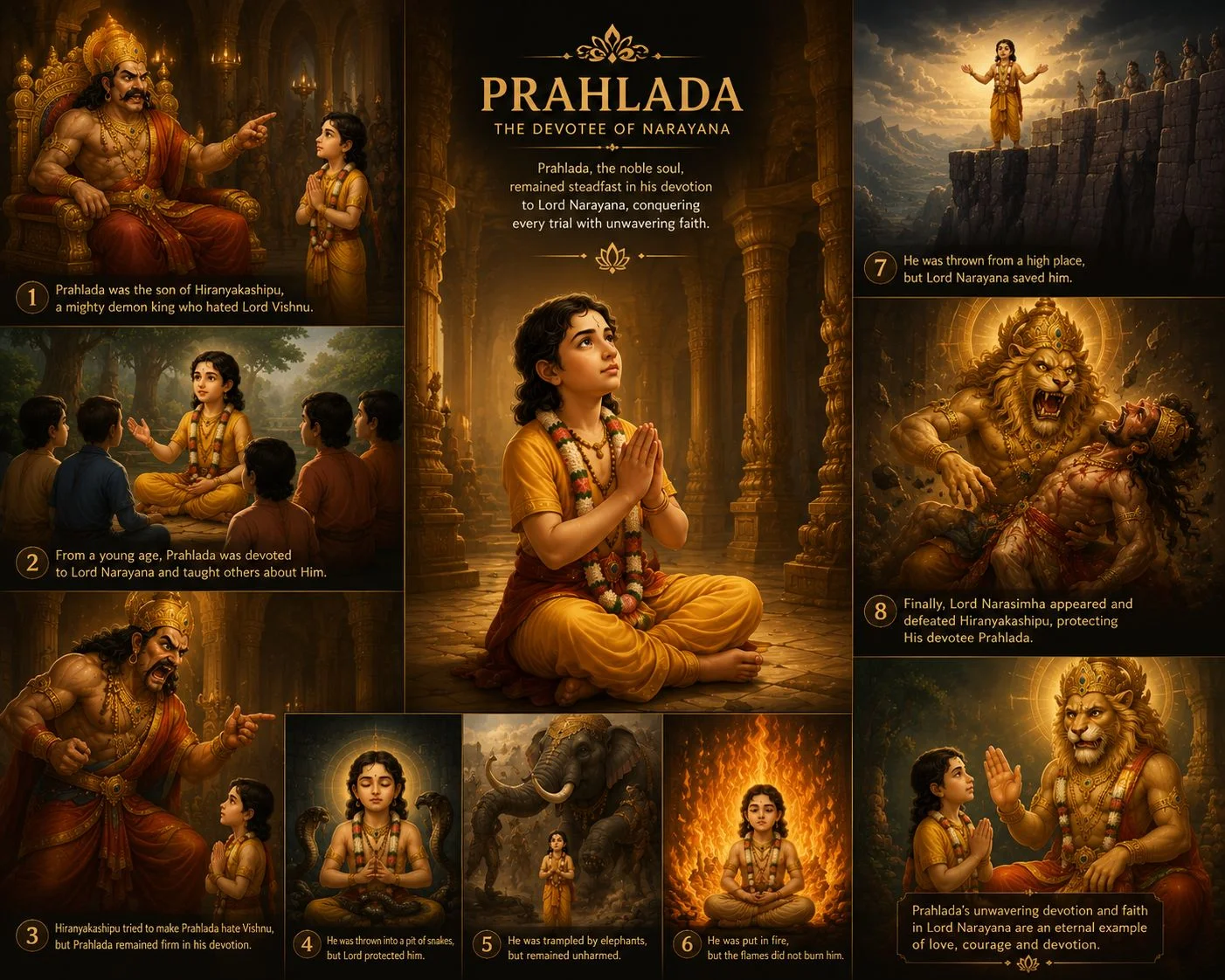 7 min
7 minBhagavata Purana / Vishnu Purana
Prahlada - the unshakeable name
Hiranyakashipu, the demon king, won a boon: no man or beast, by day or night, indoors or outdoors, on earth or in sky, by weapon or by hand, could kill him. He declared himself God. His own son Prahlada chanted Vishnu's name. The king tried elephants, snakes, fire, poison, a fall from a cliff - Prahlada survived each. Furious, the king demanded: 'Where is your Vishnu? In this pillar?' He struck the pillar. Narasimha - half-man, half-lion - burst forth at twilight on the threshold and tore the king apart on his lap, fulfilling every clause of the boon.
Read story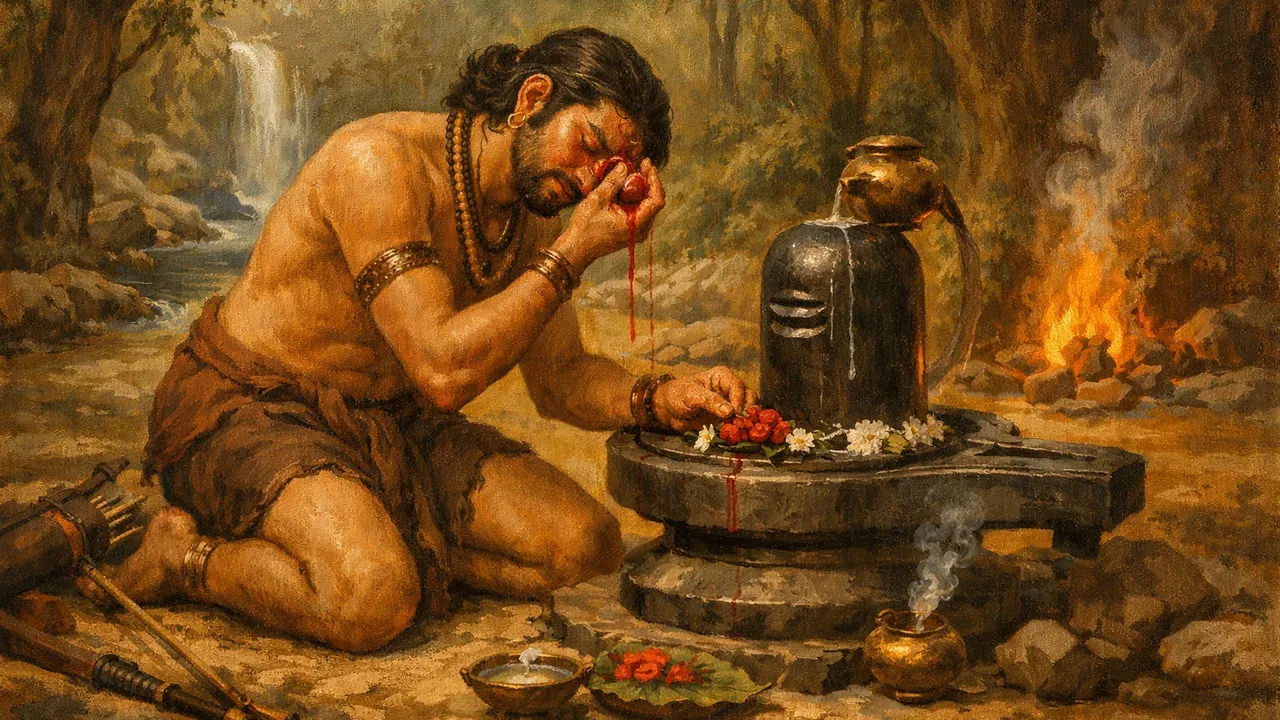 6 min
6 minPeriya Puranam (Saiva tradition)
Bhakta Kannappa - the hunter who offered his eyes
Thinnan, a tribal hunter in the Kalahasti forest, fell in love with a forest Shiva lingam. He offered the lingam roasted meat (it was the only thing he had), bathed it with water carried in his mouth, garlanded it with wildflowers. The orthodox priest who served the same shrine was scandalised. One morning the lingam's eye started to bleed. Thinnan plucked out his own eye and pressed it onto the lingam - the bleeding stopped. Then the second eye began to bleed. Thinnan placed his foot on the lingam to mark the spot, and was about to remove his second eye when Shiva caught his hand and called him 'Kannappa' - the one who gave his eyes.
Read story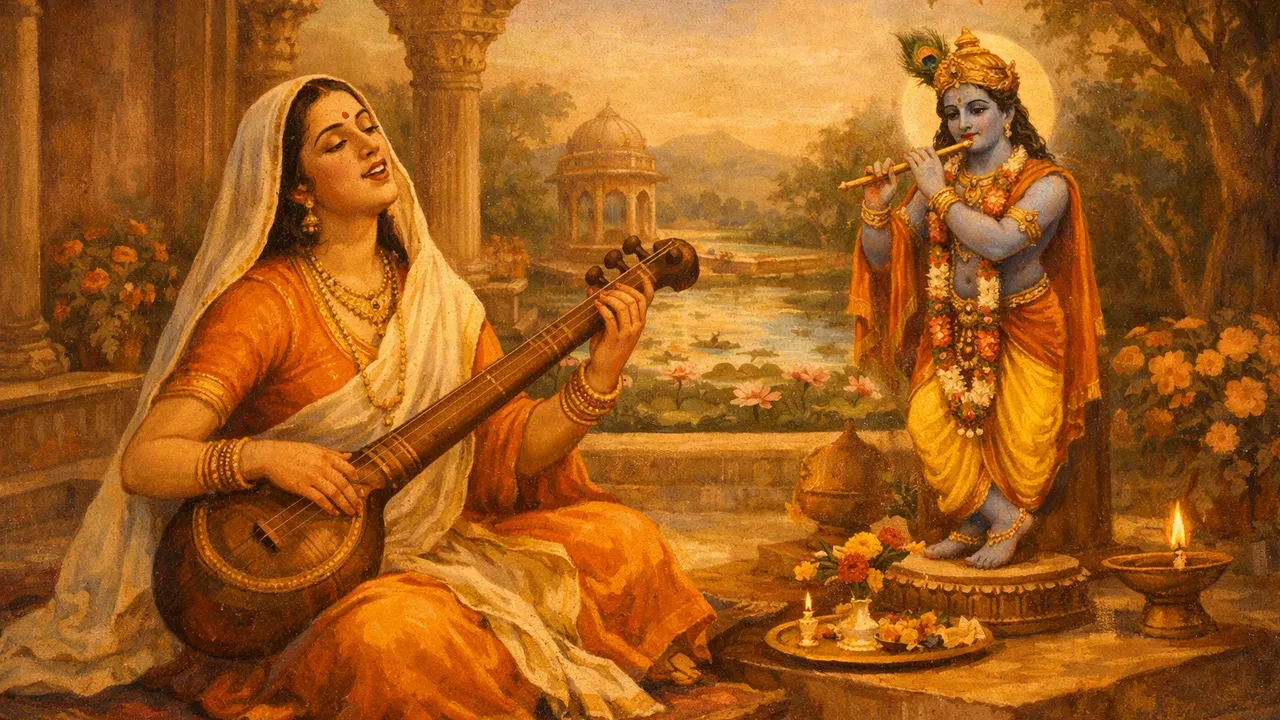 7 min
7 minBhakti movement / Meera bhajans
Meera Bai - the queen who left a palace for Krishna
Meera was given a small Krishna idol as a child. She decided she was already married to Him. When her royal in-laws married her to a Rajput prince and the prince died young, the family demanded she perform sati. She refused. They sent poison disguised as charanamrita; she drank it and was unharmed. They sent a basket with a snake; it became a garland of flowers. She walked out of the palace, joined wandering sadhus, sang her bhajans across northern India, and dissolved at last into the Krishna murti at Dwarka.
Read story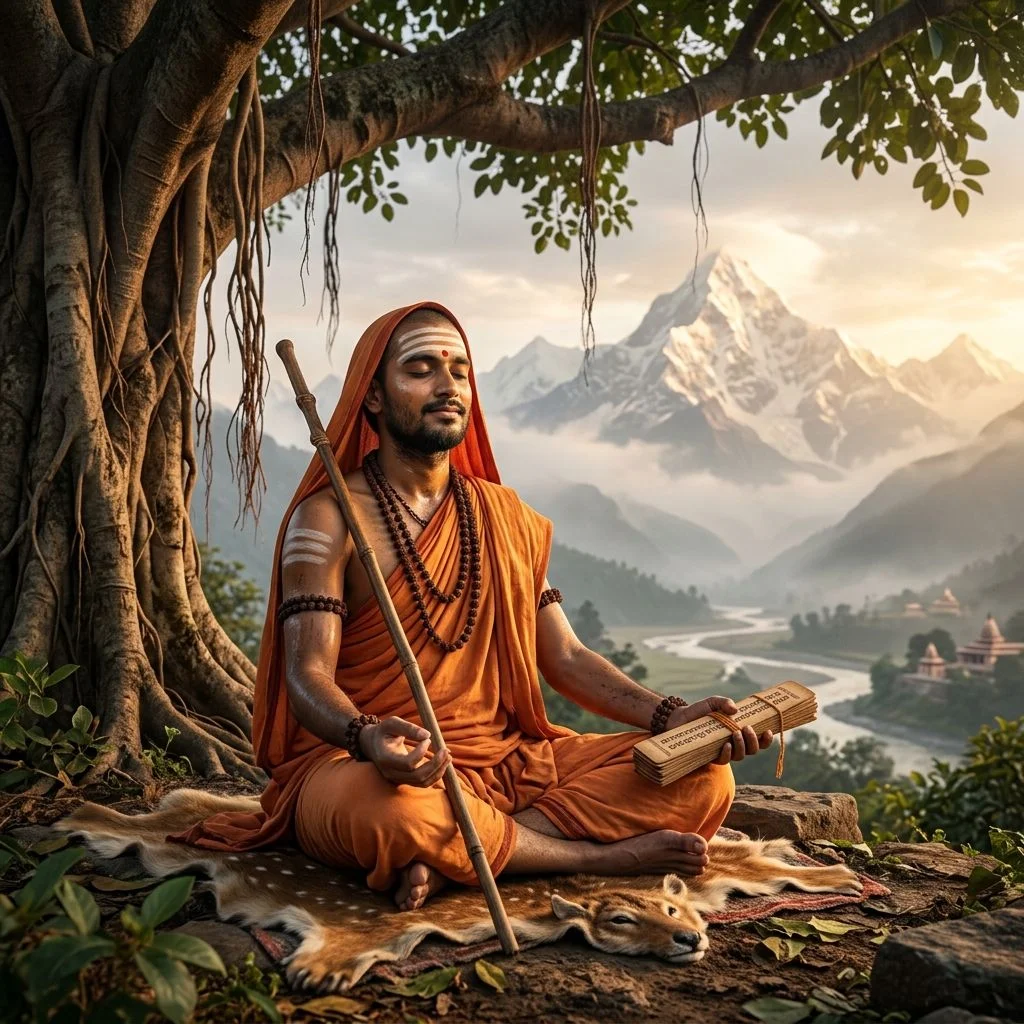 8 min
8 minMadhaviya Shankaravijaya / Anantanandagiri
Adi Shankaracharya - sixteen years to walk the four corners
Adi Shankara was born in Kaladi, Kerala. He took sannyasa at eight. He walked from the southern tip of India to Badrinath in the north, established four mathas at the four corners (Sringeri, Puri, Dwarka, Joshimath), composed commentaries on the prasthanatrayi (Brahma Sutras, Upanishads, Bhagavad Gita), composed hymns to every major deity including Bhaja Govindam and Soundarya Lahari, debated and converted the great Mandana Mishra, and dissolved into Kedarnath at the age of thirty-two. The Advaita Vedanta lineage today still flows from these four seats.
Read story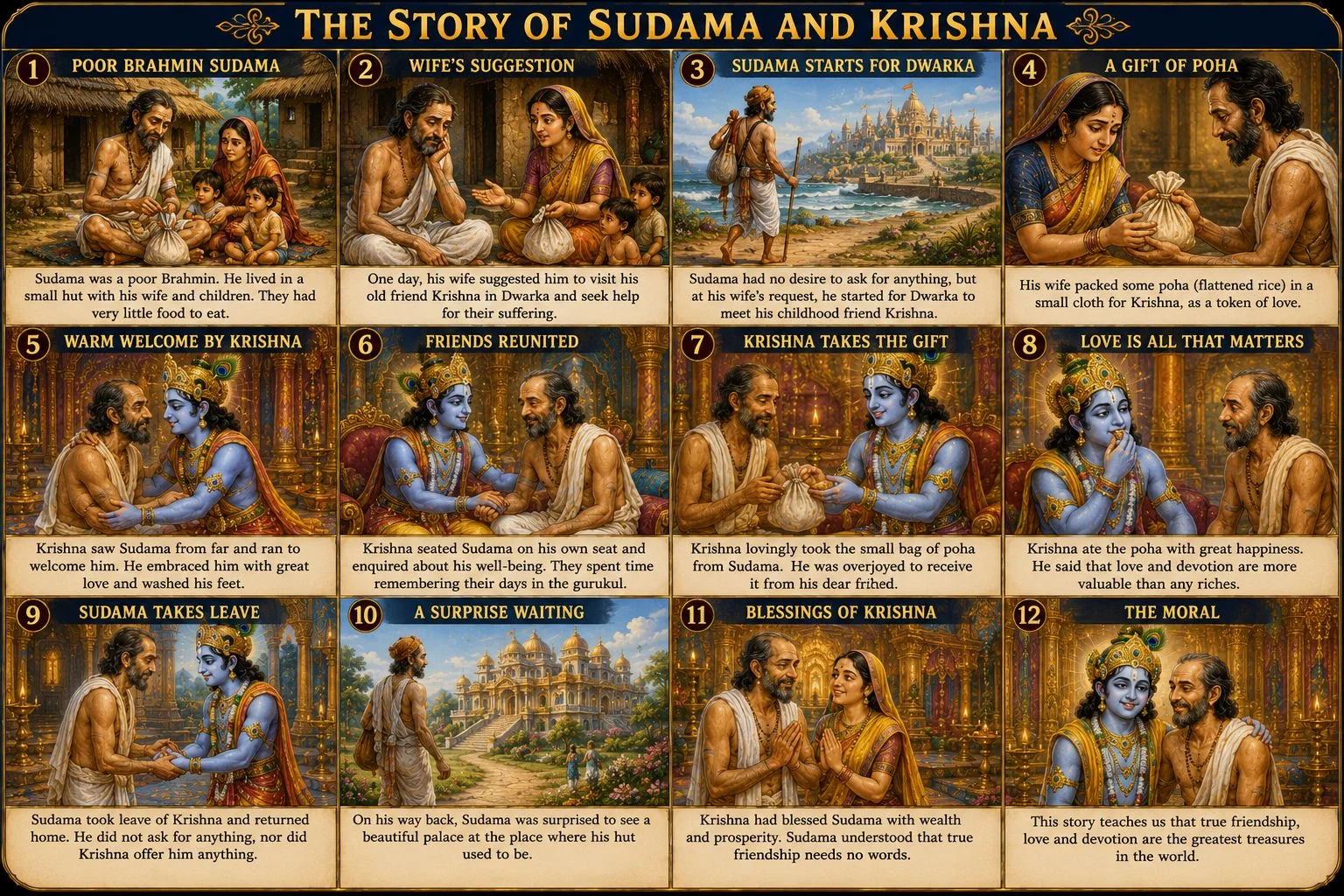 6 min
6 minBhagavata Purana, Skandha 10
Sudama - three handfuls of beaten rice
Sudama and Krishna had studied together under Sage Sandipani. Years later Sudama lived in deep poverty while Krishna ruled Dwarka. His wife begged him to visit his old friend. Sudama agreed but felt ashamed to arrive empty-handed; he brought a knotted handful of beaten rice (poha) wrapped in a torn cloth. At the gates of Dwarka, Krishna embraced him, washed his feet, seated him on his own throne. Krishna ate two fistfuls of the poha; the third Rukmini stopped, because each handful had already granted Sudama wealth beyond what any boon could quantify. Sudama returned home to find his hut transformed into a palace, his children fed, his wife shining.
Read story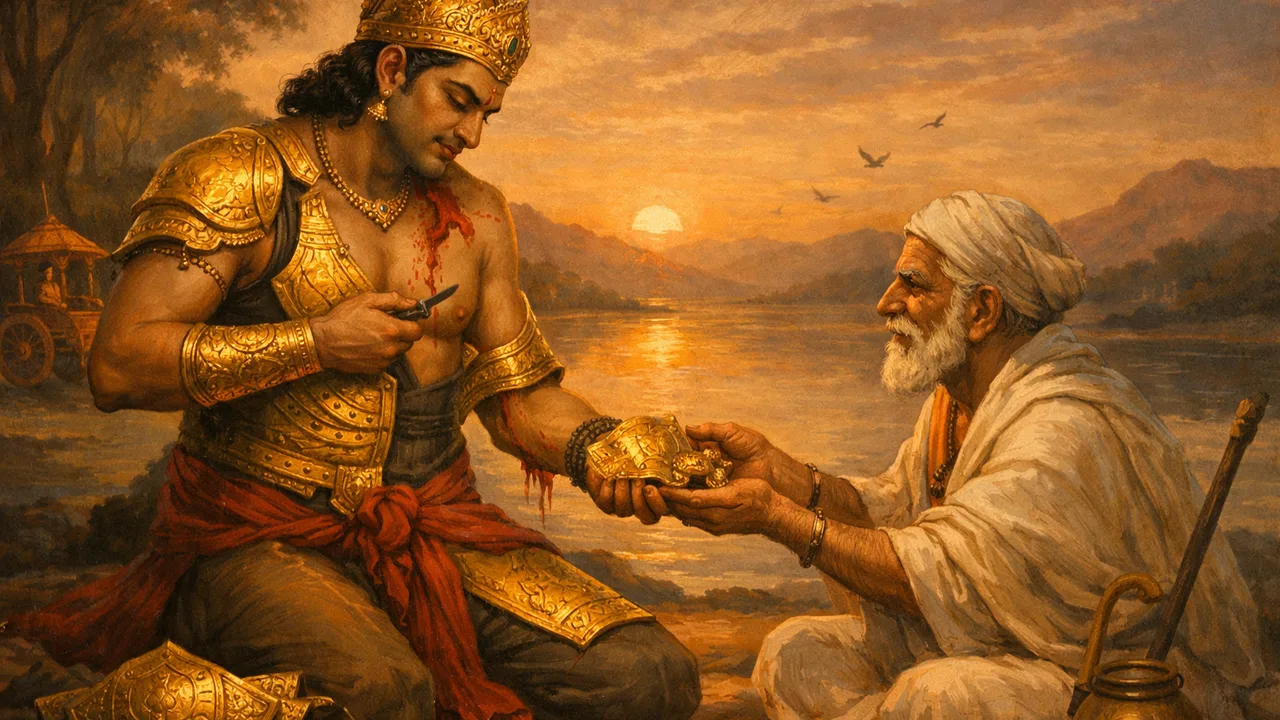 7 min
7 minMahabharata, Vana Parva + Karna Parva
Karna - the warrior who could not refuse a request
Karna had been born with golden armour fused to his skin and a pair of golden earrings - the gifts of Surya, his father. While the armour stayed on, no weapon could harm him. Indra, father of Arjuna, knew this. Disguised as a poor brahmin he came to Karna at his daily noon vow, when Karna had sworn never to refuse a request from a brahmin. 'Give me the armour and the earrings,' Indra said. Karna recognised him at once and recognised the trap. He smiled. He cut the armour from his own body and the earrings from his ears and laid them in the brahmin's hands. Indra, ashamed of the disguise, gifted Karna a one-use celestial weapon in return. Karna walked away bleeding but had not broken a vow.
Read story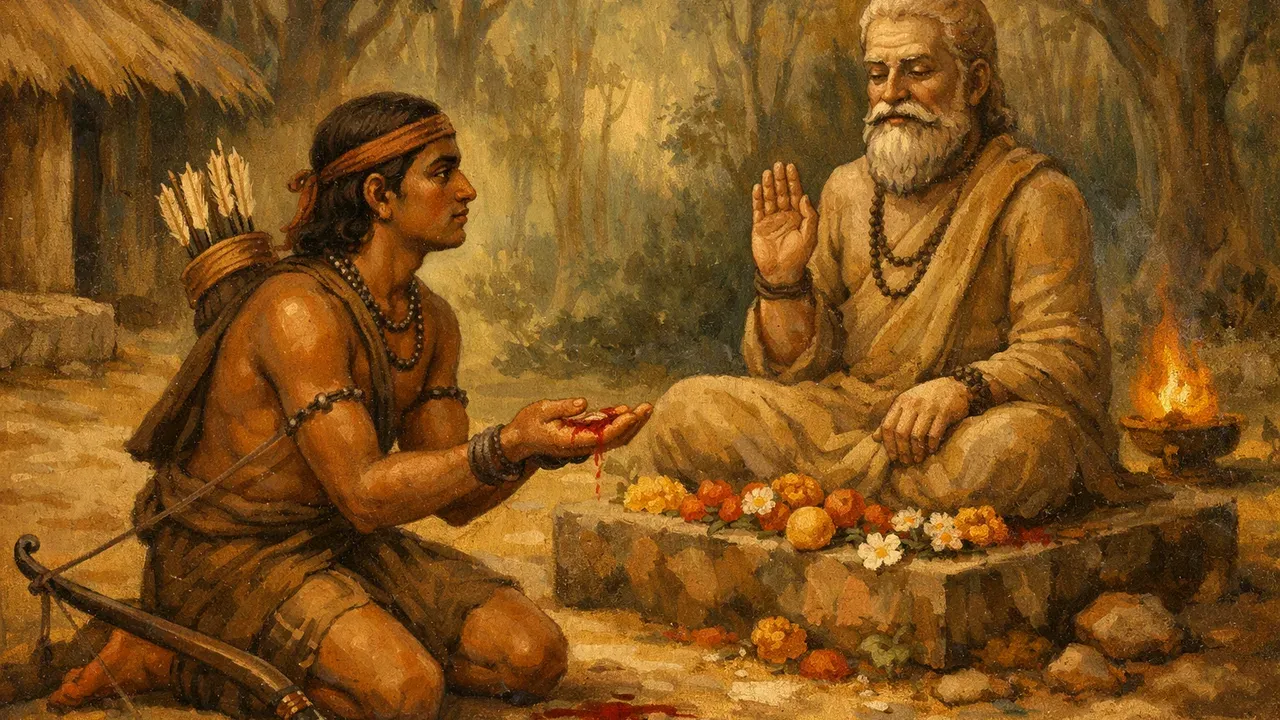 6 min
6 minMahabharata, Adi Parva
Ekalavya - the disciple whose teacher would not teach him
Ekalavya was the son of a Nishada forest chief. He came to Dronacharya and asked to be taught archery. Drona refused - his vow was to teach only the royal Kuru princes. Ekalavya bowed, returned to the forest, sculpted a clay statue of Drona, and practised before it for years. One day the Kuru princes were hunting and saw a barking dog suddenly silenced - its mouth jammed full of arrows fired from too far away to even see the archer. They tracked the shots to Ekalavya. Confronted by Drona, Ekalavya said 'You are my teacher.' Drona, fearing this forest boy would outshine Arjuna, asked for guru-dakshina: the thumb of Ekalavya's right hand. Without hesitation Ekalavya cut off the thumb and laid it at Drona's feet.
Read story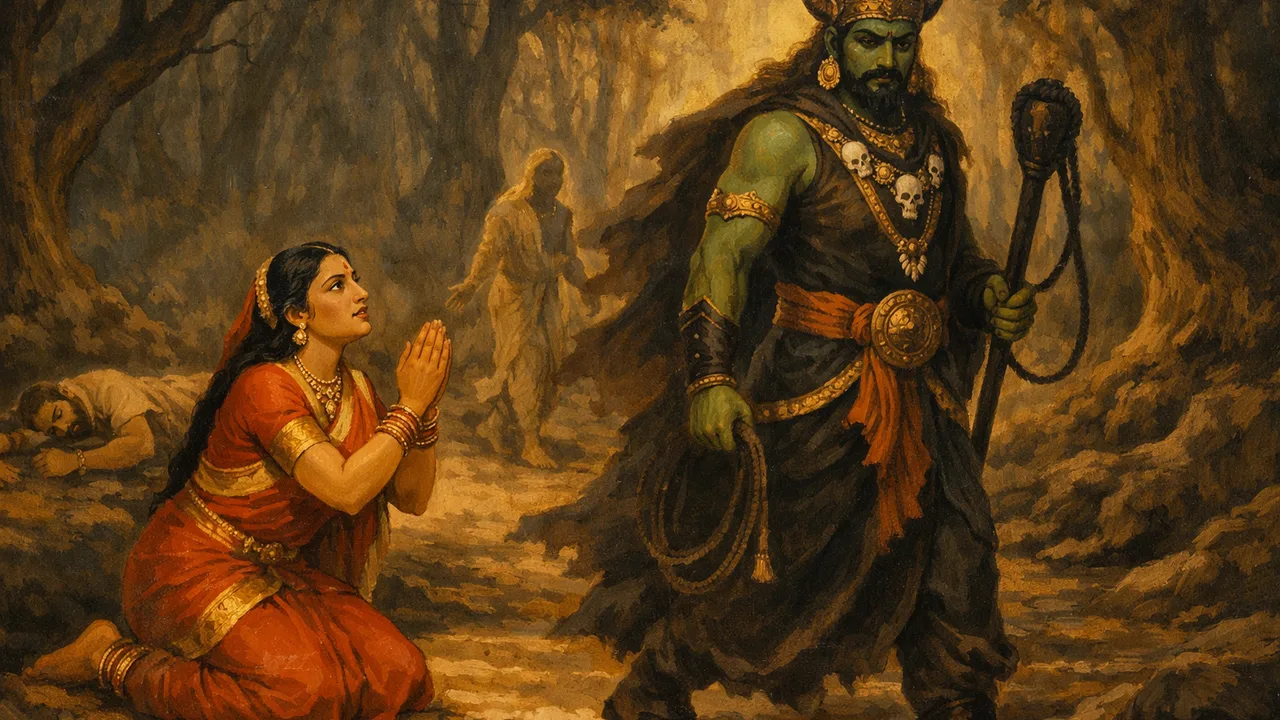 7 min
7 minMahabharata, Vana Parva (Savitri Upakhyana)
Savitri - the wife who argued with Yama
Princess Savitri chose Satyavan as her husband knowing Narada's warning: Satyavan would die exactly one year from the wedding. On the appointed day she went with him into the forest. When he laid his head in her lap and his breath stopped, Yama himself arrived to take his soul. Savitri stood up and walked behind Yama. Yama, surprised, offered her three boons (anything except Satyavan's life) to send her back. She asked for her blind father-in-law's eyesight; granted. She asked for her own father's lost kingdom; granted. She asked for a hundred sons - and Yama granted that too. Then Savitri said: 'How can I have sons without my husband?' Yama, defeated by his own boon, returned Satyavan's soul.
Read story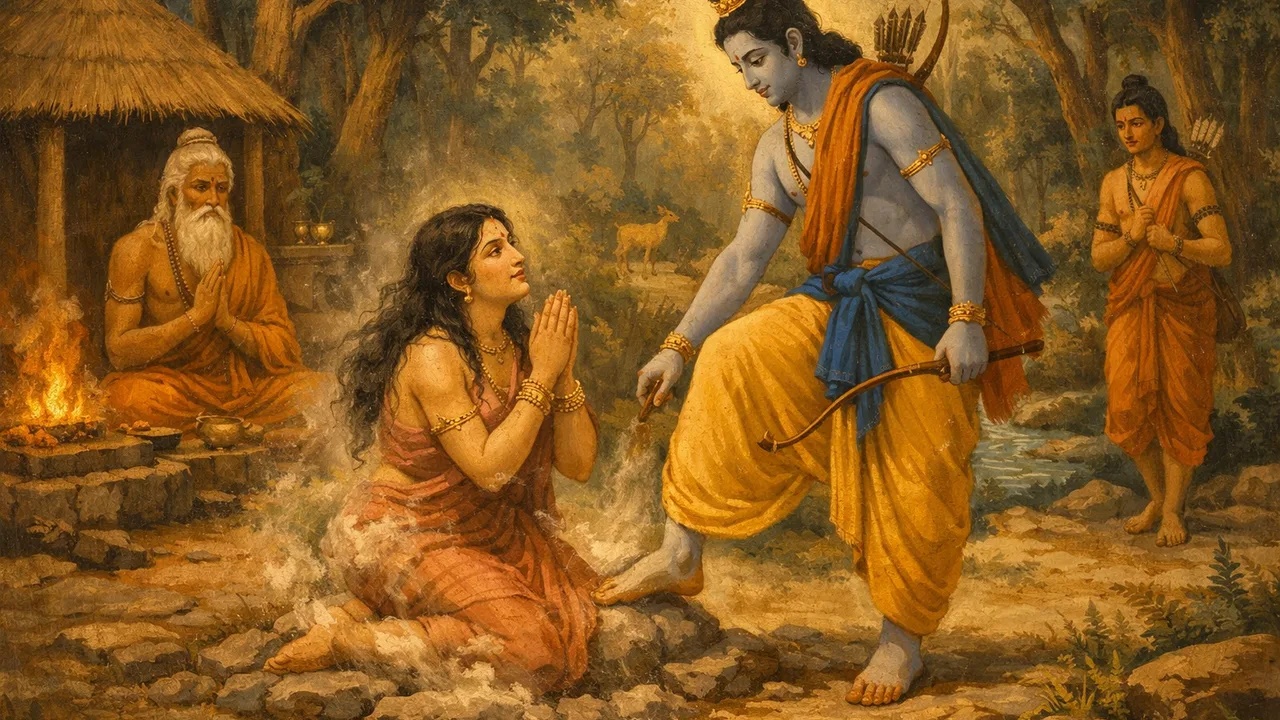 5 min
5 minValmiki Ramayana, Bala Kanda + later Puranic retellings
Ahalya - the stone that became a woman again
Ahalya, wife of Sage Gautama, was deceived by Indra who came to her in her husband's form. When Gautama discovered the trick he cursed Indra and cursed Ahalya to lie still as a stone in the ashram, invisible, until the day Rama would pass through and the dust of his feet would touch her. Years passed. Vishvamitra led the boy Rama and Lakshmana through the abandoned ashram. Rama stepped onto the stone. Ahalya rose, no longer ashamed, restored. Gautama returned and accepted her without a word.
Read story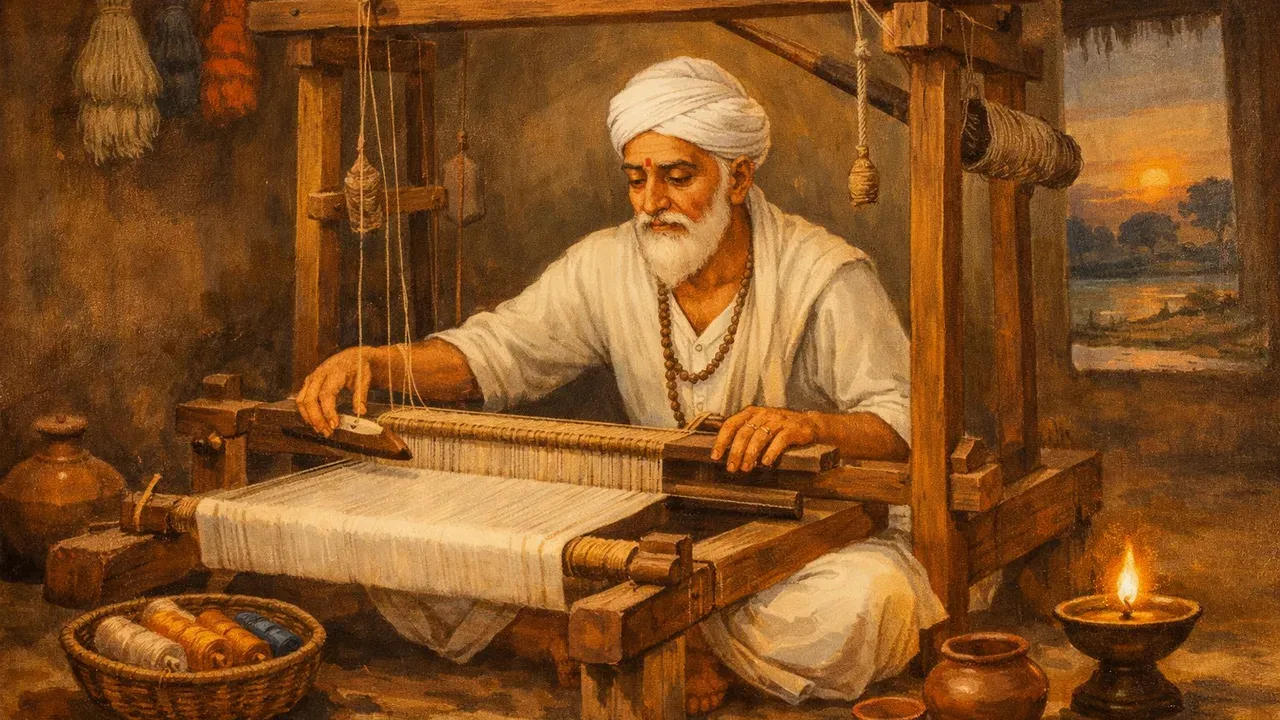 6 min
6 minKabir Bijak / Kabir Granthavali / Adi Granth
Kabir - the weaver who refused both temple and mosque
Kabir was born in Varanasi, raised in a Muslim weaver's family, and went to Ramananda for diksha. He took the name of Rama, but rejected both temple ritualism and namaz formality. He sat at his loom and composed dohas: blunt, funny, devastating two-line verses against caste, pilgrimage commerce, idol-shop priests, and self-important pandits. When he died at Maghar, his Hindu and Muslim disciples both came to claim the body - the Hindus to burn it, the Muslims to bury it. They lifted the shroud and found only flowers. Each tradition took half the flowers home and built their own samadhis. Both still stand in Maghar today.
Read story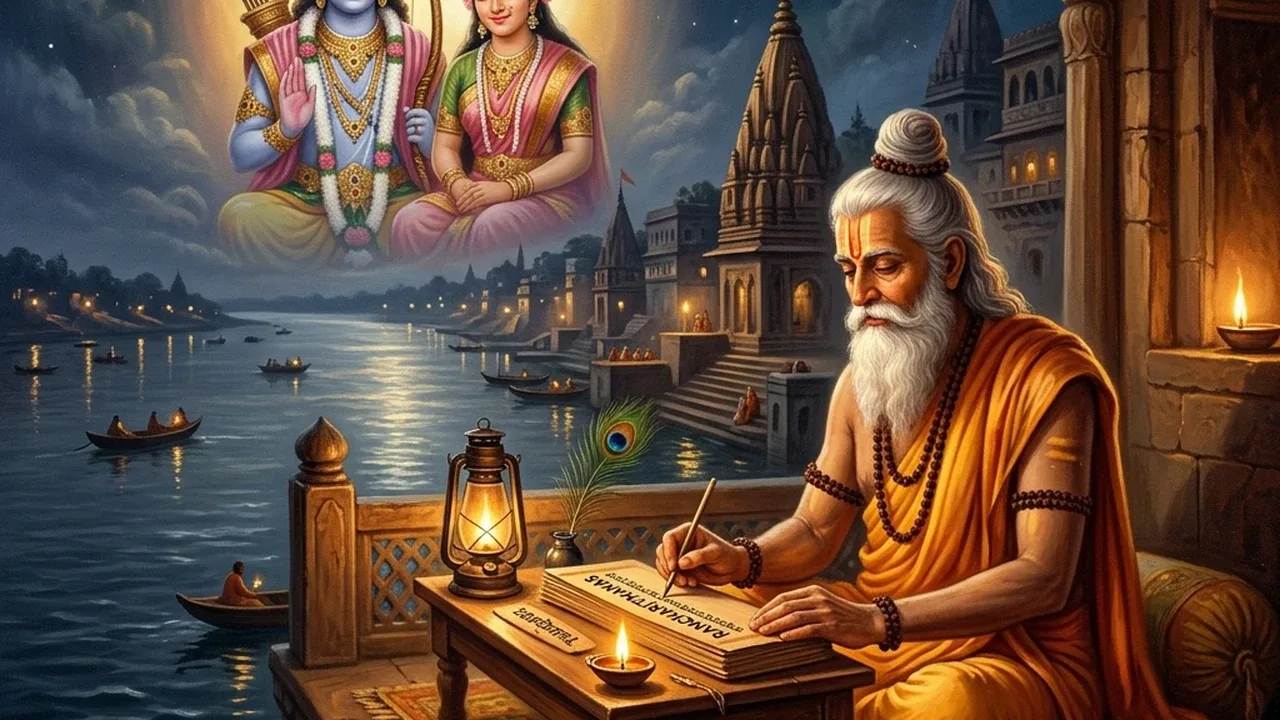 7 min
7 minGoswami Tulsidas - biographical tradition + Ramcharitmanas colophon
Tulsidas - the householder who walked away to write Ramcharitmanas
Tulsidas loved his wife Ratnavali so completely that one stormy night, when she was visiting her parents' home, he swam a flooded river and climbed her window using what he thought was a rope (it was a snake). Ratnavali turned in disgust and said: 'If you had even half this love for Rama, you would already be liberated.' The line struck home. Tulsidas left that night. He walked to Ayodhya. He learned Sanskrit. He spent his life composing the Ramcharitmanas - the Awadhi-language Ramayana that became the spoken bible of north India and from which the Hanuman Chalisa is also drawn. Ratnavali's sentence remained the silent dedication on every page.
Read story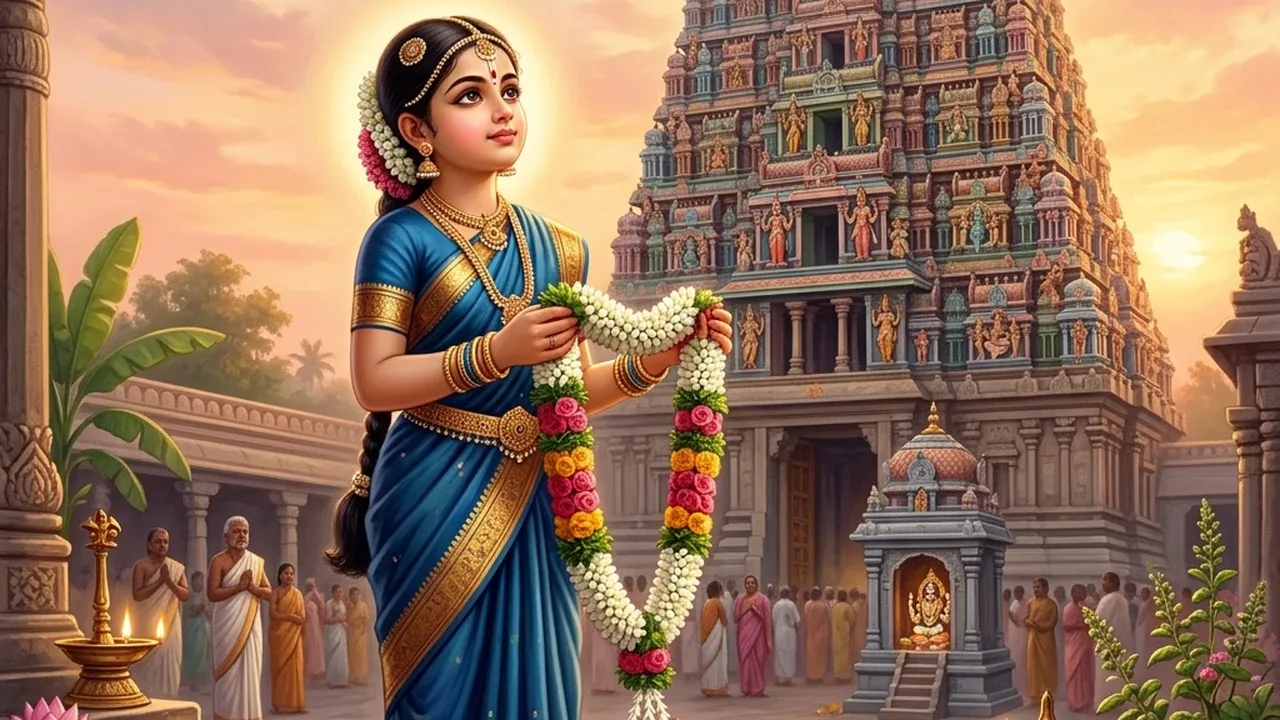 6 min
6 minTiruppavai + Nachiyar Tirumozhi / Sri Vaishnava tradition
Andal - the Tamil girl who married Vishnu
Periyalvar, a Vishnu-priest in Srivilliputtur (Tamil Nadu), found a baby girl under a tulsi plant in his temple garden. He raised her as his own. As a child she would secretly wear the flower garland meant for Vishnu before placing it on the idol, just to see what it looked like on a beloved face. She composed the Tiruppavai - thirty verses sung daily across Tamil Vaishnavism through the month of Margali - and the longer Nachiyar Tirumozhi describing her marriage to the Lord. When she was sixteen, the priests of the Srirangam temple had a dream: Vishnu was asking for Andal to be brought. She walked into the inner sanctum at Srirangam and dissolved into the idol of Ranganatha. The Tiruppavai is still chanted at dawn through December–January in every Sri Vaishnava household.
Read story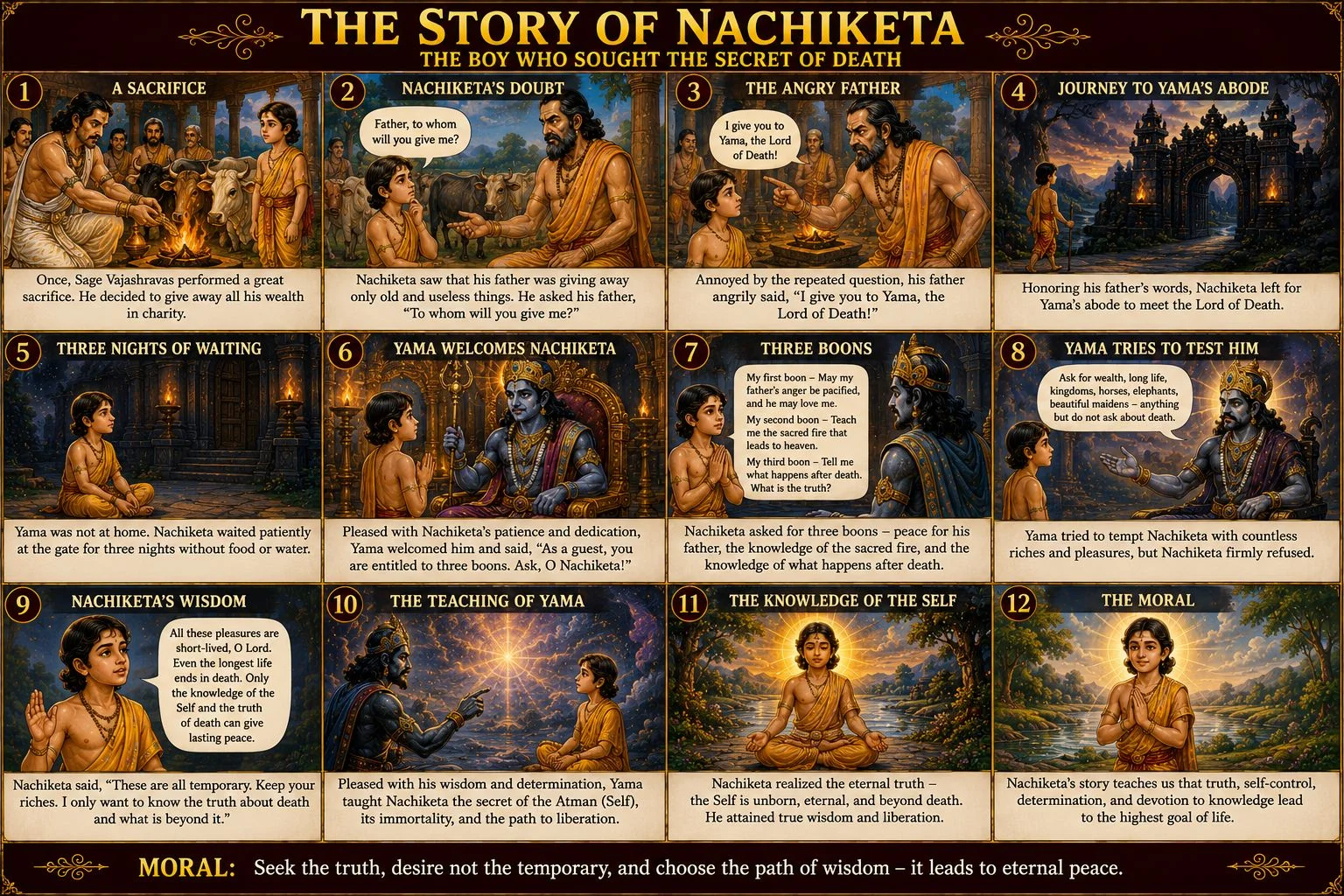 7 min
7 minKatha Upanishad
Nachiketa - the boy who questioned death itself
During a sacrifice, young Nachiketa watched his father Vajashravas give away only his old, barren cows - a hollow offering. The boy asked, 'Father, to whom will you give me?' Pestered, his father snapped: 'To Death I give you!' Holding the word as a vow, Nachiketa walked to Yama's abode and waited three days at the door. To make amends for the broken hospitality, Yama granted three boons. With the first Nachiketa freed his father's anger; with the second he learned the fire-altar of heaven. For the third he asked the one question Yama tried to refuse: what happens after death? Yama offered him sons, wealth, kingdoms, celestial women, long life - anything to change the subject. Nachiketa refused them all: 'These wear out the senses of even the longest-lived. Keep your horses and dances. Teach me That.' Won over, Yama revealed the knowledge of the Atman - the Self that is never born and never dies, smaller than the small and greater than the great.
Read story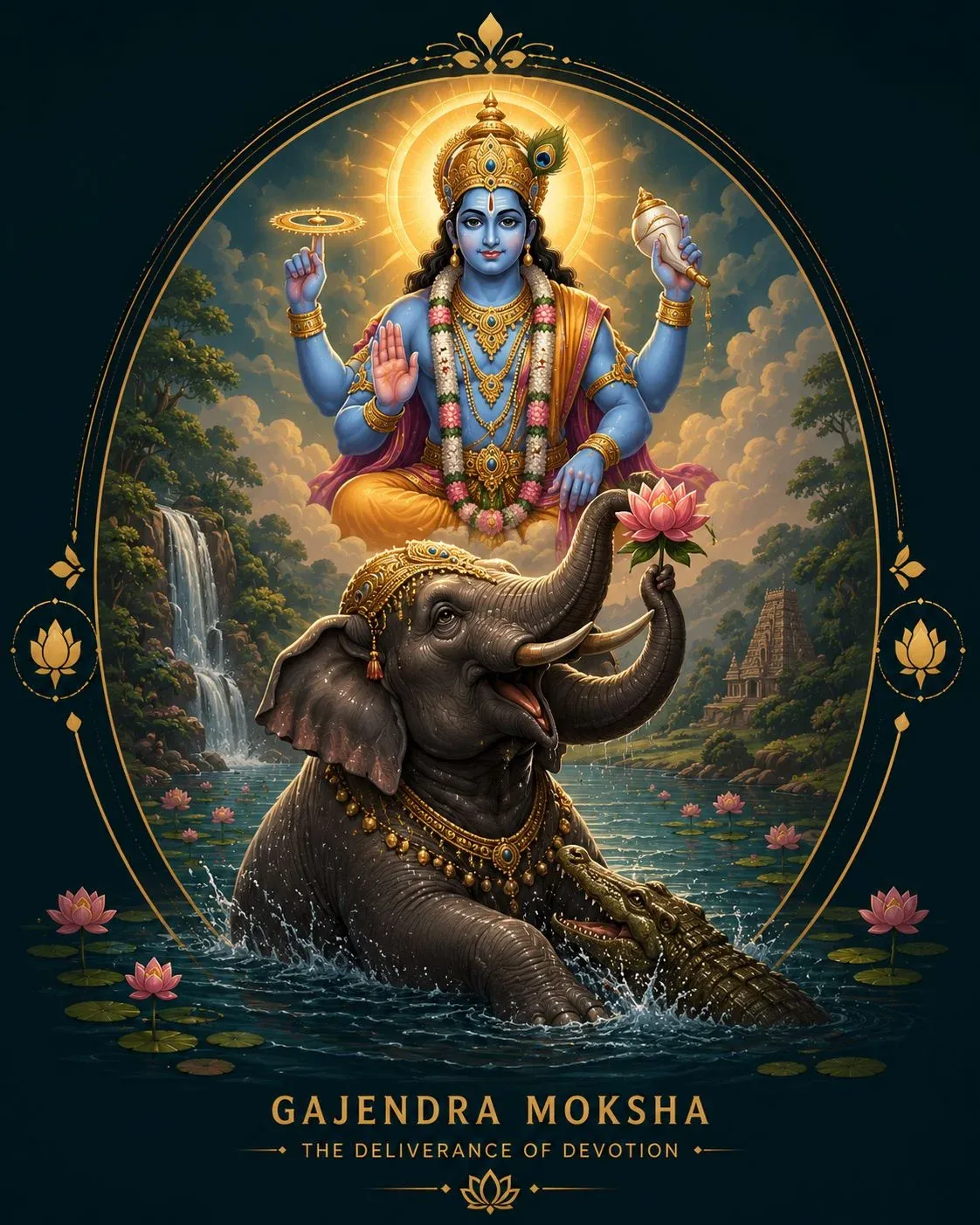 6 min
6 minBhagavata Purana, Canto 8
Gajendra Moksha - the elephant who called out
Gajendra, lord of the elephants, entered a forest lake to drink and bathe in the heat. A powerful crocodile clamped its jaws on his leg and began to drag him under. Gajendra was strong - he pulled, trumpeted, and fought for what the Purana calls a thousand years. His herd watched, then drifted away, helpless. When his own strength was finally spent, the elephant lifted a lotus in his trunk and, abandoning all reliance on himself, cried out to the Supreme: not to any name he had been taught to chant for gain, but to the Protector of all who have nowhere left to turn. Vishnu came at once on Garuda, released His discus, and freed Gajendra - who was, the text reveals, a devotee bound to elephant-form by an old curse. He was liberated the instant he stopped trusting his own power.
Read story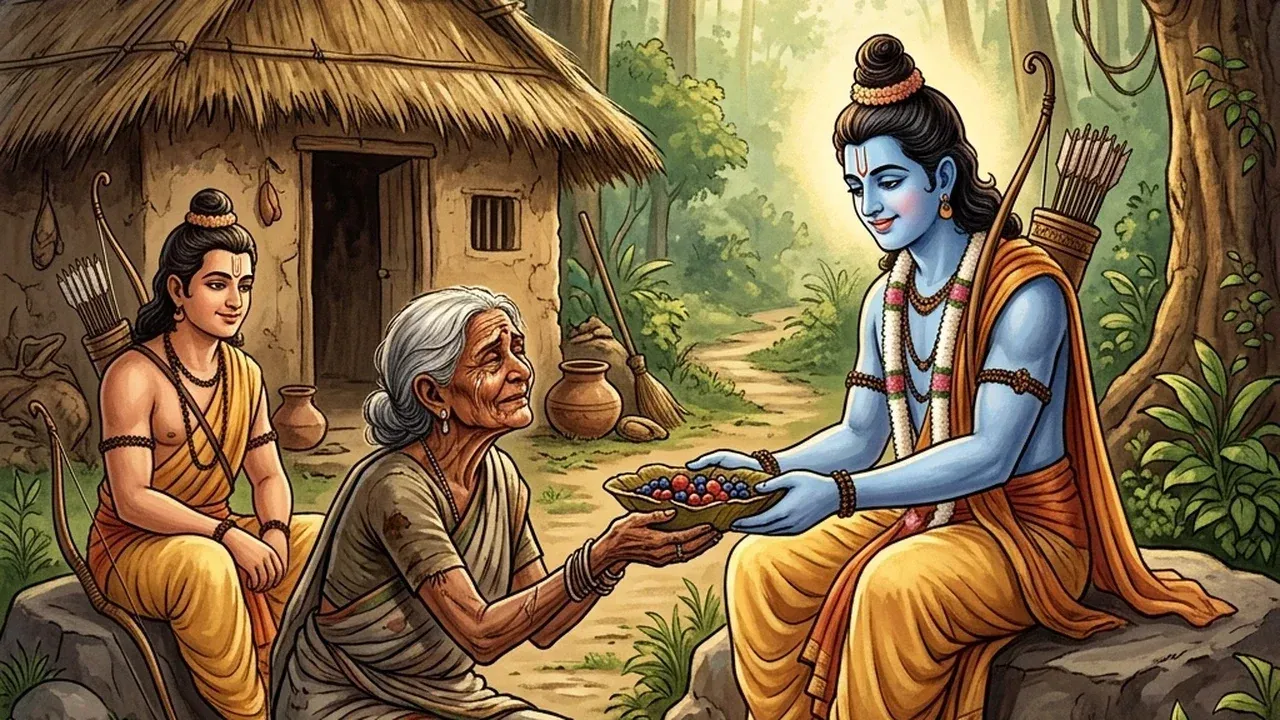 5 min
5 minRamayana, Aranya Kanda
Shabari - the berries tasted before offering
Shabari was a tribal woman, low-born by the reckoning of her age, who served the sages of Matanga's ashram with total devotion - sweeping the paths, laying out leaves, carrying water. Her guru, before leaving his body, told her that Rama would one day come to that very hermitage and that she should wait. She waited for years, decades, growing old. Each day she gathered fruit so it would be ready. When Rama and Lakshmana finally arrived, searching for Sita, Shabari offered him berries she had picked - and, fearing they might be sour, she had bitten each one first to be sure only the sweet ones reached him. By every rule of purity this made the food unofferable. Rama ate them gladly, tasting only the love behind them. He honoured her with the teaching of the nine forms of devotion before she left her body, fulfilled.
Read story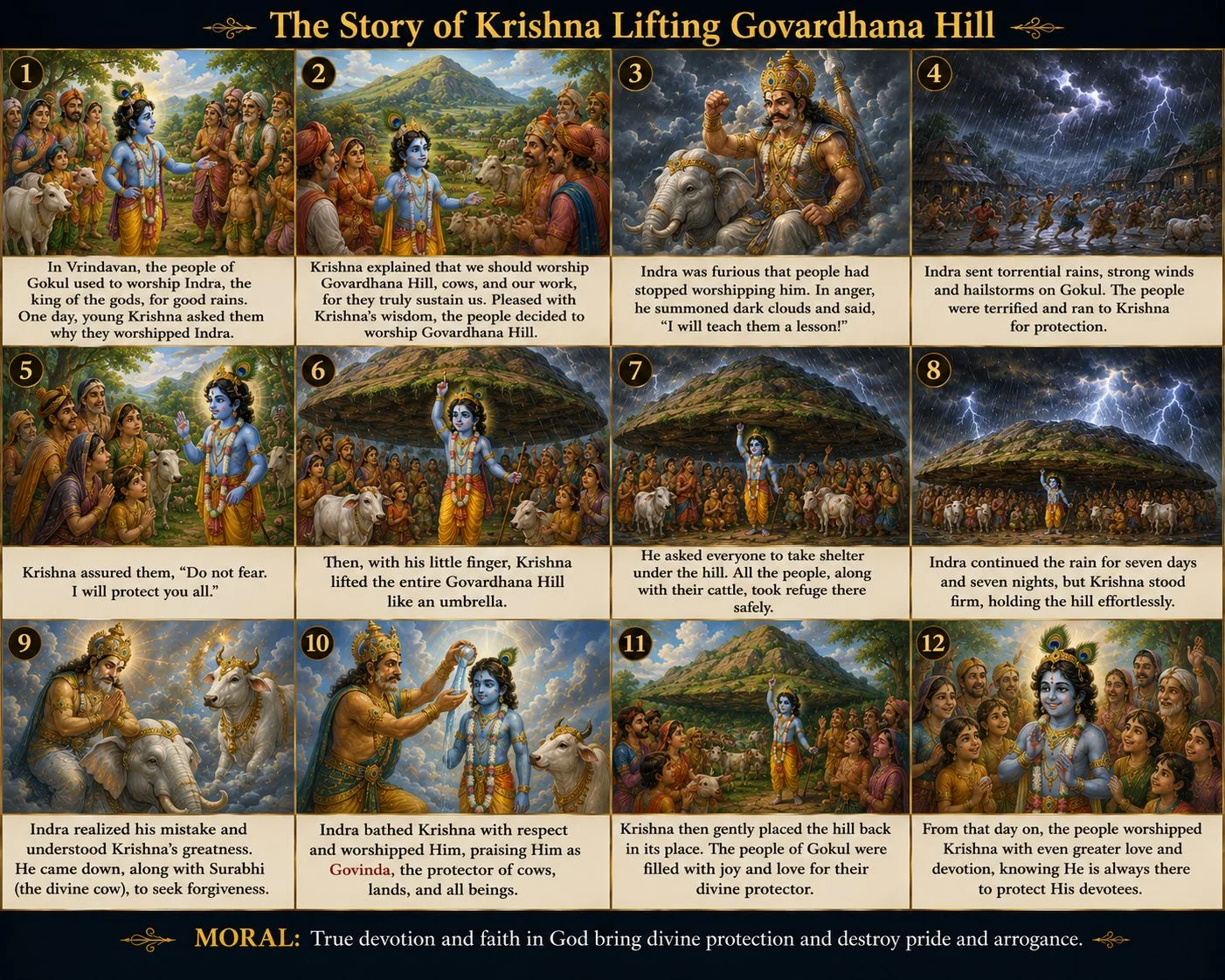 6 min
6 minBhagavata Purana, Canto 10
Govardhana - the hill lifted on a finger
Every year the cowherds of Vrindavan prepared a great offering to Indra, king of the rain. The young Krishna asked them to look at what actually sustained them: the Govardhana hill that fed their cows, and the cows themselves. Let them honour these, he said, and their own honest work - not a distant deity demanding tribute. The village agreed and worshipped the hill. Indra, enraged at the lost sacrifice, sent a deluge to drown Vraja. As the waters rose, Krishna lifted the entire Govardhana hill on the little finger of his left hand and held it up like an umbrella. The people, their cattle, and their whole world sheltered beneath it for seven days and nights while the storm spent itself. Indra, humbled, came down and bowed.
Read story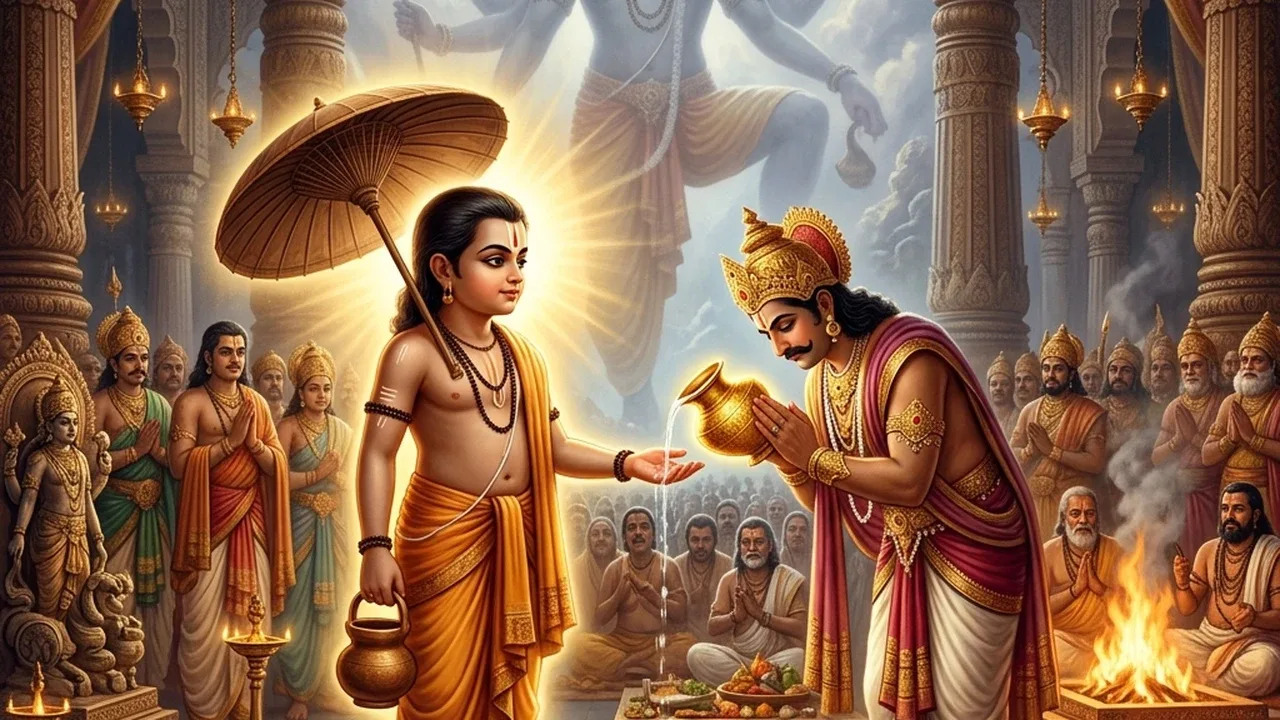 6 min
6 minBhagavata Purana, Canto 8
Vamana and Bali - three steps of land
King Mahabali, grandson of Prahlada, was a noble and generous ruler - so generous that his conquests and his fame began to unsettle the order of the worlds. Vishnu took birth as Vamana, a short brahmin boy, and came to Bali's sacrifice asking for a modest gift: three paces of land, measured by his own small feet. Bali's guru Shukracharya warned him this dwarf was the Lord in disguise and would take everything. But Bali had promised, and would not break his word. He poured the water of the vow. At once Vamana expanded into the cosmic Trivikrama: his first step covered the earth, his second the heavens, and for the third there was no space left. Bali, understanding, bowed his head and offered it as the place for the third step. Vishnu pressed him gently to the netherworld - not as punishment but as honour, granting him rulership there and promising to guard his door forever.
Read story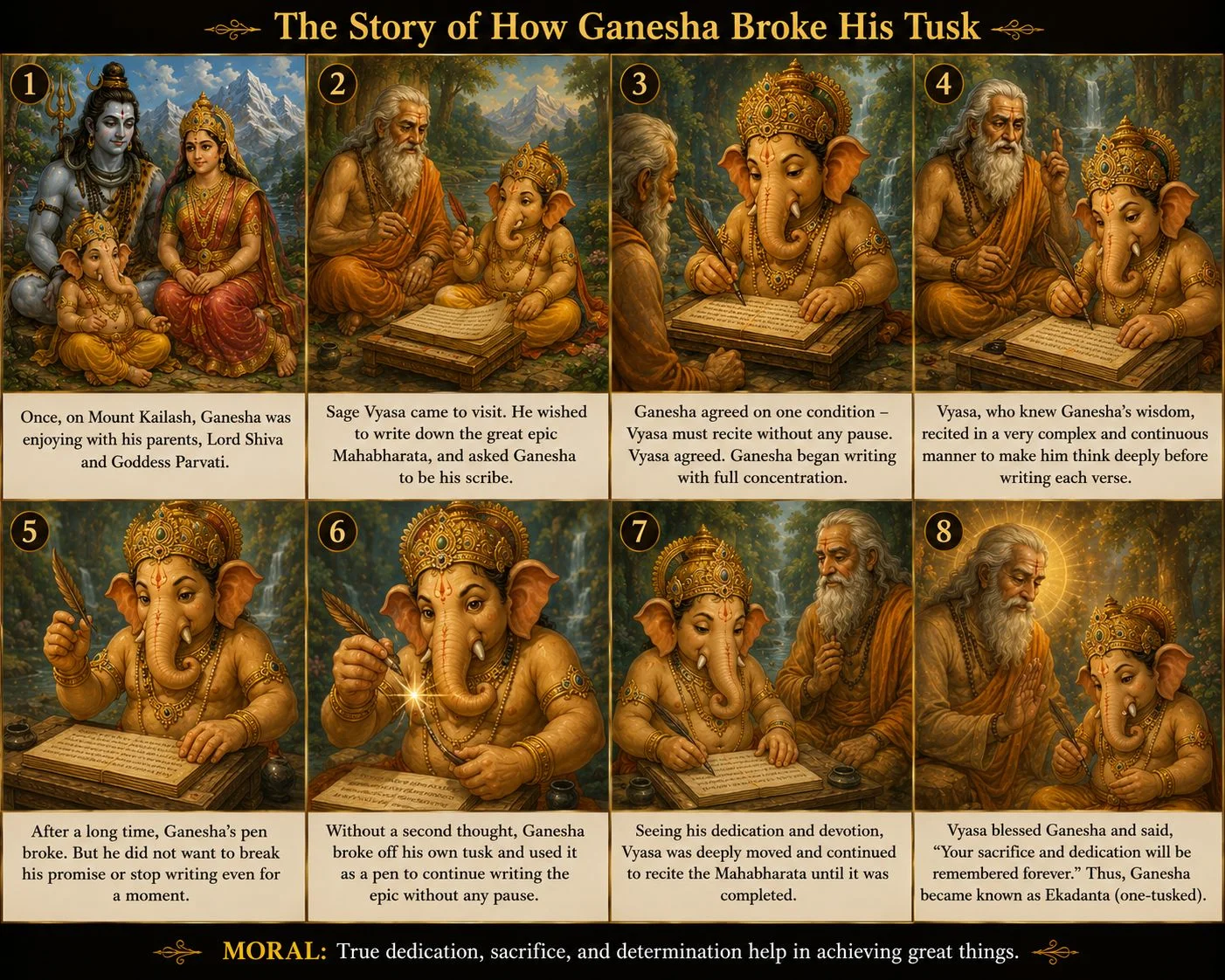 4 min
4 minShiva Purana / Ganesha lore
Ganesha's circle - the wisdom of the elephant-headed son
Shiva and Parvati set a contest for their two sons, Ganesha and Kartikeya: whoever circled the whole world three times first would win a special fruit of wisdom. Kartikeya leapt onto his peacock and shot off to race around the seas and mountains of the earth. Ganesha, round-bellied and riding only a mouse, knew he could never win that way. He thought for a moment, then walked a slow circle around Shiva and Parvati - three times - and folded his hands. 'My parents are my world,' he said. 'To circle them is to circle all of creation.' Shiva and Parvati gave him the fruit. It is why, in countless homes, Ganesha is invoked first before any undertaking - the god who solved the problem not with speed but with insight.
Read story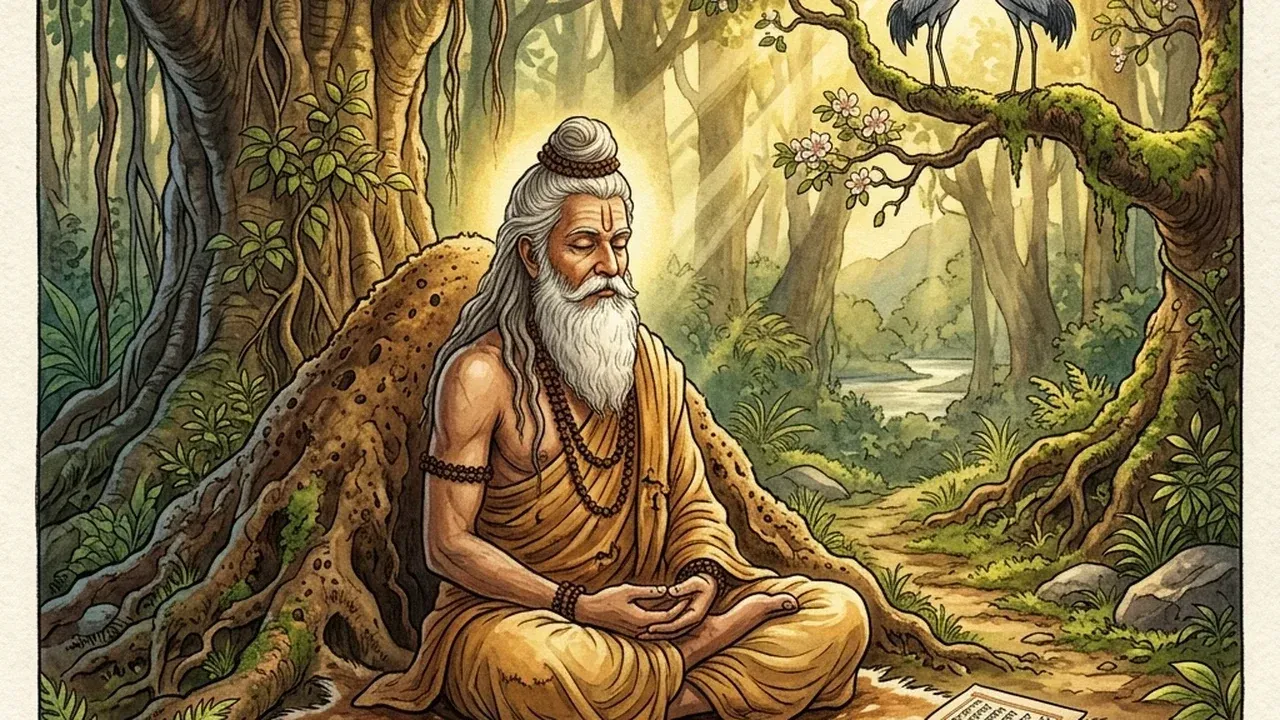 6 min
6 minRamayana tradition / Skanda Purana
Valmiki - the robber who became the first poet
Ratnakara lived by robbing travellers in the forest to feed his family. One day he tried to rob the sage Narada, who asked him a simple question: 'This sin you commit for your family - will they share its burden with you?' Ratnakara went home and asked. Each said the sin was his alone; they shared only what he brought, not how he got it. Shaken to the core, he returned to Narada, who gave him the name of Rama to repeat. So sunk was he that he could only say it backwards - 'mara, mara' - yet even reversed it carried him. He sat unmoving in meditation for so long that an anthill (valmika) grew over his body. When he emerged he was Valmiki, the Adi Kavi, the first poet - and seeing a hunter kill one of a pair of mating birds, his grief broke into the world's first metered shloka, the seed from which the entire Ramayana flowed.
Read story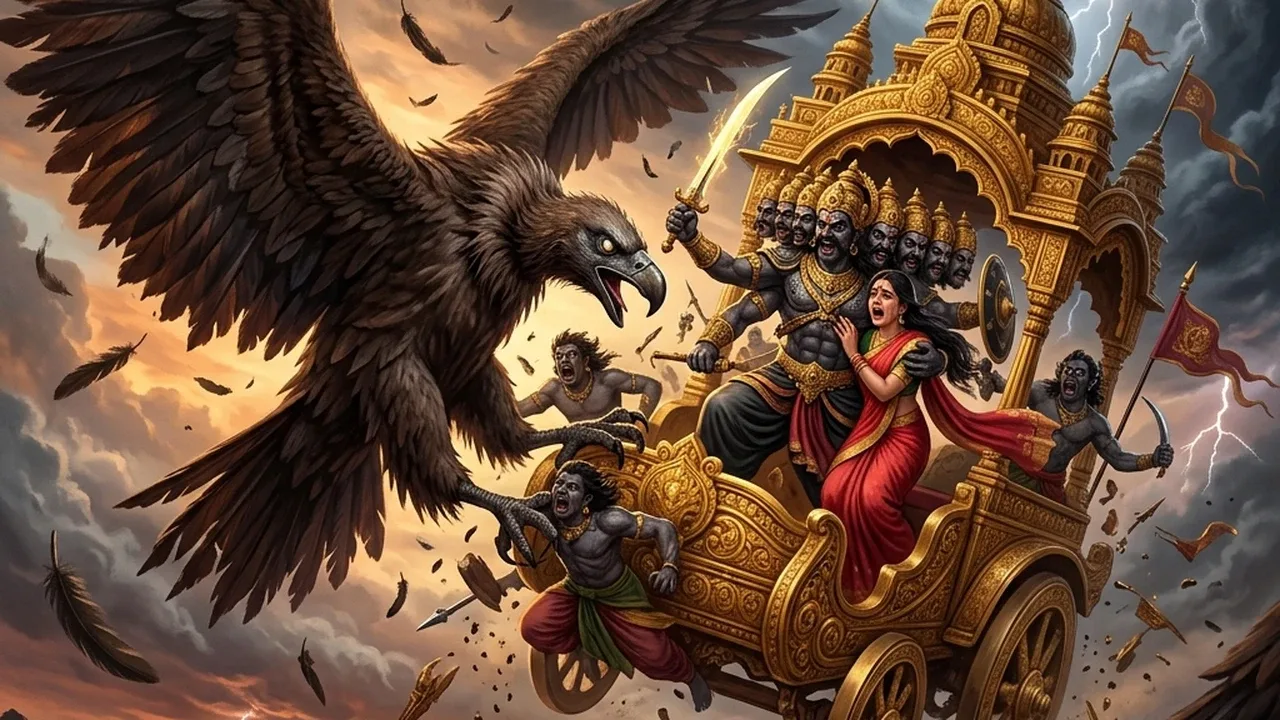 5 min
5 minRamayana, Aranya Kanda
Jatayu - the old vulture who fought for Sita
Jatayu was an ancient vulture, a friend of Dasharatha and so a kind of uncle to Rama. As Ravana carried the captured Sita south through the sky in his chariot, her cries reached the old bird resting on a crag. Though far past his strength, Jatayu rose and attacked. He tore at Ravana's bow, shattered his chariot, killed his horses and charioteer, and held the demon-king at bay through a long and desperate fight - an old bird against the conqueror of the three worlds. At last Ravana drew his sword and cut away Jatayu's wings, leaving him to fall. When Rama and Lakshmana came searching, they found the dying vulture, who used his final breath to tell them the direction Ravana had flown - the one thread that began the path to Lanka. Rama performed his last rites with the love owed to a father.
Read story4 min readFor kidsBhagavata Purana, Skandha 8
Gajendra and the crocodile
Long ago in a beautiful forest, there was a king of elephants named Gajendra. He was huge and strong, and he led a great herd of female elephants and calves. One hot day Gajendra led his family to a cool lotus lake to bathe. Gajendra was happy in the cool water. He sprayed his herd with his trunk and ate sweet lotus stems. But a crocodile lived in that lake, and the crocodile caught hold of Gajendra's leg with his terrible jaws and would not let go. For a thousand years (the story says) Gajendra fought. He was the king of elephants, strong as a hundred men. But the crocodile was stronger in the water. Gajendra grew weak, his herd ran away in fear, and finally he understood - his own strength would never be enough. Holding a single lotus high in his trunk, Gajendra cried out: "O Lord of the Universe, save me! I cannot save myself." In that very moment Lord Vishnu appeared in the sky on his eagle Garuda. With his Sudarshana chakra he cut the crocodile in half. He lifted Gajendra out of the water and gave him moksha - freedom forever from the cycle of birth and death.
Read story5 min readFor kidsBhagavata Purana, Skandha 7
Prahlada and Narasimha
Hiranyakashipu was a powerful asura king who hated Lord Vishnu. By long penance he had been granted a boon - he could not be killed by man or beast, indoors or outdoors, by day or night, on earth or in sky, by any weapon. He thought he had become indestructible. But his own little son Prahlada loved Lord Vishnu with all his heart. From morning to night the boy chanted the names of Vishnu. His father raged. He sent Prahlada to be trampled by elephants - the elephants knelt down. He sent him to be poisoned - the poison turned to nectar. He had him thrown from a cliff - he landed unharmed. At last Hiranyakashipu pointed to a stone pillar and shouted: "Is your Vishnu in this pillar too?" Prahlada quietly said yes. The king struck the pillar in fury - and out came Narasimha, half-man and half-lion, neither man nor beast. Narasimha caught the demon king at twilight (neither day nor night), on the threshold of the palace (neither indoors nor outdoors), placed him on his lap (neither earth nor sky), and tore him apart with his claws (no weapon). Prahlada bowed and asked only one boon - to keep loving Vishnu always.
Read story4 min readFor kidsBhagavata Purana, Skandha 4
Dhruva - the boy who became the Pole Star
King Uttanapada had two queens. The younger queen had a son named Uttama; the older queen had a son named Dhruva. One day little Dhruva, only five years old, climbed onto his father's lap. The younger queen scolded him: "Only my son may sit there. If you want a father's lap you should have been born to me." Dhruva ran to his mother in tears. She told him gently, "What anyone can take away is not truly yours. The lap of God is the only lap that can never be denied. Go and find Him." The boy walked into the forest alone. There he met the great sage Narada, who taught him a mantra and the vision of Vishnu. Dhruva sat in meditation - first eating fruit, then leaves, then water, then nothing at all - for months. The whole earth began to tremble at the heat of his concentration. Vishnu appeared before him, blue and beautiful. He touched Dhruva's cheek with his conch and the boy woke from deep meditation. Vishnu told him: "You have asked for nothing for yourself. You shall have a place in the sky that never moves - every star will circle around you forever." Dhruva became the pole star, Dhruva-tara, the steady point.
Read story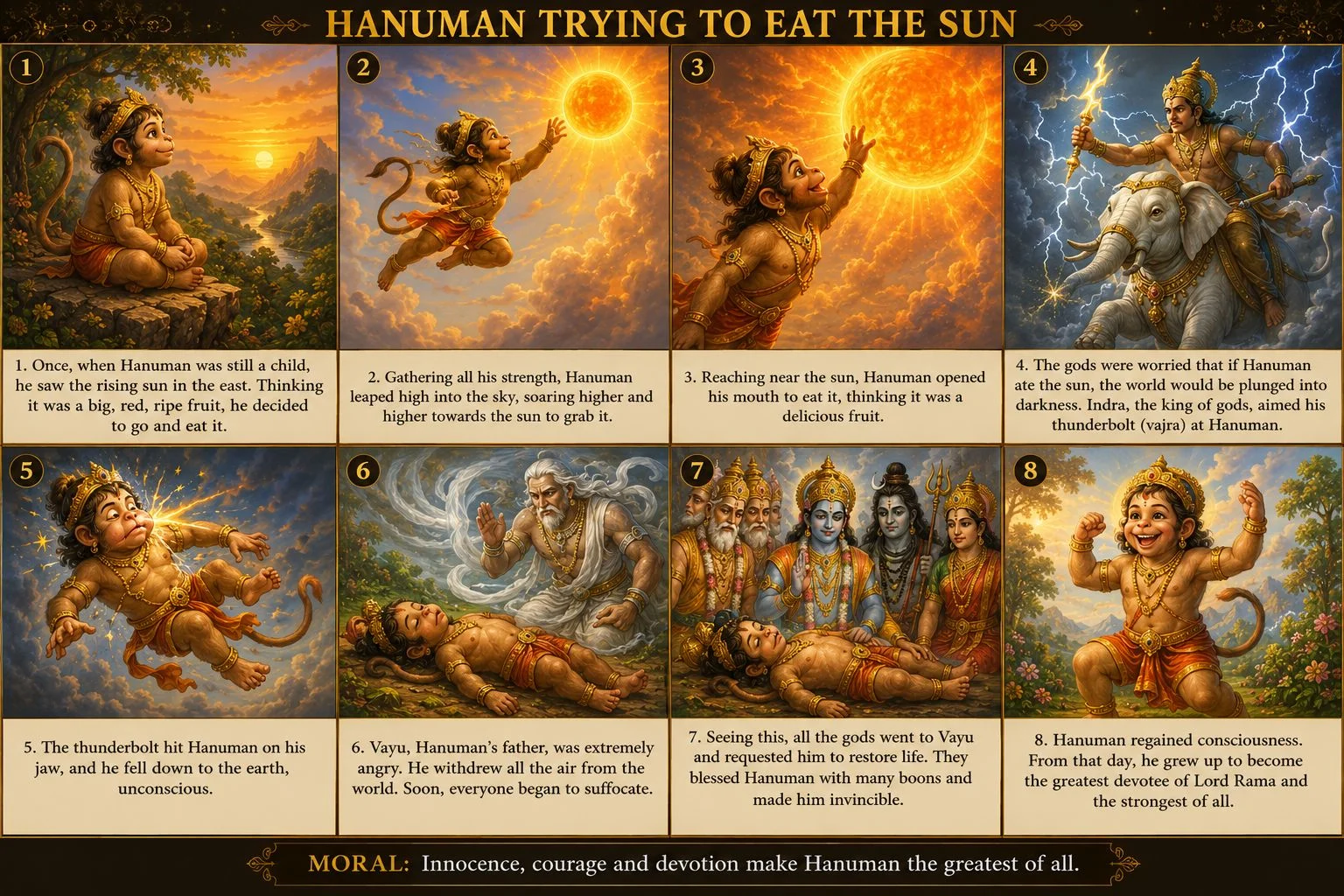 3 min readFor kids
Ramayana - Bala Kanda
Baby Hanuman tries to eat the sun
When Hanuman was very small, his mother Anjana left him sleeping under a tree while she went to fetch food. Hanuman woke up hungry. He looked at the sky, and the rising sun looked exactly like a giant ripe red mango! In one mighty leap the baby flew from the earth all the way to the sun, opened his mouth, and was about to swallow it. Indra, the king of the devas, was alarmed - without the sun the world would die in darkness. He hurled his thunderbolt (vajra) at the baby. The vajra struck Hanuman on the chin and he fell from the sky. His father Vayu, the wind god, picked up his hurt baby and stopped breathing in grief - and all the wind in the world stood still. Trees did not sway. People could not breathe. Birds fell from the air. The other devas hurried to apologise. Each one gave Hanuman a special blessing - strength of a thousand elephants, immortality, mastery of the scriptures, the power to fly anywhere. That is why, when Lord Rama needed someone to leap across the ocean to Lanka, only Hanuman could do it. The sun-eating baby grew up to be the greatest devotee of all.
Read story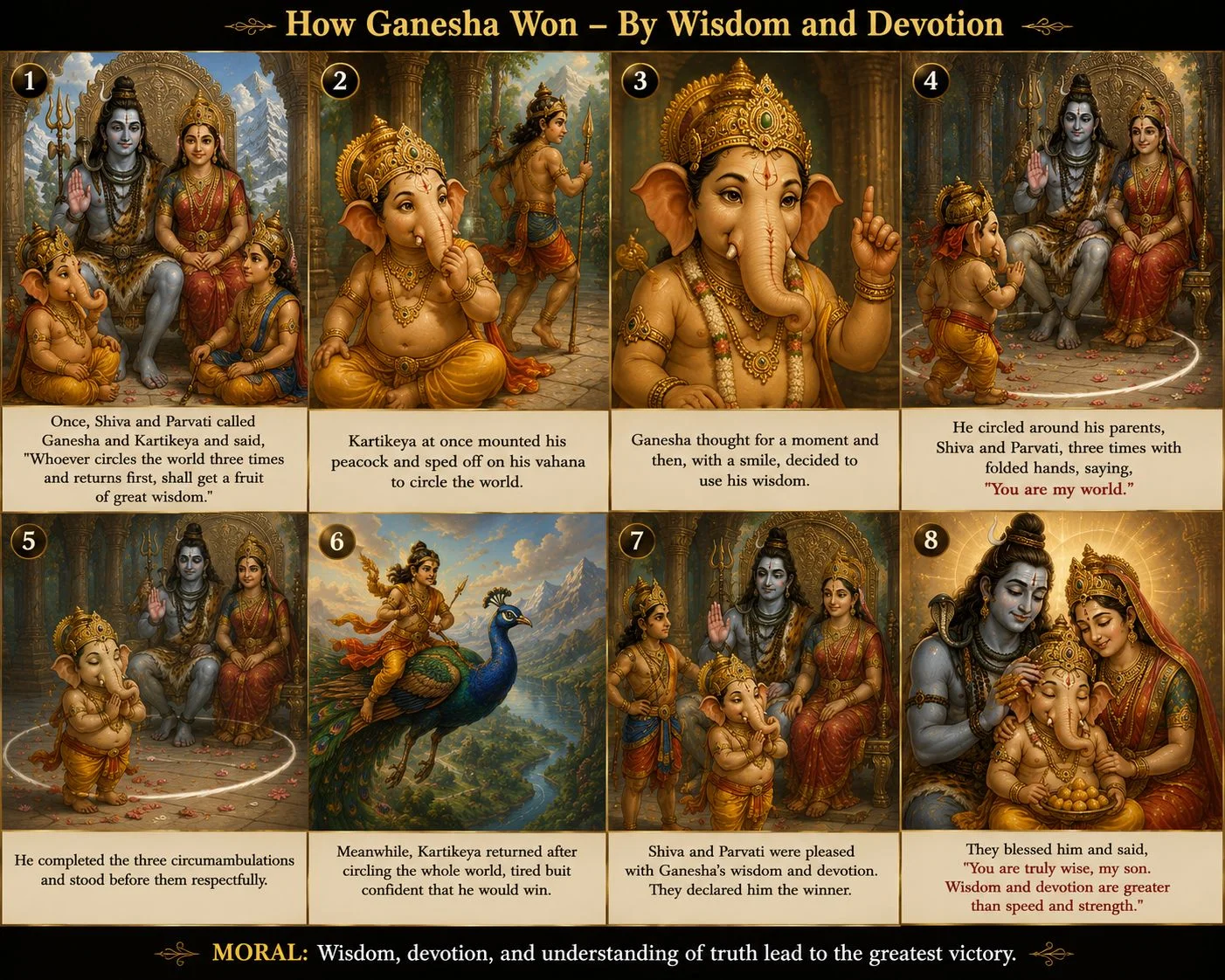 3 min readFor kids
Skanda Purana - Shiva Mahapurana
Ganesha's race around the world
One day Sage Narada brought a sweet golden mango (the fruit of wisdom) to Mount Kailasa. Shiva and Parvati could not give it to both their sons - Ganesha and Kartikeya - and could not divide it. So they set a contest: "Whoever circles the world three times and returns first will win the mango." Kartikeya leapt onto his peacock and flew off at lightning speed across mountains, oceans and continents. He thought, "My pot-bellied brother will never beat me on his little mouse!" Ganesha thought for a moment. Then he walked slowly around his mother and father three times, bowed, and held out his hand for the fruit. "But you did not go round the world!" said Shiva. Ganesha replied: "My parents are my world. There is nothing in the universe greater than them. To circle them is to circle the cosmos." Kartikeya returned out of breath to find Ganesha already eating the mango. At first he was angry, but then he laughed. From that day Ganesha was honoured as the wisest, and is invoked first in every Hindu ritual.
Read story3 min readFor kidsMahabharata - Adi Parva
Ganesha breaks his own tusk
The great sage Vyasa had composed the entire Mahabharata in his mind - over a hundred thousand verses, the longest poem in the world - and needed someone to write it down. Only one being was both wise and patient enough: Lord Ganesha. Ganesha agreed on one condition: "I will write only if you do not stop dictating, even for a moment." Vyasa agreed on his own condition: "I will dictate only if you understand every verse before writing it." Both nodded. They began. Vyasa spoke quickly, sometimes deliberately weaving in difficult verses to give himself a moment to think while Ganesha worked them out. Hours passed. Days passed. At one point Ganesha's writing-stylus broke. Without pausing for even a moment, he reached up, snapped off one of his own tusks, and kept writing with it. That is why Ganesha is also called Ekadanta - the one with a single tusk. The broken tusk is a reminder: when the work is sacred, no sacrifice is too great.
Read story4 min readFor kidsBhagavata Purana, Skandha 10
Krishna lifts Mount Govardhana
Every year the cowherds of Vrindavan offered a great puja to Indra, king of the rain. But young Krishna asked the elders: "Why pray to Indra? It is the mountain Govardhana that gives our cows grass, our forest its trees, our rivers their springs. Let us worship Govardhana." The villagers agreed and held a great festival for the mountain. Indra, in his pride, was furious that no one had prayed to him. He sent down the most terrible storm the world had ever seen - rain in sheets, lightning that split trees, hail like stones. The villagers ran to Krishna in terror. The little boy bent down, lifted the entire Govardhana mountain on the tip of his little finger, and held it up like a giant umbrella. The whole village - every man, woman, child, cow and calf - sheltered beneath. For seven days and nights Krishna held up the mountain. When Indra finally realised who this small cowherd really was, his pride broke. He came down from the heavens, washed Krishna's feet with his own tears, and asked forgiveness. From that day Krishna was called Giridhari - the lifter of the mountain.
Read story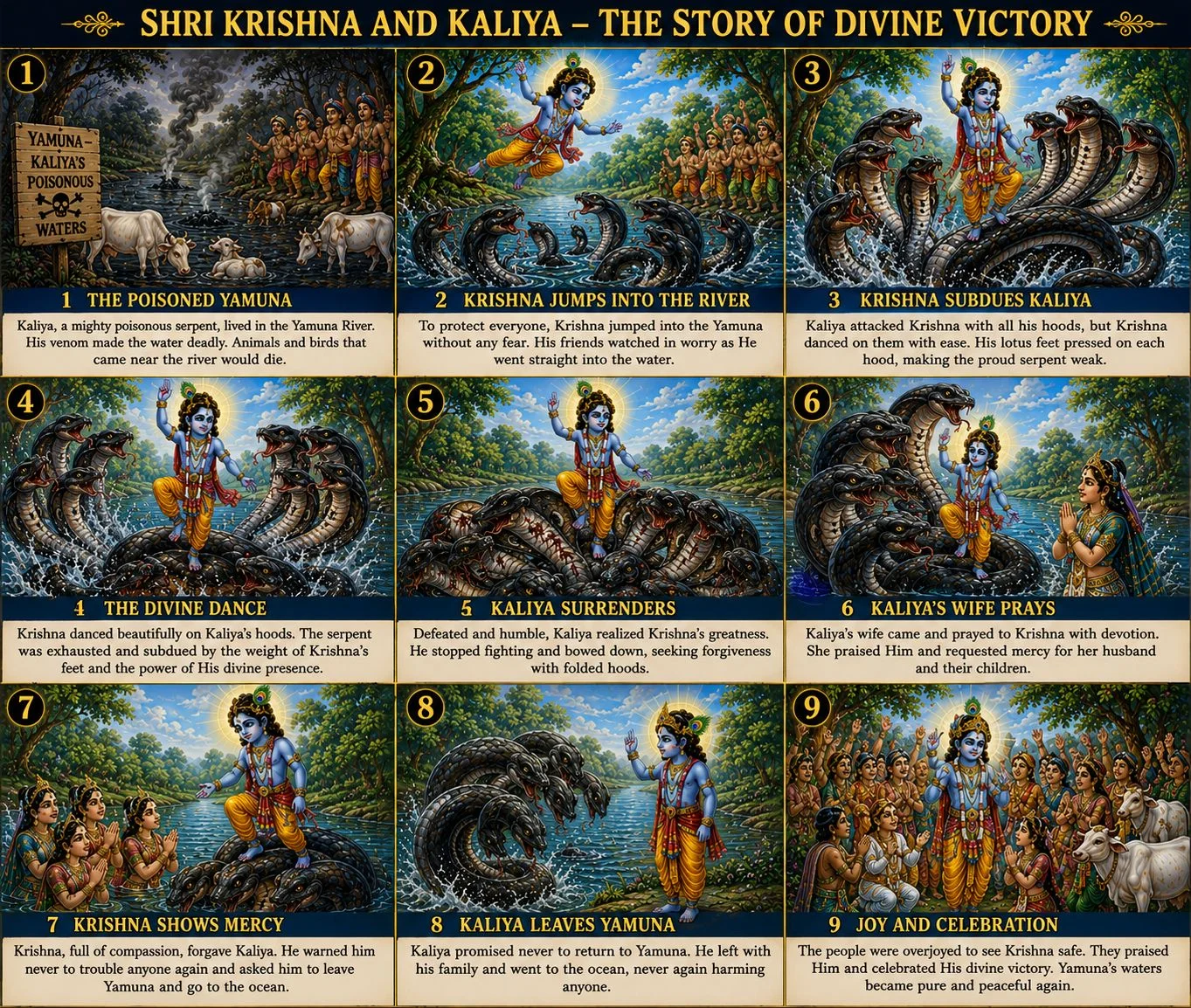 4 min readFor kids
Bhagavata Purana, Skandha 10
Krishna dances on the serpent Kaliya
There was a deep dark pool in the river Yamuna where lived the terrible serpent Kaliya. He had a hundred and one heads, and his poison was so strong that the water boiled. Birds flying above fell dead from the sky. No cow could drink at the river. One day a stray cow drank from the poisoned water and died. Krishna's little friends began to weep. Krishna climbed a kadamba tree above the pool, smiled, and jumped in. Kaliya rose up in fury, wrapped Krishna in his coils, and squeezed. The cowherds on the bank wailed. But Krishna was no ordinary boy. He grew, lighter than air, and slipped from the coils. Then he leapt onto the serpent's heads and began to dance. On each head as Krishna landed, the serpent was crushed back down. He danced and danced. The wives of Kaliya rose from the water and prayed, "O Lord, please spare our husband - he is what he is by nature." Krishna stopped, lifted Kaliya gently, and told him to leave the Yamuna and go to the ocean. The river was clean and sweet again.
Read story4 min readFor kidsBhagavata Purana, Skandha 10
Sudama and his handful of rice
When Krishna was a boy he had studied at the gurukul of Sage Sandipani. His best friend there was a poor Brahmin boy named Sudama. They had been like brothers. After their studies they parted - Krishna went to rule Dwaraka, Sudama went home and stayed poor all his life. Years later Sudama's wife said gently, "Your friend Krishna is the king of Dwaraka. Surely he will help us. Will you go and ask?" Sudama did not want to go to ask anything, but he agreed to visit. The only gift he could afford was a handful of beaten rice (poha) tied in an old cloth. When he reached Dwaraka and the guards announced him, Krishna ran out himself, washed his old friend's tired feet with his own tears, hugged him, and kept asking, "What have you brought me? Give it!" Sudama was ashamed of his small gift but Krishna snatched the cloth and ate the dry beaten rice with such joy that the queens stopped him after two handfuls. Sudama spent a wonderful day with Krishna and walked home, never asking for anything. When he arrived, his mud hut was gone - in its place stood a beautiful palace, with his wife in fine clothes. He understood: Krishna had given everything because Sudama had asked nothing.
Read story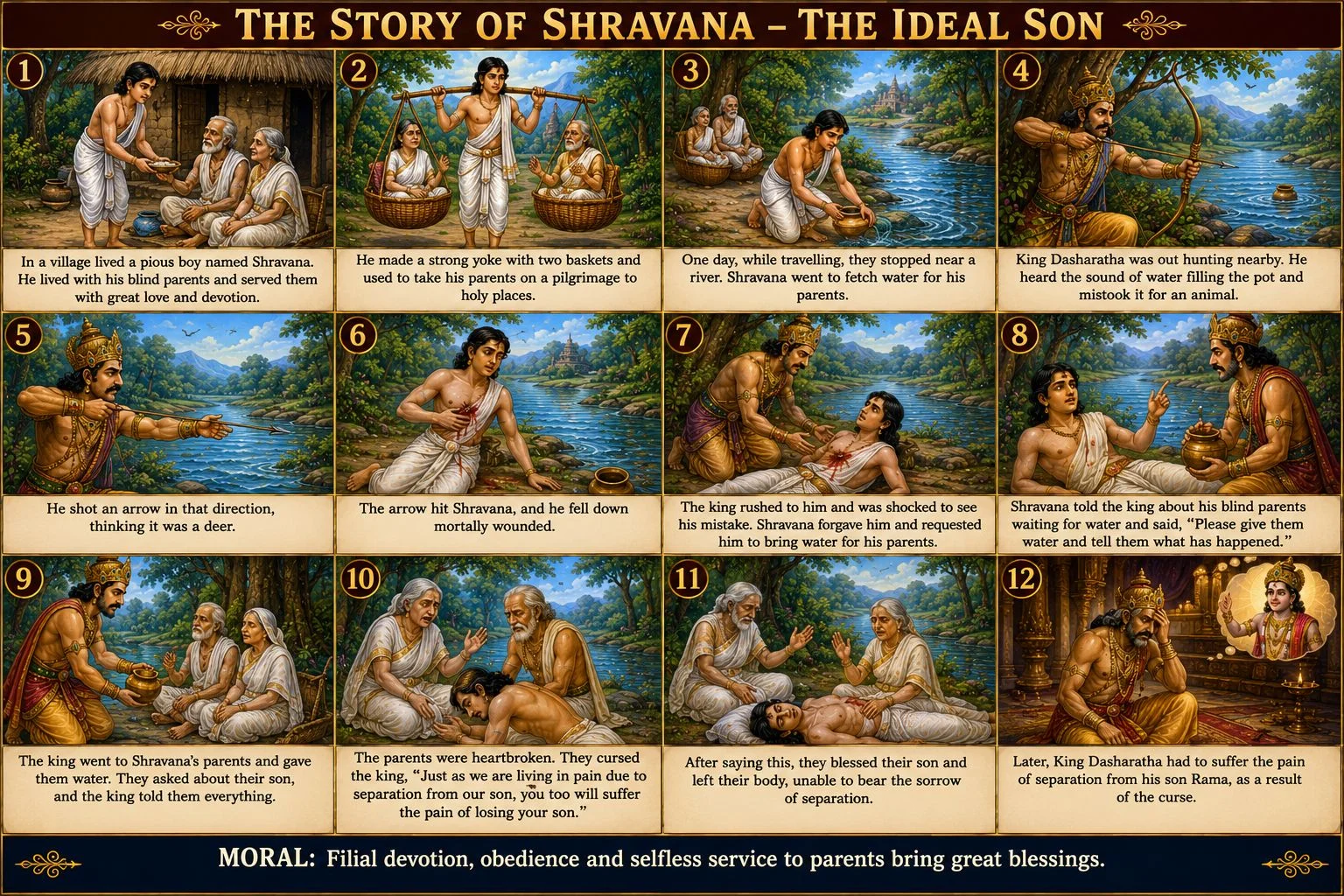 3 min readFor kids
Ramayana - Ayodhya Kanda
Shravana Kumara carries his parents
In ancient times there lived a young man named Shravana Kumara. His parents were old and both blind. They had one wish: to go on pilgrimage to all the holy places of India before they died. They had no money for chariots or palanquins. So Shravana made a simple yoke - a wooden bar with two baskets hanging from it. He sat his father in one basket and his mother in the other, lifted the yoke onto his shoulders, and began to walk. Through forests, across rivers, up mountains, he carried them. All the way he sang to them so they would not feel afraid. One evening they camped near a forest pond. Shravana took an empty pot to fetch water for his thirsty parents. As he dipped the pot the water made a gurgling sound. Hidden behind a tree, King Dasharatha (Rama's father) was hunting; he heard the sound and thought it was a deer drinking. He shot an arrow toward the sound. The arrow struck Shravana. The dying boy called the king to his side and asked one thing: "Take this water to my blind parents. Tell them what happened gently." Dasharatha did. The grief-stricken parents cursed the king: "You too shall die in sorrow over a beloved son." That curse came true many years later - when Dasharatha had to send his own son Rama into exile.
Read story4 min readFor kidsMarkandeya Purana
Markandeya hugs the Shiva linga
Sage Mrikandu and his wife Marudvati prayed for years for a child. Lord Shiva appeared and asked, "Would you rather have one wise son who lives only sixteen years, or many sons who live long but are foolish?" They chose one wise son - and Markandeya was born, the most beautiful and intelligent boy. The years passed quickly. As his sixteenth birthday approached, his parents grew sad without telling him why. The wise boy noticed and asked. When they told him, he was not afraid. "Whatever life I have left, I will spend in worship," he said. On the morning of his sixteenth birthday Markandeya went to a temple, embraced a Shiva linga, and began to chant the Mahamrityunjaya Mantra - "Tryambakam yajamahe…" - with all his heart. Yama, the god of death, came on his black buffalo with the noose of death. Yama threw his noose. It caught not the boy but the Shiva linga itself, because Markandeya had held the linga so close. At that, Lord Shiva burst out of the linga in fury. "How dare you cast your noose on me?" Shiva said to Yama, and pushed him back. To Markandeya he gave a boon: "You shall live forever, never growing old past sixteen." Markandeya is one of the seven chiranjivis - the immortals - alive somewhere on earth even today.
Read story5 min readFor kidsKatha Upanishad
Nachiketa and Yama
Long ago a man named Vajashravasa wanted heaven. He decided to give away everything he owned. But the cows he gave away were old, sick, and could not give milk anymore. His young son Nachiketa watched and was troubled. "If you give bad gifts you will not earn good karma. To whom will you give me?" Three times the boy asked. Annoyed, the father snapped: "I give you to Yama!" - the lord of death. A vow once spoken cannot be undone. So Nachiketa walked to Yama's house, alone and unafraid. Yama was away. Nachiketa waited at the door without food or water for three days. When Yama returned and saw the boy, he was so impressed by his calm that he offered three boons. First Nachiketa asked: "Let my father not be angry when I return." Granted. Second: "Teach me the fire ritual that leads to heaven." Granted. For the third boon Nachiketa asked the great question: "When a person dies, some say he still exists, some say he does not. Tell me - what is the truth?" Yama tried to refuse, offered him kingdoms, beautiful women, gold, anything. But the boy stood firm. So Yama taught him: the Atman, the inner self, is never born and never dies. Bodies come and go; the self is eternal. This dialogue, between a fearless boy and the lord of death, is the Katha Upanishad - one of the great texts of Vedanta.
Read storyHave a story you would like us to record? Write to wisdom@sevacart.com.