№ 1
Yama · यम
External moral observances. The "do not" of yoga ethics.
Subdivisions - Ahimsa (non-violence), Satya (truthfulness), Asteya (non-stealing), Brahmacharya (continence), Aparigraha (non-possessiveness).
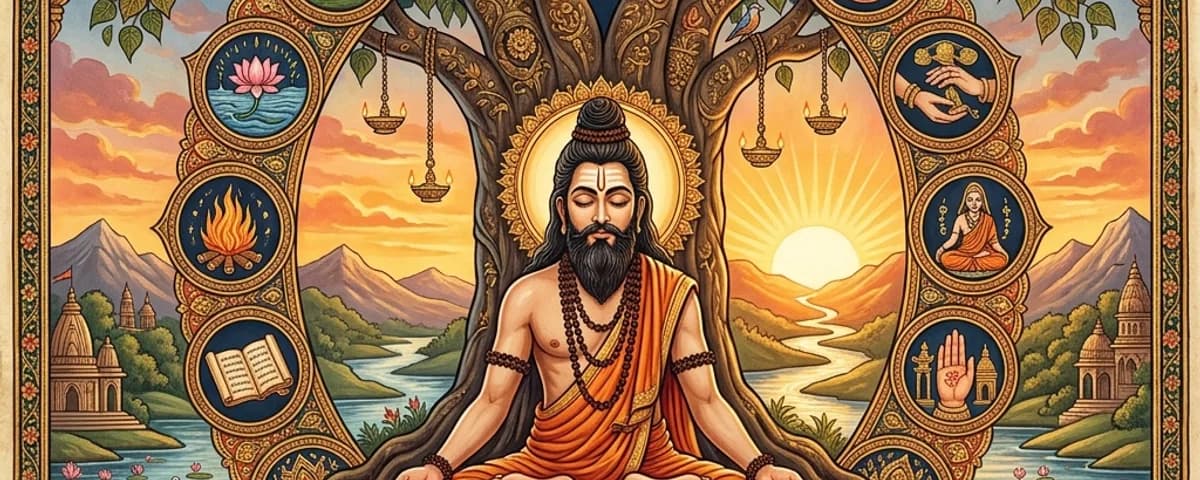
Patanjali defines yoga as "chitta vritti nirodhah" - the cessation of mental modifications. The 8-limb path (ashtanga) is the complete prescription: ethics → ethics-inward → posture → breath → withdrawal → concentration → meditation → absorption. Modern practice often emphasises only asanas + pranayama, but these are means, not ends. Below: all 8 limbs, 16 marquee asanas, the 12-pose Surya Namaskara sequence, and 8 pranayama techniques with technique + benefits + cautions.
External moral observances. The "do not" of yoga ethics.
Subdivisions - Ahimsa (non-violence), Satya (truthfulness), Asteya (non-stealing), Brahmacharya (continence), Aparigraha (non-possessiveness).
Internal moral disciplines. The "do" of yoga ethics.
Subdivisions - Saucha (purity), Santosha (contentment), Tapas (austerity), Svadhyaya (self-study + scripture study), Ishvara-pranidhana (surrender to God).
Steady, comfortable seat. Patanjali's definition: "sthira sukham asanam" - the asana is that which is steady + comfortable. Modern hatha-yoga expanded this to 84+ specific postures.
Control of prana (vital force) through breath. Three movements: rechaka (exhalation), puraka (inhalation), kumbhaka (retention).
Subdivisions - 8 main techniques: Nadi Shodhana, Bhastrika, Kapalbhati, Ujjayi, Bhramari, Sheetali, Sheetkari, Surya Bhedana.
Withdrawal of senses from external objects. The turtle drawing in its limbs - pratyahara turns the senses inward.
Concentration. Holding the mind on one point - a mantra, a deity's image, the breath, a chakra.
Meditation. The continuous flow of dharana - like oil pouring in an unbroken stream.
Absorption. Subject + object dissolve; only the object of meditation remains, free of the meditator's sense of self.
Subdivisions - Savikalpa (with-thought) → Nirvikalpa (without-thought) → Sahaja (natural / continuous samadhi). Asamprajnata (objectless) samadhi is the highest.
The "sun salutation" - a 12-pose dynamic sequence performed at sunrise. Each pose flows into the next with synchronized breath. 12 repetitions = 144 individual asanas, in approximately 10 minutes. Combines asana + pranayama + mantra (one of 12 Surya names per round).
Cross-legged with each foot resting on the opposite thigh. The "lotus pose" - the supreme meditation posture.
Benefits - Stable base for long meditation. Calms the mind. Stimulates ida + pingala nadis at the base.
Caution - Avoid if you have knee or hip issues. Half-lotus (Ardha Padmasana) is acceptable substitute.
Comfortable cross-legged seat (no foot-on-thigh placement). The default meditation posture for beginners.
Benefits - Sustainable for long sittings. Opens hips gently. Suitable for everyone.
One heel pressed at the perineum, the other at the pubic bone. The "perfect pose" preferred by ancient yogis.
Benefits - Activates Muladhara + Svadhishthana chakras. Stabilises sexual energy upward into spiritual energy. Preferred by hatha yoga masters.
Caution - Requires hip flexibility. Often used by celibate sadhakas - historically a brahmacharya posture.
Kneeling with the buttocks resting on the heels. The "thunderbolt pose".
Benefits - Only asana that can be done after a full meal - actually IMPROVES digestion. Strengthens pelvic muscles. Calms the mind.
Mountain pose. Standing straight, arms at sides, palms forward.
Benefits - The foundation of all standing poses. Improves posture, balance, breathing.
Triangle pose. Wide stance, side-bend, one hand to ankle, other arm extended up.
Benefits - Stretches sides, opens hips + chest. Strengthens legs. Stimulates digestive system.
Tree pose. Stand on one leg, place the other foot on inner thigh, palms together overhead.
Benefits - Balance + focus. Strengthens standing leg. Calms the mind through focused gaze (drishti).
Cobra pose. Lying on belly, palms beside chest, lift head + chest off floor.
Benefits - Strengthens spine. Opens chest + lungs. Stimulates anahata chakra.
Wheel / upward-facing bow. From lying-on-back, push body up into a backward arch.
Benefits - Full-body backbend. Stimulates all chakras. Opens chest dramatically.
Caution - Requires significant strength + flexibility. Not for beginners.
Headstand. The "king of asanas". Body inverted, balanced on the head + forearms.
Benefits - Increases blood flow to brain. Activates sahasrara chakra. Believed to reverse aging effects.
Caution - Practice only under qualified guidance. NOT for those with high BP, glaucoma, neck issues, or menstruation.
Shoulder stand. "All-limbs pose". Body inverted, supported on shoulders + back of head.
Benefits - The "queen of asanas". Regulates thyroid + parathyroid. Calms nervous system. Activates vishuddha chakra.
Caution - Avoid during menstruation. Care with neck.
Seated forward bend. Sit with legs extended, fold forward, hold feet.
Benefits - Stretches entire back of body. Calms nervous system. Improves digestion.
Half-spinal twist. Seated twist named after Matsyendranath (founder of Nath sampradaya).
Benefits - Increases spinal mobility. Massages internal organs. Stimulates manipura chakra.
Crane pose. Arm-balance with knees resting on the back of the upper arms.
Benefits - Builds arm strength. Improves concentration. Builds confidence in inversions.
Corpse pose. Lying flat on the back, arms slightly away from body, palms up. The standard closing pose for every yoga session.
Benefits - Deep relaxation. Integrates the practice. Many yogis consider this the most difficult asana - fully letting go of the body.
Child pose. Kneel, fold forward, rest forehead on floor, arms back along sides.
Benefits - Restorative. Calms the mind. Stretches lower back + hips. The "reset" pose between difficult asanas.
Alternate nostril breathing. The "channel-purification" - balances ida + pingala nadis.
Technique - Sit comfortably. Close right nostril with right thumb; inhale through left. Close left nostril with right ring + little fingers; exhale through right. Inhale through right. Close right; exhale through left. That = 1 round. 10-20 rounds.
Benefits - Balances both hemispheres of the brain. Calms anxiety. Improves focus. Foundational pranayama - start here.
Bellows breath. Forceful, rapid inhalation + exhalation through both nostrils.
Technique - Sit straight. Inhale forcefully, exhale forcefully - both through nose, equal time. Continue 20-30 breaths. Then hold (kumbhaka) as long as comfortable. Repeat 3-5 rounds.
Benefits - Cleanses respiratory system. Increases prana sharply. Warms the body. Builds vigor.
Caution - NOT during pregnancy, high BP, heart issues. Stop if dizzy.
"Skull-shining" breath. Active exhalation, passive inhalation.
Technique - Sit straight, hands on knees. Sharply exhale through nose (engaging abdomen forcefully). Inhalation happens passively. 60-120 strokes per minute. Repeat 3 rounds.
Benefits - Detoxifies. Strengthens abdominal muscles. Activates manipura chakra. Removes excess mucus + fat around abdomen.
Caution - NOT during pregnancy, menstruation, high BP, ulcers, heart issues, or after surgery.
"Victorious" breath. Slight throat constriction creates an ocean-like sound.
Technique - Slightly constrict the throat (as if whispering). Breathe slowly + deeply through nose. The sound is audible - like a low ocean hiss. Use this breath throughout an asana session.
Benefits - Calms nervous system. Generates internal heat (tapas). The breath used by Ashtanga vinyasa practitioners throughout practice.
"Humming bee" breath. Producing a sustained humming sound on exhalation.
Technique - Sit straight. Close ears with thumbs, close eyes with index fingers, place middle + ring fingers on either side of nose, little finger at corners of mouth. Inhale through nose; exhale humming "Mmmmmm" (like a bee). 5-10 rounds.
Benefits - Instantly calms anxiety. Stimulates pituitary gland. The vibration soothes the entire nervous system. Excellent before sleep.
"Cooling" breath. Inhaling through a curled tongue.
Technique - Curl tongue into a tube. Inhale slowly through the tongue-tube. Close mouth, exhale slowly through nose. 5-10 rounds.
Benefits - Cools the body. Reduces heat, blood pressure, anger. Especially good in summer + for those with pitta dosha.
Alternative cooling breath. For those who cannot curl tongue.
Technique - Press tongue against the upper palate. Bare teeth slightly. Inhale through teeth with a hissing sound. Exhale through nose.
Benefits - Same cooling benefits as Sheetali - for those unable to do tongue-curl (genetic).
"Sun-piercing" breath. Inhale through right nostril, exhale through left.
Technique - Close left nostril with right ring + little fingers. Inhale through right. Hold briefly. Close right nostril with right thumb; exhale through left. 10 rounds.
Benefits - Activates pingala nadi (right channel - solar / active energy). Generates heat. Energising - good for morning practice + those with cold constitution.
Caution - NOT for those with high BP or excessive pitta dosha.