1. The literal meaning
Kulameans “family, lineage”. Devatameans “divine being”.Kuladevata = the divine being who has watched over your family line for as long as anyone can remember.
In south Indian usage, you may also hear:
- Kuladaivam - Tamil/Malayalam term for the same idea
- Kuladevaru - Kannada term
- Gramadevata - village deity, often a maternal-line goddess associated with the ancestral village
- Vastudevata - house deity, specific to the household’s built dwelling
2. How a family acquires a kuladevata
Most kuladevatas were chosen between 800 and 1500 years ago. The common acquisition paths:
- A miraculous blessing - an ancestor in distress prayed to a specific deity, received help, and pledged the lineage to that deity.
- A saint’s initiation - a wandering acharya gave the family a mantra and a presiding form.
- A king’s allegiance - when ancestors served a court, they often adopted the royal deity.
- A village adoption - the gramadevata of the ancestral village became the kuladevata when the family settled.
- A samskara vow - taken at a wedding or naming ceremony and never broken.
Whatever the origin, the obligation passes to every descendant. The kuladevata is not chosen - it is inherited.
3. How to find yours
- Ask the eldest in the male line. Father, grandfather, paternal uncle. Most families remember even when they have stopped active worship.
- Check the family purohit’s records.Hereditary priests keep gotra and kuladevata records for the families they serve, often going back generations.
- Visit the ancestral village. The dominant village temple is usually the kuladevata seat. Villages remember even when families forget.
- Read any wedding card or jathaka. The kuladevata is almost always named in the sankalpa text.
- Look at family heirlooms.Brass deity images, embroidered cloth, old photographs - often inscribed with the kuladevata’s name.
- Consult a community samaja. Many community associations (Saraswat, Kota, Iyer, Bhat, Kamma, Reddy, etc.) now publish kuladevata-by-surname directories.
4. What if it is genuinely lost
Migration over multiple generations sometimes erases the chain. Three classical resolutions:
- Adopt the ancestral-village deity.Even if the family has been away for 4-5 generations, the village’s presiding deity is considered the default kuladevata.
- Take a new vow.If a deity has clearly come to your aid in this generation, you can take a formal vow at a temple to adopt that deity as the family’s kuladevata going forward. The vow is binding on descendants.
- Default to the family’s rashi or nakshatra deity. Each rashi and each nakshatra has a presiding devata; some sampradayas treat this as a fallback kuladevata when no other clue exists.
Consult a learned priest before settling on a resolution - the choice binds the lineage.
5. When kuladevata is invoked
- Major samskaras - naming, upanayana, wedding, griha pravesh. The kuladevata is named first in the sankalpa, before the rite-specific deity.
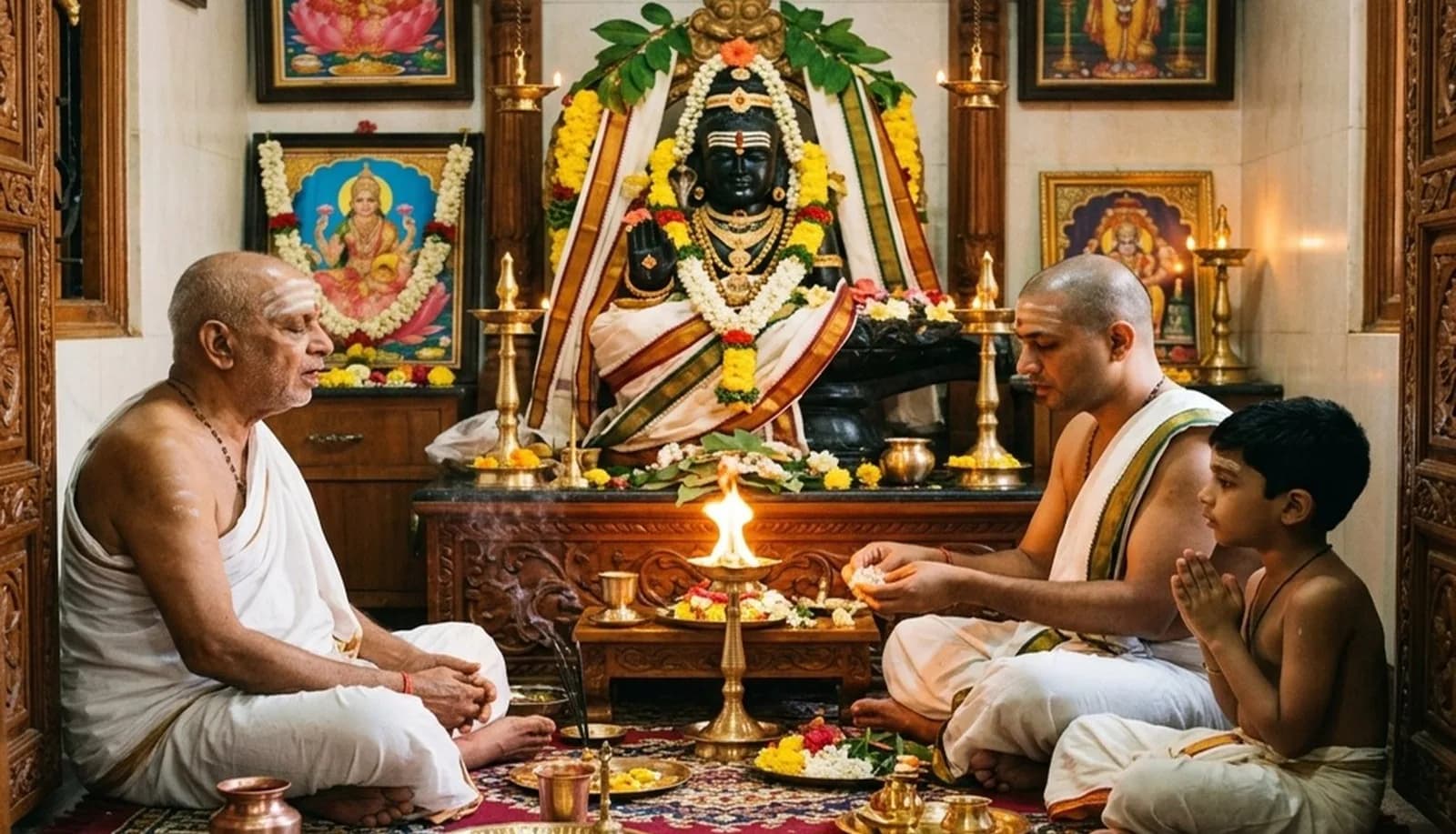
- Annual family pooja- most households perform a kuladevata pooja once a year, often during Navaratri or on the deity’s specific tithi.
- Pre-event blessing - before a major undertaking (new business, exam, surgery, long journey), the kuladevata is invoked for protection.
- Generational visits - many families visit the kuladevata temple at least once after every major life event (wedding, birth of child, retirement).
- Shraddha and pitru rites- the kuladevata is referenced as the witness to the family’s lineage continuity.
6. Kuladevata vs ishta-devata
These are NOT the same and both are valid:
- Kuladevata - inherited, fixed, shared with entire paternal lineage. Invoked for family-level rites.
- Ishta-devata - personal, chosen by you, changes through life. Invoked for daily personal sadhana.
A devotee may have Lord Shiva as kuladevata (lineage) and Krishna as ishta-devata (personal love). Both are honoured - kuladevata at family events, ishta-devata in daily practice.
7. Why neglecting the kuladevata is taken seriously
Traditional households treat the kuladevata as the lineage’s protective covenant. Honoured, the deity is held to guard the family’s continuity, health, and fortune. Neglected across generations, families speak of kuladevata-kopa - a sense of stalled luck, recurring household friction, or unexplained obstacles in marriage and progeny.
Whether you read this literally or as the simple cost of losing a family’s shared spiritual anchor, the remedy is identical: resume the annual pooja, visit the temple after major life events, and name the deity in your samskaras. The covenant is not broken by absence - it is reopened the moment the family remembers it.
8. Where families trace their kuladevata
A kuladevata is almost always one specific temple seat. Common regional anchors:
- Maharashtra - Tuljapur Bhavani, Kolhapur Mahalakshmi, Khandoba of Jejuri, Jyotiba.
- Karnataka - Kollur Mookambika, Kukke Subrahmanya, Dharmasthala Manjunatha, Banashankari, Marikamba of Sirsi.
- Goa & Konkan (Saraswat) - Shantadurga, Mangueshi, Mahalasa Narayani.
- Tamil Nadu - the six Murugan padai-veedu, kula-specific Mariamman and Amman temples.
- Andhra & Telangana - Kanaka Durga of Vijayawada and the village Ammavaru.
- North India - kula-specific Devi shakti-pithas and the ancestral gram-devata shrine.
Once you identify your family’s seat, that temple becomes a fixed point you return to after every major life event.
9. Reviving a lapsed worship - step by step
- Confirm the deity and seat from elders, the family purohit, or the ancestral village.
- Make a first visit - a darshan and a simple archana in the family name and gotra re-establishes the link.
- Restart an annual pooja - a kuladevata archana or abhisheka on the deity’s tithi, or during Navaratri.
- Name the kuladevata in every future samskara’s sankalpa.
- If travel is hard, commission an annual archana at the kuladevata temple remotely.
Consistency matters more than scale - a simple yearly archana faithfully kept outweighs one elaborate event and then silence.
10. On SevaCart
When you offer a seva that involves a sankalpa (most pooja and abhisheka sevas), the form lets you name your kuladevata as a secondary devata for the ritual blessing. If your kuladevata is different from the seva’s primary deity, both are referenced - the primary deity for the seva, your kuladevata for the protective blessing.
11. Common questions
What is a kuladevata?
Kuladevata (kula = family, devata = deity) is the presiding deity adopted by your paternal lineage centuries ago - sometimes through a saint's blessing, sometimes through a king's allegiance, sometimes through a vow. Once chosen, the kuladevata is honoured by every generation of the family forever.
How is kuladevata different from ishta-devata?
Kuladevata is inherited and shared by the whole family. Ishta-devata is your personal chosen deity - anyone you feel drawn to. Both can be worshipped: kuladevata for samskaras and family rites, ishta-devata for daily personal practice. Many devotees have both.
How do I find my kuladevata?
Ask the eldest in your paternal family - father, grandfather, paternal uncle. The kuladevata travels through the male line. If no living elder knows: check your family priest's records, visit your ancestral village temple, or look at any wedding card or jathaka - the kuladevata is usually named in the sankalpa.
What if my family has forgotten our kuladevata?
It happens often - migration, generations away from the ancestral village, lost records. You can: (1) adopt the kuladevata of the ancestral village (the village goddess or temple deity), (2) take a new vow to a deity who has come to your aid, or (3) consult a knowledgeable priest who can guide you back to your lineage.
Should every seva be offered to the kuladevata?
No. Sevas can be offered to any deity for any intent. The kuladevata is invoked specifically for life-event samskaras (weddings, naming, griha pravesh), annual family rites, and pre-event blessings for major undertakings. Daily worship can be to your ishta-devata.