1. The short answer
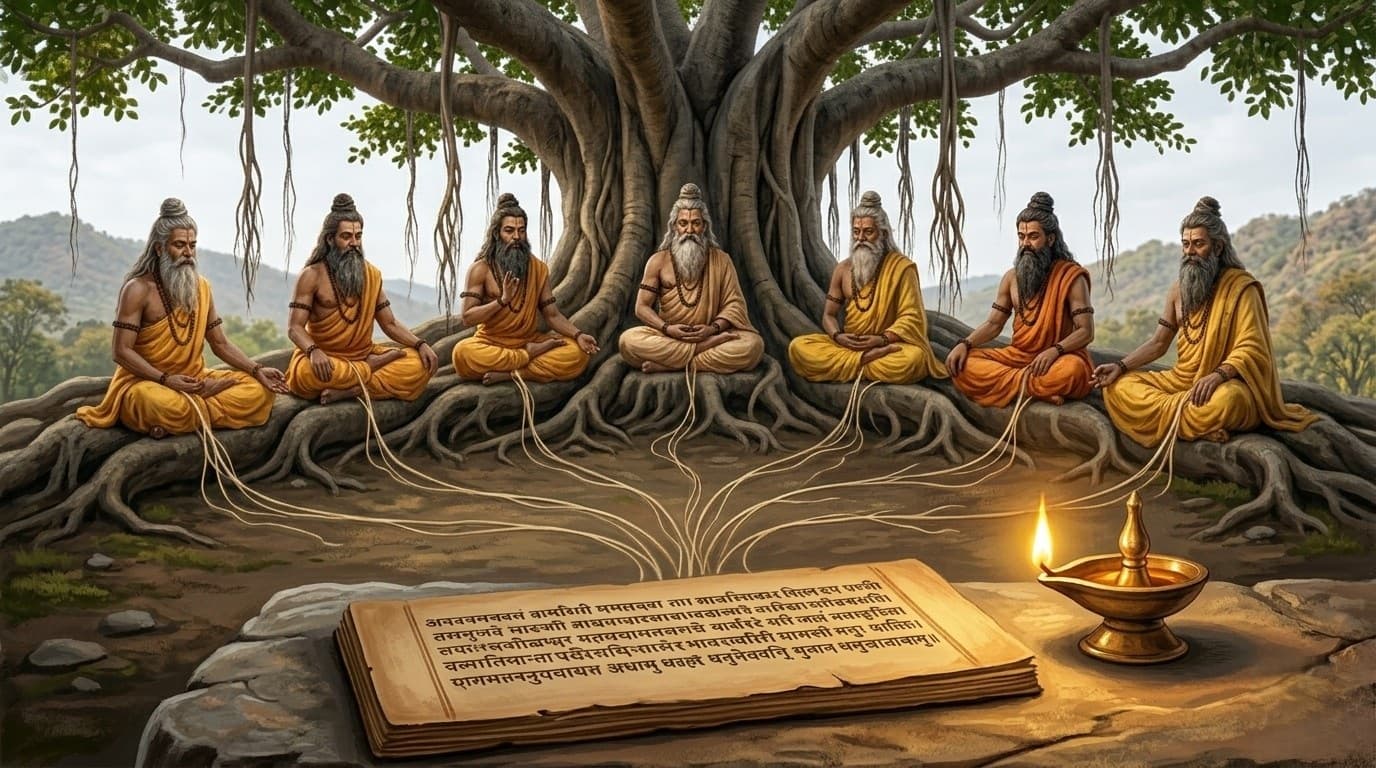
Gotra traces your paternal lineage back to one of the saptarishis (seven Vedic rishis): Vishvamitra, Jamadagni, Bharadvaja, Gautama, Atri, Vasishtha, and Kashyapa. Some traditions include Agastya as an eighth. Your gotra is the rishi whose line your family belongs to.
It functions as a permanent identity tag in ritual - older and more durable than any modern surname.
2. Where it matters
Every formal Hindu ritual opens with a sankalpa - a spoken declaration of intent. The sankalpa names the devotee in full:
- Country, region, and place where the ritual is being performed
- The current Vedic year, month, paksha (lunar fortnight), tithi (lunar day), and nakshatra (lunar mansion)
- The devotee’s gotra
- The devotee’s name
- The deity being invoked and the purpose of the ritual
Without the gotra, the priest cannot complete this opening invocation correctly. The ritual still happens - but its formal framing is incomplete.
3. How to find your gotra
- Ask the eldest in your father’s line. Father, grandfather, paternal uncle. Gotra travels through the male line in most communities.
- Ask your family priest (purohit). Purohits keep gotra + pravara records for the families they serve over generations.
- Check your kuladevata temple. The temple your family is historically associated with usually has the gotra recorded in contributor lists, samskara registers, or ancestral records.
- Check matrimonial records. Wedding cards, jathaka (horoscope) sheets, and sambandha documents almost always list the gotra explicitly.
- Community archives. Many Brahmin and other community samajas now publish gotra-by-family directories online.
4. Edge cases
Maternal vs paternal
A small number of communities use the matrilineal gotra (Nair, some Tulu, certain Bunt families). Follow your family tradition; do not assume the rule.
Adopted children
Tradition holds that the gotra changes to that of the adoptive father. Some schools also recite the biological father’s gotra once at the start of a ritual.
Inter-gotra marriage
After marriage, a wife’s ritual gotra typically becomes her husband’s. Her birth gotra is remembered in some samskaras (like shraddha for her own parents) but for joint rituals the married gotra is used.
You truly don’t know
Then the priest will use Kashyapa gotraas a default. Rishi Kashyapa is regarded as the universal ancestor in many traditions, so this fallback is widely accepted. Or you can offer the sankalpa under your kuladevata’s name. Do not postpone the seva because of a missing gotra.
5. Pravara - the lineage’s chain
Pravara is the chain of 3, 5, or 7 ancestor rishis (starting with the gotra-rishi) that the priest recites in fuller invocations. You do not need to memorise your pravara - the priest knows the mapping. Just know your gotra.
6. Gotra is not your caste, surname, or jati
This is the most common confusion. A gotra names only the rishi your paternal line descends from - nothing else. Two families with completely different surnames can share the same gotra; a single surname like Sharma, Patil, or Rao can span a dozen gotras. The gotra also does not fix your varna: Brahmana, Kshatriya, and Vaishya families all carry rishi-gotras.
So when a sankalpa form, a matrimonial profile, or a temple register asks for your gotra, it wants the rishi-lineage word (e.g. Bharadvaja, Kashyapa, Vasishtha) - not your community name, your caste, or your village. If you have been writing your surname in the gotra field, that is the gap to close.
7. Why same-gotra (sagotra) marriage is avoided
Classical dharma treats everyone of the same gotra as descendants of one rishi - siblings in lineage - so a sagotra marriage is read as marrying within the family. The Gṛhya Sūtras and later Smṛtis bar it, alongside the sapindarule (no marriage within roughly seven generations on the father’s side and five on the mother’s). Beyond the ritual logic, the rule quietly preserves genetic diversity across lineages - practical wisdom encoded long before modern genetics named it.
Communities differ on strictness. Many South Indian traditions even favour cross-cousin marriage (a maternal uncle’s daughter), which is never sagotra; several North Indian communities additionally avoid the mother’s and grandmothers’ gotras. Follow your family’s custom and a learned priest - do not generalise the rule.
8. Do non-Brahmin families have a gotra?
Yes. Kshatriya and Vaishya families carry rishi-gotras too - often the gotra of the purohit-rishi who guided the lineage. Many other communities use functionally equivalent lineage markers: devak in Maharashtra, bali or bedagu in Karnataka, illam in Kerala, or simply the kuladevata itself.
If your community does not use a rishi-gotra, the priest records your kuladevata or community marker in the sankalpa instead. No devotee is ever turned away for lacking a rishi-gotra - the lineage is honoured by whatever marker your tradition keeps.
9. Putting it to use
When you offer a seva on SevaCart, the sankalpa form asks for your gotra, nakshatra, and family member names. The priest at the partner temple reads these out during the ritual and the photo proof shows the moment your name is offered before the deity.
10. Common questions
What is a gotra?
A gotra is a lineage marker tracing your paternal ancestry back to one of the seven (or eight) Vedic rishis - Vishvamitra, Jamadagni, Bharadvaja, Gautama, Atri, Vasishtha, Kashyapa (and often Agastya). It is used in rituals to identify which family you belong to before the priest offers your sankalpa.
How do I find my gotra?
Ask the eldest living male in your paternal family - your father, grandfather, or paternal uncle. The gotra is inherited from your father, not your mother. If no one knows, your family priest (purohit) or the temple your family is associated with typically has records. A small number of communities use the maternal gotra; check your family tradition.
Why does the priest ask for it during a pooja?
The sankalpa - the formal declaration of intent that opens every Hindu ritual - names the devotee fully: their gotra (rishi lineage), name, family deity, place, date, and ritual purpose. Without the gotra, the priest cannot complete the sankalpa correctly, which weakens the ritual's formal validity.
I don't know my gotra - can I still do a seva?
Yes. In that case the priest typically uses "Kashyapa gotra" as a default, since Rishi Kashyapa is considered the universal ancestor in many traditions. You can also offer the sankalpa under your family deity (kuladevata) name. Find your real gotra when you can - but never let "I don't know" stop you from offering a seva.
What is the difference between gotra and pravara?
Gotra is the single rishi who founded your line. Pravara is the list of 3, 5, or 7 ancestor rishis (including the founding one) that the priest recites during sankalpa for fuller lineage acknowledgement. Most devotees only need to know their gotra - the priest knows the pravara mapping.