1. What pind daan is
Hindu tradition holds that after death the subtle body of the departed (the pretatma) traverses a transitional realm before reaching the pitruloka (the world of ancestors) or undergoing rebirth. Pind daan provides the nourishment that subtle body needs during this passage.
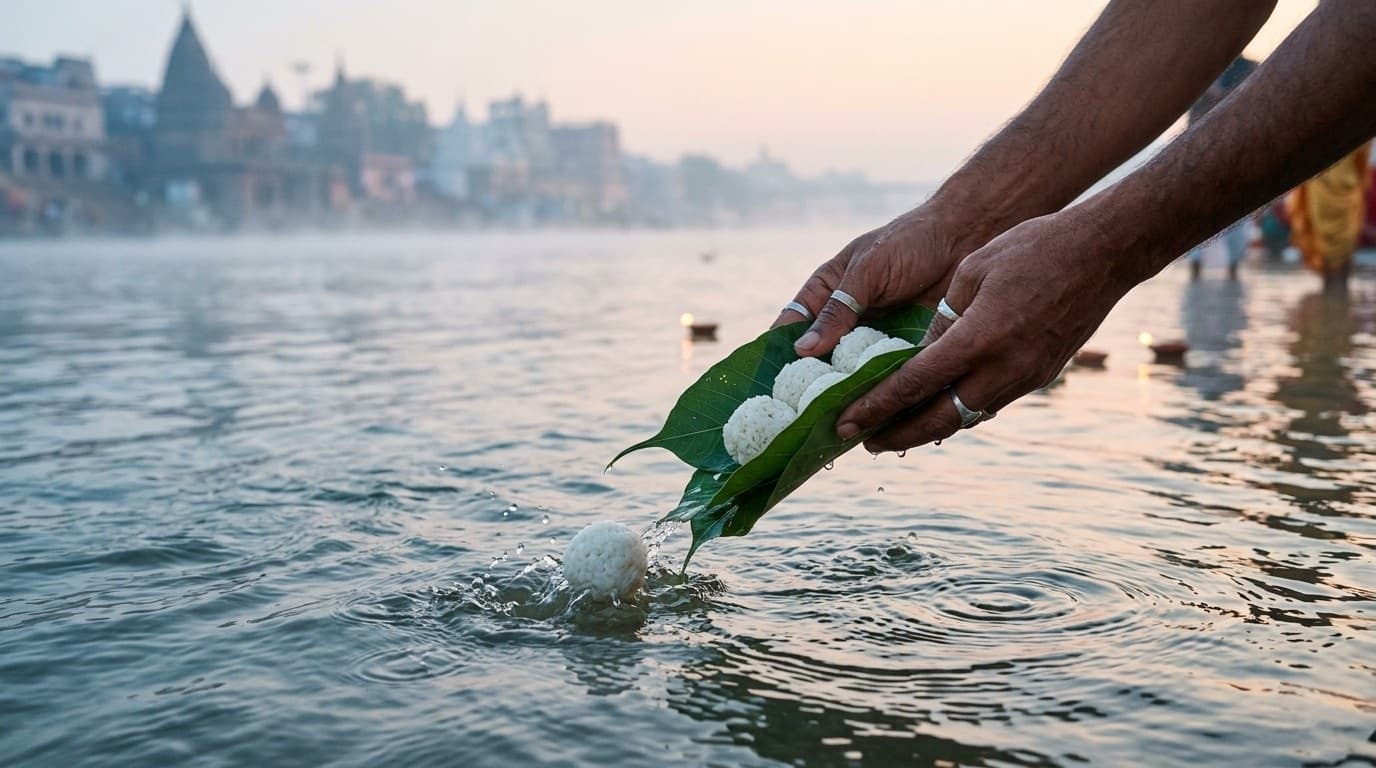
The pindaitself is a small ball pressed by hand from cooked rice, barley flour, black sesame seeds, ghee, and honey - placed on a banyan leaf, offered with water, dharbha grass, and the recitation of pitru-mantras. Each pinda carries the offerer’s sankalpa naming the ancestor it is intended for.
2. Why Gaya
The Vayu Purana, the Garuda Purana, and the Mahabharata all describe Gaya as the unique location where a single pind daan grants the ancestor moksha - release from the cycle of rebirth. The kshetra is anchored by three sites:
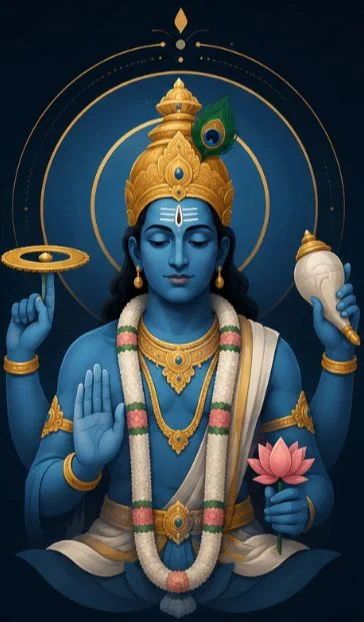
- Vishnupada Temple - Vishnu’s footprint, the central altar for the main pinda.
- Akshayavata - the immortal banyan tree under which Buddha is said to have meditated. Pinda offered here is held to never decay in its benefit.
- Phalgu river - the dry-bed river. Pinda is offered into the sand; the river carries the ancestral karma away.
A full Gaya pind daan covers 16 to 48 offerings across these three sites and several supplementary altars (Pretashila, Ramshila, Brahmayoni).
3. Who can offer it
The traditional priority order:
- Eldest son (with wife seated to his right)
- Younger sons
- Grandson
- Brother of the deceased
- Son-in-law
- Daughter (formally accepted by most sampradayas today)
- Widow / widower
- Any direct descendant in pinda-relationship (sapinda)
For ancestors with no descendant alive, a relative or even a disciple may offer pind daan - the Garuda Purana explicitly permits this as an act of dharma.
4. When to offer
- Pitru Paksha - the 16 lunar days before Mahalaya Amavasya in September-October. The most powerful annual window.
- Annual shraddha - on the ancestor’s death-tithi each year, lifelong.
- First year - monthly on the same tithi as death, plus on the 10th, 12th, and 16th days following death.
- Mahalaya Amavasya - for collective offering to all ancestors, named and unnamed.
- Any auspicious tithi at Gaya itself - visiting the kshetra and offering pinda at any time is meritorious.
5. The Gaya vidhi outline
- Sankalpa at Vishnupada - naming offerer, gotra, ancestor, intent.
- Pretashila - first pinda for ghosts (pretas) so the ancestor crosses the preta state.
- Phalgu river - pinda offered into the dry sand; tarpana with sesame water.
- Akshayavata - main pinda for the named ancestor; the banyan’s “imperishable” merit is invoked.
- Vishnupada main pinda - the climactic offering at Vishnu’s footprint.
- Brahmana bhojanam - feeding brahmins; the ancestor receives nourishment through the satisfied guests.
- Closing sankalpa - release of the karmic debt; sankalpa-jala (water) poured to seal.
6. Offering it online
Through SevaCart you select a verified Gaya pandit. Provide:
- Your name, gotra, nakshatra
- Ancestor’s name, relationship to you, date or tithi of death (if known)
- Whether this is annual shraddha, Pitru Paksha, or a one-time offering
The pandit performs the full vidhi, takes a photograph at each altar with the offering chit naming you and the ancestor, and returns the photo bundle plus an optional brief video of the Vishnupada pinda. A formal sankalpa receipt (sankalpa-patra) is also issued.
7. Common questions
Do I need to know my ancestor’s gotra?No - the offerer’s gotra is what matters in the sankalpa. The ancestor is named directly.
What if the death-tithi is unknown? The pandit can use Mahalaya Amavasya as the anchor date, which covers ancestors whose specific tithi has been lost.
Is pind daan only for parents?No. It is offered to three generations on the father’s side (father, grandfather, great-grandfather) and three on the mother’s side (mother, maternal grandmother and grandfather’s wife) - six pinda offerings in the classical shraddha sequence.
8. Why the Phalgu river runs dry
Pilgrims are often surprised that pinda at Gaya is offered into sand, not flowing water. The Ramayana tradition explains it: when Sita offered pind daan to Dasharatha on the Phalgu’s bank, the river falsely testified against her, and she cursed it to flow hidden beneath its own bed. So the Phalgu runs dry on the surface and full underground.
The teaching inside the legend is the heart of the whole rite: even a hidden, dry channel carries the ancestral offering when the sraddha (faith) is true. The form matters less than the sincerity behind it.
9. Tristhali - Gaya, Kashi, and Prayag
Gaya is one of three classical seats for ancestral rites, together called the Tristhali(“three places”):
- Prayag (Triveni Sangam) - the opening shraddha and tonsure.
- Kashi (Varanasi, Pishachamochan) - release of the departed from any preta or ghost state.
- Gaya - the culminating offering for moksha.
Many families complete the Tristhali-yatra in sequence, but Gaya is the culmination - a single pinda offered here is said to liberate the ancestor, which is why it stands apart from annual shraddha done at home.
10. The Akshayavata and the Gaya registers
At the heart of the kshetra stands the Akshayavata, the “imperishable banyan”. Pinda offered beneath it is held to be akshaya - its benefit never decaying. This is the altar families travel generations to reach.
The rite is kept by the Gayawal pandits, the hereditary priests of Gaya, who maintain family bahis(lineage registers) that some households return to across centuries - a written memory of every ancestor for whom pinda has been offered. When you commission remotely, a verified Gayawal performs the vidhi and your offering is recorded in the same tradition.