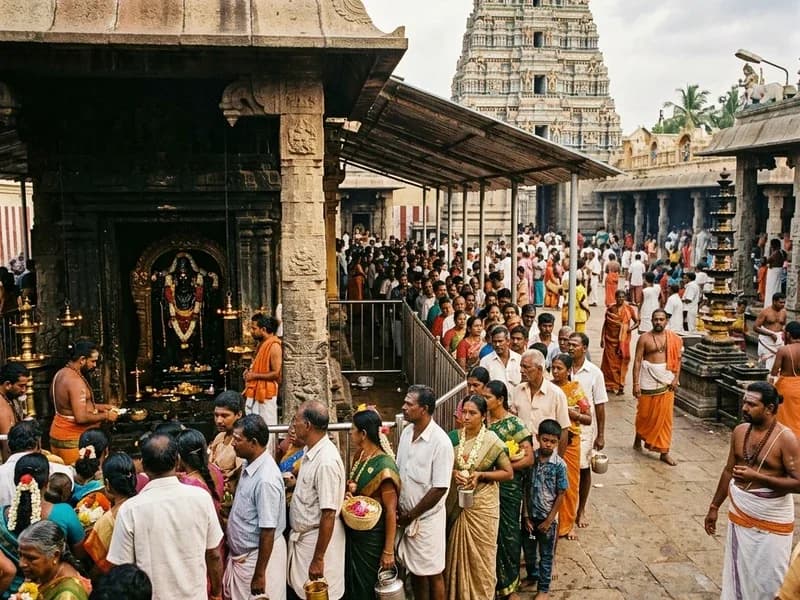
नवग्रहस्थल - Tamil Nadu’s planetary circuit of Shiva temples
Nine Shiva temples of the Kumbakonam-Thanjavur-Nagapattinam belt, each presided over by a Navagraha (planetary deity). Each temple holds the legend of how that planet attained its planetary status by worshipping Shiva - and each temple offers the antidote for that planet’s malefic influence in a birth chart.
By Sevasannidhi LLP·Updated 22 May 2026
The circuit: Most of the 9 temples are within 40–80 km of Kumbakonam (Thanjavur district). The traditional circuit is done in 2 days - Day 1: Suryanar Kovil → Thingalur → Vaitheeswaran Koil → Thiruvenkaadu; Day 2: Alangudi → Kanjanur → Thirunageswaram → Keezhperumpallam → Thirunallaru (Karaikal). Best done in a dedicated car/taxi from Kumbakonam or Thanjavur.
1
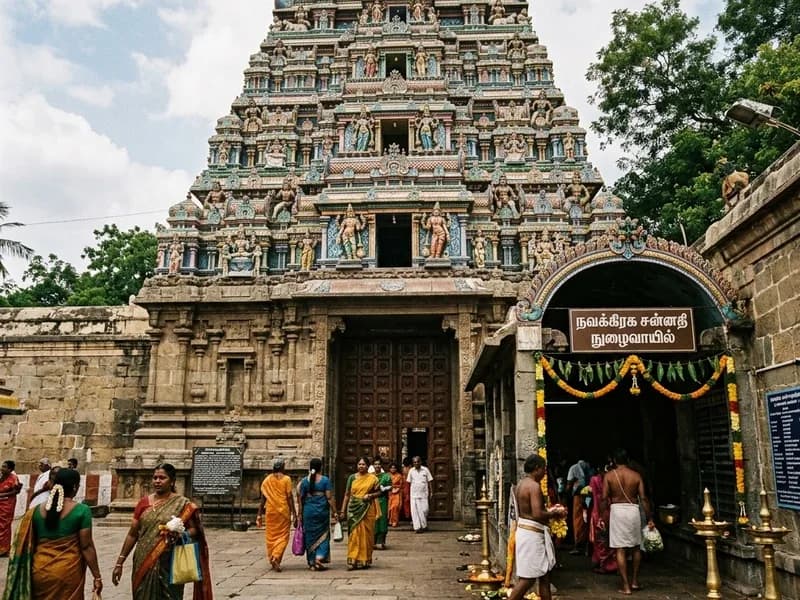
Suryanar Kovil- Surya (Sun) सूर्य
Suryanar Kovil, Kumbakonam, Thanjavur district, TN (18 km from Kumbakonam)
Deity: Suryanarayana (Brahmin form - one of the rarest Surya temples)
Graha form: Surya faces east, red stone murti; both wives Chaya and Sanjana are present.
Legend: One of the very few temples in India where Surya is the presiding deity. All nine grahas have individual shrines here, making it the primary Navagraha circuit base. Sage Kalava was cured of leprosy by worshipping Surya here. The 12 zodiac signs (rasis) and 27 nakshatras also have shrines.
Speciality: All 9 Navagraha shrines in one complex. 12 rasi shrines + 27 nakshatra shrines. The primary starting point for the 9-temple circuit.
Ritual: Sunday puja: Surya Namaskara at sunrise, Aditya Hridayam recitation. Ratha Saptami (Magha month) - chariot festival for Surya.
2
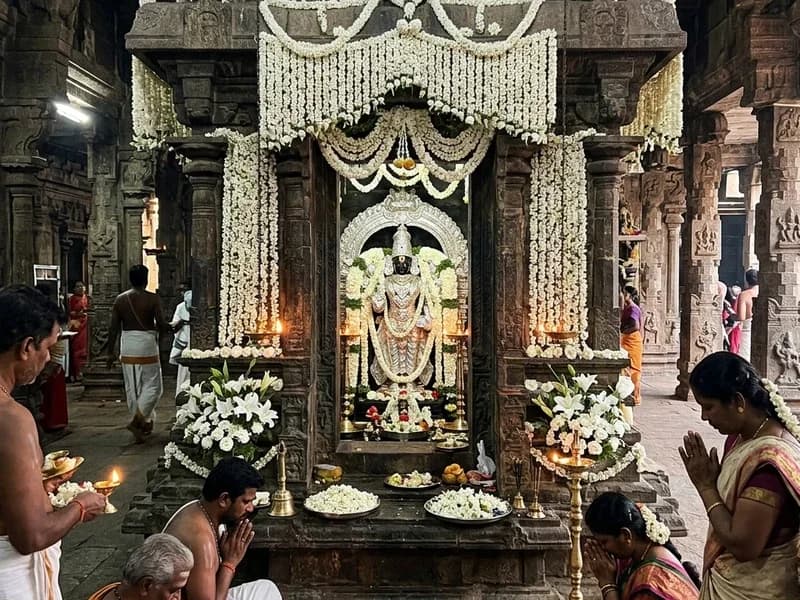
Thingalur - Kailasanathar- Chandra (Moon) चन्द्र
Thingalur, Papanasam taluk, Thanjavur district, TN (25 km from Kumbakonam)
Deity: Kailasanathar (Shiva) with Chandra as sthala-devata
Graha form: Chandra (crescent moon) - white murti, crescent-shaped shrine.
Legend: Chandra was cursed by Daksha with wasting disease for favouring Rohini above his other 26 wives (the 26 nakshatras). He worshipped Shiva at Thingalur and was partially freed - which is why the moon waxes and wanes. The Tamil name 'Thingalur' literally means 'the town of the Moon'.
Speciality: The cure of Chandra's curse - waxing and waning are worshipped as divine rhythm here. Monday pooja is particularly potent.
Ritual: Monday abhisheka with white flowers, white sandal paste. Purnima (full moon) - major puja.
Vaitheeswaran Koil, Sirkazhi taluk, Nagapattinam district, TN (26 km from Chidambaram)
Deity: Vaitheeswara (Shiva as the healing deity - 'physician of the universe')
Graha form: Angaraka (Mars) - red murti, facing south.
Legend: Mars worshipped Shiva here after being afflicted with a skin disease and was healed. This makes Vaitheeswaran Koil the Mars temple and the premier healing temple of TN. The naadi jyotisha (Nadi astrology) manuscripts attributed to Agastya are read outside this temple.
Speciality: The holiest healing temple of Tamil Nadu. Nadi astrology readings (from palm-leaf manuscripts) conducted outside the temple. Mangal (Mars/Tuesday) dosha remedy puja.
Ritual: Tuesday abhisheka with red flowers. Skanda Sashti (Karthika month). Nadi jyotisha readings available outside.
Thiruvenkaadu, Nagapattinam district, TN (25 km from Chidambaram)
Deity: Swetaranyeshwarar (Lord of the white forest) + Brahma-vidya-nayaki Amman
Graha form: Budha (Mercury) - green murti.
Legend: Budha (Mercury - god of intellect and speech) worshipped Shiva here seeking clarity of mind. Brahma, Vishnu, and Saraswati all sought knowledge at this kshetra. The Brahma shrine is in a pit - showing Brahma's humility before Shiva.
Speciality: Brahma worshipped Shiva here - extremely rare. The Brahma shrine is deliberately in a pit. Green stone Budha murti.
Ritual: Wednesday puja with green flowers, green silk. Mercury retrograde periods - special Budha shanti puja.
5
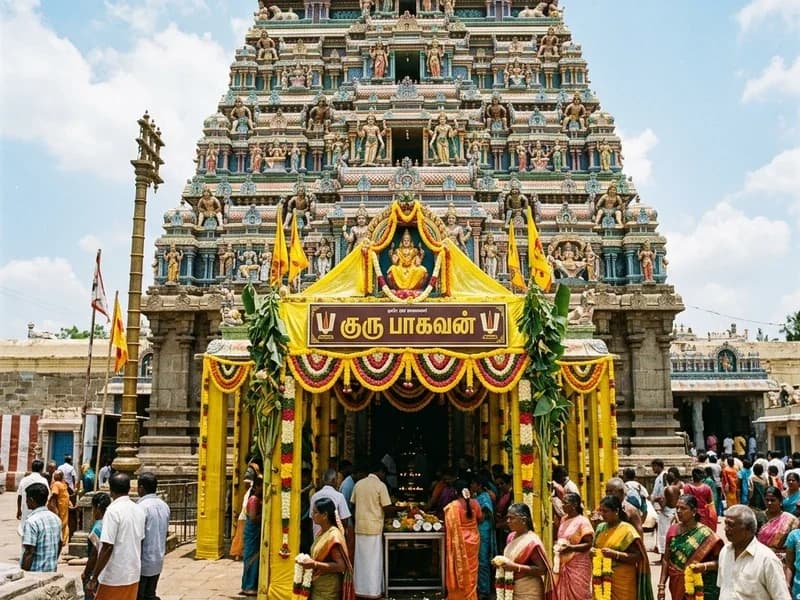
Alangudi - Apatsahayeshwarar- Guru / Brihaspati (Jupiter) गुरु / बृहस्पति
Alangudi, Papanasam taluk, Thiruvarur district, TN (20 km from Kumbakonam)
Deity: Apatsahayeshwarar (Shiva who saves from calamity)
Legend: Brihaspati (Jupiter, teacher of the gods) was cursed and lost his brilliance. He performed tapas here and Shiva restored his light, position, and wisdom. The kshetra is famed for remedying Guru dosha - Jupiter afflictions in the birth chart.
Speciality: The primary temple for Guru Peyarchi (Jupiter transit) ceremonies - once every 12 months (sign change). Yellow silk, turmeric abhisheka.
Ritual: Thursday puja with yellow flowers, turmeric. Guru Peyarchi (Jupiter sign-change) - the most auspicious occasion here.
6
Kanjanur - Agneeshwarar- Shukra (Venus) शुक्र
Kanjanur, Papanasam taluk, Thanjavur district, TN (15 km from Kumbakonam)
Deity: Agneeshwarar / Sukreeshwarar
Graha form: Shukra (Venus) - white murti, silver-toned.
Legend: Shukra (Venus - teacher of the asuras, master of Mritasanjivani) performed tapas here seeking Shiva's grace. Shiva granted him the Mrityunjaya vidya (victory over death). This kshetra is linked to longevity, the arts, and abundance - all domains of Venus.
Speciality: Shukra's Mritasanjivani vidya (life-restoration) is associated with this kshetra. Friday - very powerful here. Couples facing obstacles worship here.
Ritual: Friday puja with white flowers, white silk. Shukra shanti puja for Venus afflictions. Marriages blessed here.
7
Thirunageswaram - Naganathaswamy- Rahu (North lunar node) राहु
Thirunageswaram, Kumbakonam, Thanjavur district, TN (6 km from Kumbakonam)
Deity: Naganathaswamy (Shiva as Lord of serpents) + Kokilambal Amman
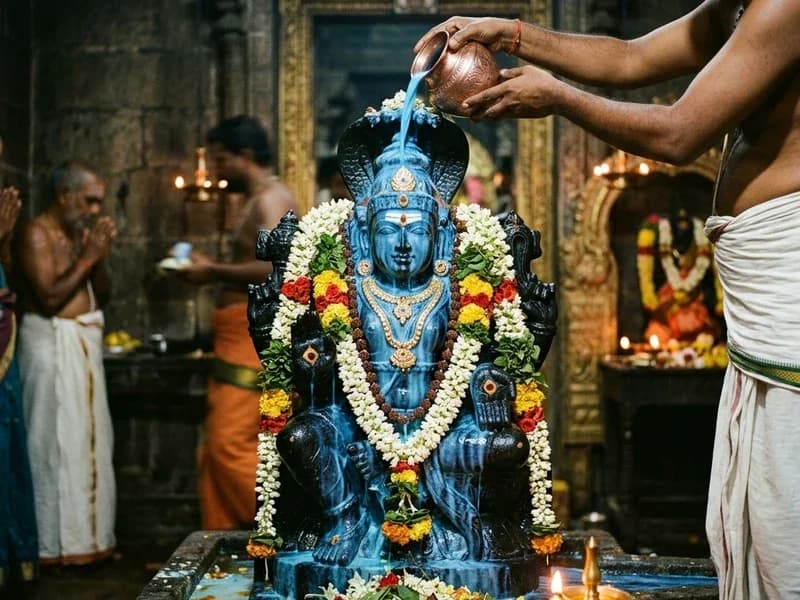
Graha form: Rahu - serpent head, dark blue/black murti.
Legend: Rahu, after being severed by Vishnu's Sudarshana Chakra, sought Shiva's grace here. Shiva granted him planetary status. The milk abhisheka here is said to turn blue (the colour of Rahu) - a phenomenon witnessed and photographed by many.
Speciality: Milk abhisheka turns blue in the Rahu shrine. The most popular temple for Rahu dosha and Kalasarpa dosha remedies in Tamil Nadu.
Ritual: Saturday and Tuesday - traditional Rahu days. Rahu Kalam (specific 90-minute window each day) - peak ritual time. Kalasarpa dosha homa on Rahu Kalam.
8
Keezhperumpallam - Vetaranyeshwarar- Ketu (South lunar node) केतु
Keezhperumpallam, Nagapattinam district, TN (12 km from Sirkazhi)
Deity: Vetaranyeshwarar (Shiva as master of spiritual liberation)
Graha form: Ketu - serpent tail without head, smoke-grey murti.
Legend: Ketu (the headless body of Svarbhanu), after being cut from Rahu, sought Shiva's grace at this kshetra. Shiva granted him the power to give moksha and spiritual liberation. Ketu is the 'moksha karaka' - the planet of spiritual insight and detachment.
Speciality: Ketu puja for ancestral karma clearing and spiritual progress. Combined Rahu-Ketu circuits (Thirunageswaram + Keezhperumpallam) are done in one day by pilgrims.
Ritual: Tuesday and Saturday Ketu puja. Special homa for Kalasarpa dosha.
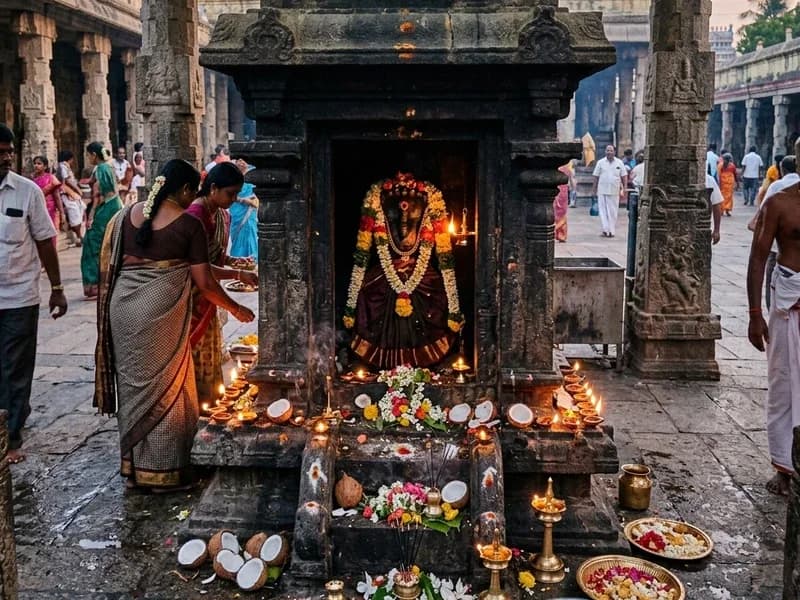
Thirunallaru, Karaikal, Puducherry Union Territory (5 km from Karaikal)
Deity: Dharbaranyeshwarar (Shiva as the Lord of the darbha-grass forest)
Graha form: Shani (Saturn) - black murti, iron-toned.
Legend: King Nala (of Nala-Damayanti fame) was under Shani's affliction for 12 years. He came to Thirunallaru, performed Shiva puja, and Shani's curse was lifted. This story from the Mahabharata's Vana Parva makes Thirunallaru the supreme Shani temple.
Speciality: Supreme Shani-dosha remedy temple. Shani's 7.5-year dasha (Sadesati) - lakhs come here annually. Darbha-grass grows abundantly around the temple.
Ritual: Saturday puja - massive crowds. Shani Jayanti (Vaishaka Amavasya, May-June). Til (sesame) oil abhisheka on Shani murti.