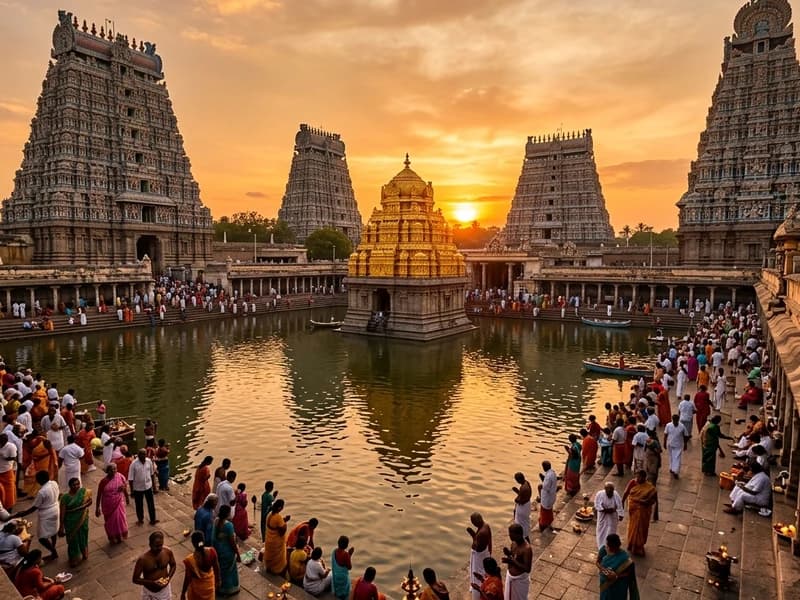
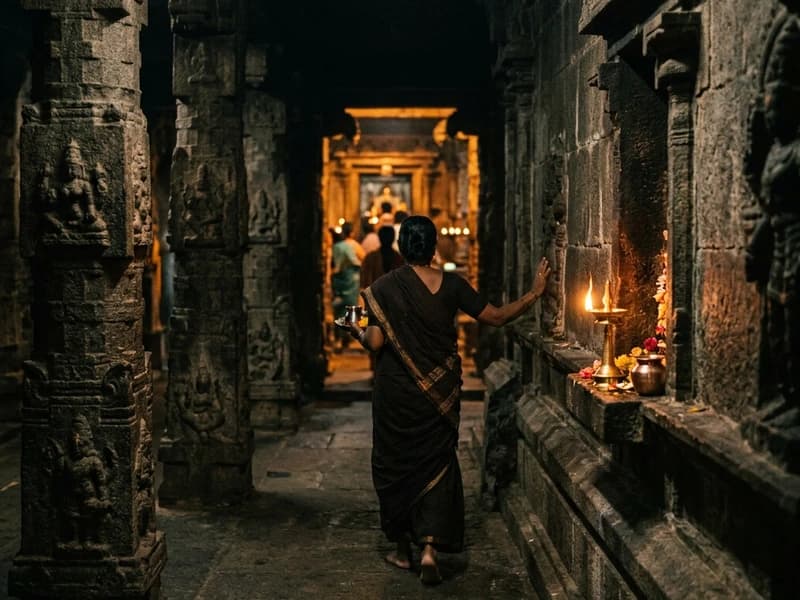
पञ्चभूतस्थल - five temples where Shiva IS the element
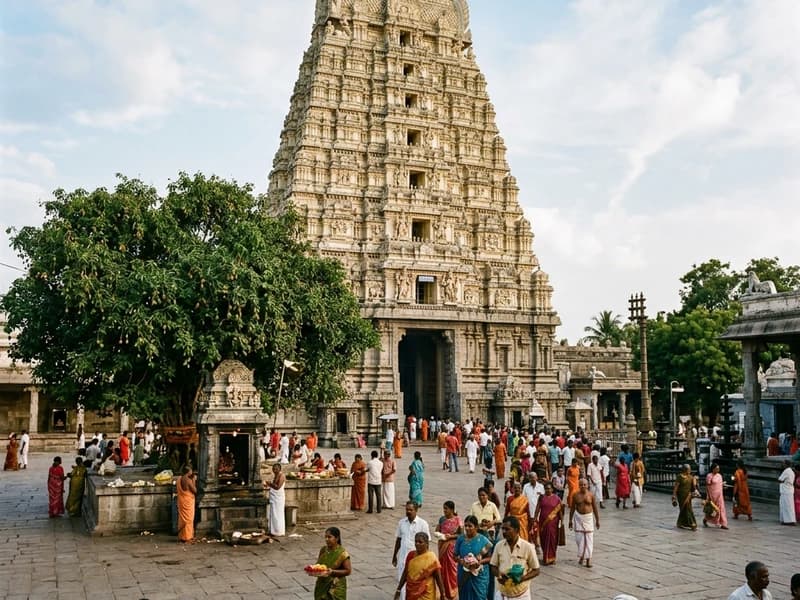
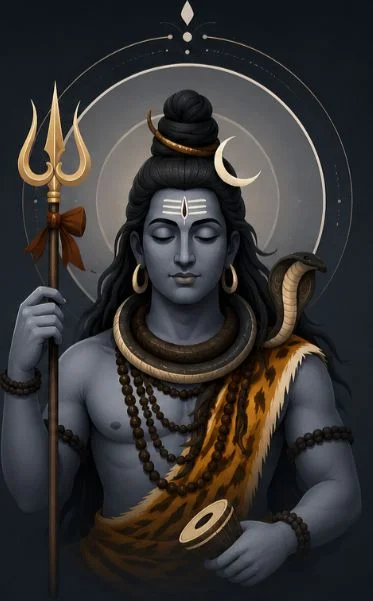
Five temples of South India where the presiding linga is not made of stone - but is the element itself. Space, water, fire, wind, earth: Shiva has made each of the five bhuta (elements) his permanent abode, declaring himself to be identical with the cosmos he sustains.
I salute the Lord - the fire-pillar at Tiruvannamalai, the Earth at Kanchipuram with Kamakshi, the Ether at Chidambaram, the Water at Thiruvanaikkaval, and the Wind at Srikalahasti - Shiva who pervades all five elements.
About the Pancha Bhuta Sthalas:Four of the five temples are in Tamil Nadu; one (Srikalahasti) is in Andhra Pradesh. Together they form the supreme Shaiva pilgrimage of the south. Each linga was not installed by human hands - the element itself IS the linga. The Shaiva Agama tradition holds that worshipping all five in sequence purifies all five elements in the devotee’s own body, leading to liberation.
1
Chidambaram - Thillai Nataraja
Chidambaram, Cuddalore district, Tamil Nadu
Space / Ether - Ākāśa (आकाश)
Deity: Akashalingam - Nataraja (Lord of the Cosmic Dance) · Devi: Shivakamasundari
Legend: The Akashalingam at Chidambaram is invisible - the divine Space itself is the linga. The famous 'Chidambara Rahasyam' (the secret of Chidambaram) is a curtain of golden vilva leaves concealing the sky, representing the formless Brahman. Shiva danced the Ananda Tandava (dance of bliss) here, winning a dance contest with Kali. The 108 dance poses of the Natya Shastra are carved on the outer gopurams.
Speciality: Only linga that is pure Ether - invisible, formless. The Chidambara Rahasyam curtain is opened only at specific puja times - darshan of the 'empty space' is itself the darshan of Brahman.
Arrive for the special Arudra Darshan puja (once a year, Margazhi month) when the full Ananda Tandava cosmic dance is performed. The golden roof of the sabha is clad in actual gold tiles.
2
Thiruvanaikkaval - Jambukeswaram
Thiruvanaikkaval, Tiruchirappalli district, Tamil Nadu (near Srirangam island)
Water - Ap / Jala (अप / जल)
Deity: Jambukeswarar (Appu-Lingam) · Devi: Akilandeswari (the Devi who pervades all)
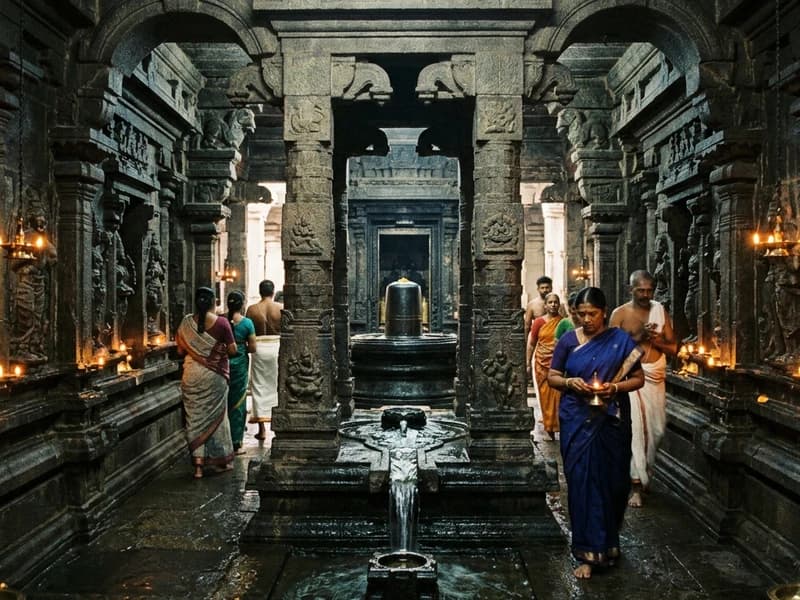
Legend: A spring of living water perpetually rises inside the garbhagriha, partially submerging the linga - the water-element is the deity itself. The legend says an elephant and a spider both worshipped Shiva at this site; their devotion earned them liberation. Adi Shankaracharya hung his Sri Chakra earrings on Akilandeswari's ears, transforming her energy from destructive to protective.
Speciality: The linga is partially submerged in living spring water at all times. The inner sanctum is only accessible to men. Akilandeswari is particularly powerful here.
Panguni Uthiram (March-April) - Thirukalyanam. Aadi Pooram for Akilandeswari (July-August).
Visit at dawn when the water is still. The Akilandeswari shrine has Sri Chakra earrings placed by Shankara - considered especially powerful for Devi upasana.
3
Tiruvannamalai - Arunachaleswarar
Tiruvannamalai, Tiruvannamalai district, Tamil Nadu (180 km south-west of Chennai)
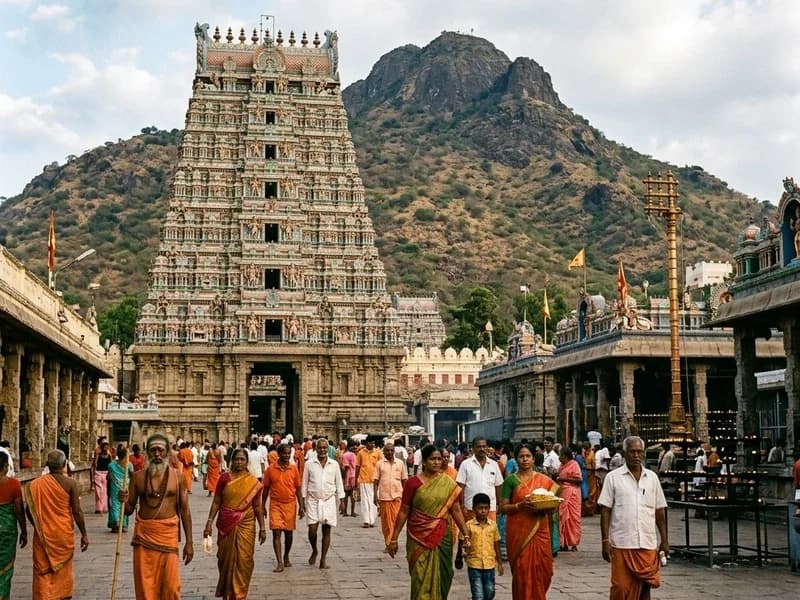
Legend: Brahma and Vishnu disputed who was supreme. Shiva manifested as an infinite column of fire (jyoti-stambha) and challenged them to find its end. Neither could - establishing Shiva's supremacy. The Arunachala hill itself is considered the linga of fire made permanent. Ramana Maharshi, the great 20th-century sage, declared Arunachala to be Shiva himself in physical form and spent 53 years in its presence.
Speciality: The entire Arunachala hill (803 m) IS the fire-linga. The 14-km pradakshina of the hill is performed barefoot, especially on full-moon nights. On Karthigai Deepam, a giant fire beacon is lit on the hilltop, visible for 30+ km.
Karthigai Deepam (November-December) - the beacon fire on the hill. Pradosha puja every fortnight.
The Karthigai Deepam month sees lakhs of pilgrims. The 14-km girivalam (hill pradakshina) starts and ends at Ramana Maharshi Ashram.
4
Srikalahasti - Srikalahasteeswara
Srikalahasti, Tirupati district, Andhra Pradesh (36 km from Tirupati)
Wind / Air - Vayu (वायु)
Deity: Srikalahasteeswara · Devi: Gnana Prasunambika (flower of wisdom)
Legend: The name encodes three devoted creatures - Sri (spider who wove a web shelter), Kala (serpent who offered precious stones), and Hasti (elephant who brought water). The Vayu-lingam is distinguished by a perpetually flickering flame even in an airtight chamber - caused by the air element within the linga. The saint Kannappa Nayanar offered his eyes to Shiva here - the supreme act of devotion in Tamil Shaiva lore.
Speciality: The wind inside the enclosed chamber causes the lamp flame to flicker perpetually. Rahu-Ketu dosha puja is performed here; considered the supreme location for Sarpa Dosha remedy.
Maha Shivaratri (February-March) - all-night vigil. Brahmotsavam (10 days in February).
Rahu-Ketu pooja (Rahukala timing) is done by lakhs for sarpa-dosha. Best timed at Rahu Kalam on Tuesdays and Saturdays.
5
Kanchipuram - Ekambareshwara (Ekambaranatha)
Kanchipuram, Kancheepuram district, Tamil Nadu (75 km south-west of Chennai)
Earth - Prithvi / Bhumi (पृथ्वी / भूमि)
Deity: Ekambareshwara / Ekambaranatha · Devi: Kamakshi (the wish-fulfilling Devi)
Legend: Parvati performed penance under a mango tree, fashioning a linga of sand (earth) and worshipping it. Shiva tested her by sending a flood - she embraced the linga to protect it. The ancient mango tree in the temple complex is said to be 3,500 years old and bears four varieties of mangoes on its four branches - one for each Veda.
Speciality: The earth-linga was made by Parvati from sand - not anointed with water during abhisheka (only sandal paste and milk). The 3,500-year mango tree with 4 Vedic varieties. The tallest gopuram in Tamil Nadu (58 m, 11 tiers).