पञ्चकेदार - five Himalayan abodes of Shiva in Garhwal
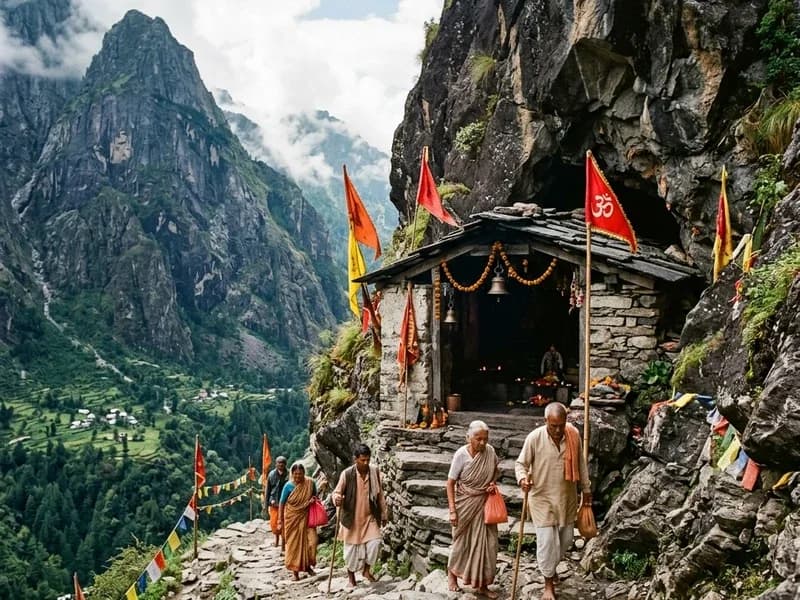
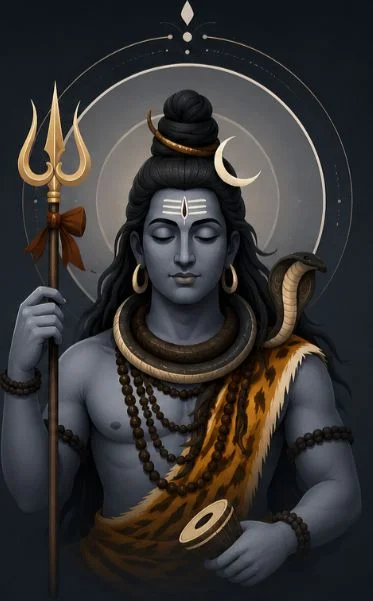
After the Kurukshetra war, Shiva hid from the Pandavas as a bull and sank into the earth. Five parts of the divine bull manifested at five sacred sites in the Garhwal Himalaya. Together these five shrines form the most demanding - and most spiritually potent - Shiva pilgrimage in India.
By Sevasannidhi LLP·Updated 22 May 2026
⚠ High altitude - important: Kedarnath (3,553 m), Tungnath (3,680 m), Madhyamaheshwar (3,497 m), and Rudranath involve high-altitude trekking. Acclimatise properly. Consult a physician if you have heart, lung, or blood-pressure conditions. All four are closed from November to May due to snowfall. Only Kalpeshwar is accessible year-round.
1
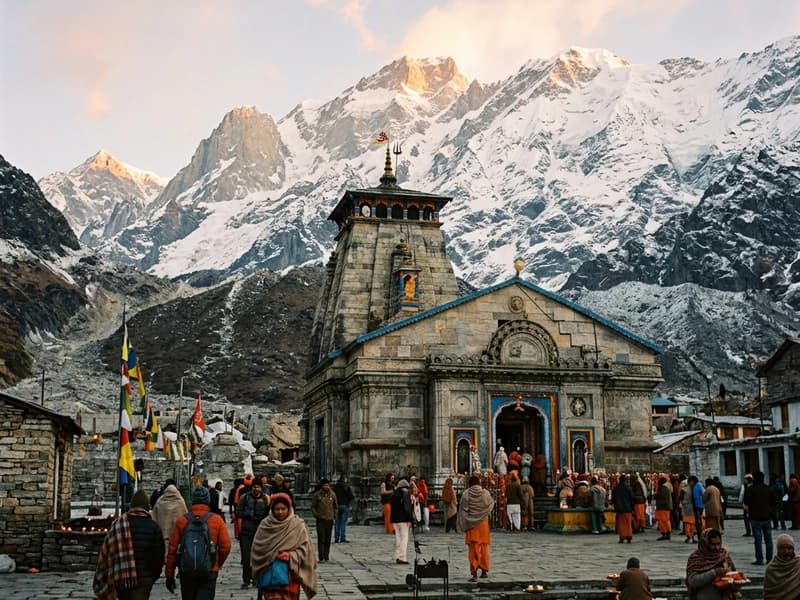
Kedarnath
Rudraprayag district, Uttarakhand
3,553 m (11,657 ft) Hump of the bull (Nandi's back)
Deity: Kedarnatha - the most exalted Jyotirlinga of the Himalaya
Legend: After the Kurukshetra war, the Pandavas sought Shiva's forgiveness. Shiva evaded them in Kedarnath in the form of a bull. Bhima grabbed the bull's tail; the bull sank into the ground leaving only the hump. Adi Shankaracharya is said to have attained mahasamadhi at Kedarnath in 820 CE - his samadhi-peetha is behind the main temple.
May (Akshaya Tritiya) to November (Kartik Purnima). Closed in winter.
Trek: 14 km from Gaurikund (2,000 m) by foot/horse/palanquin. Helicopter service from Sirsi/Phata.
Book helicopter slots 3–4 months ahead during peak (May-June). The Adi Shankaracharya samadhi behind the temple is lesser-known but deeply significant.
2
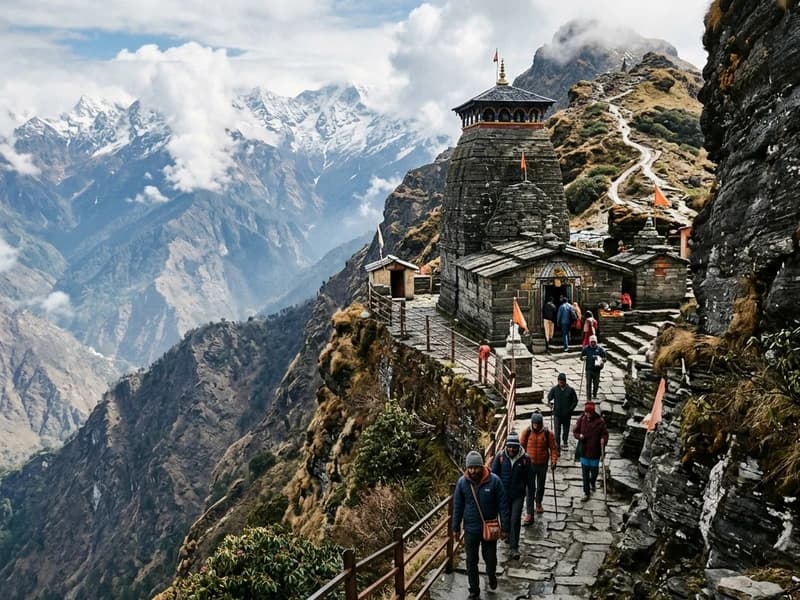
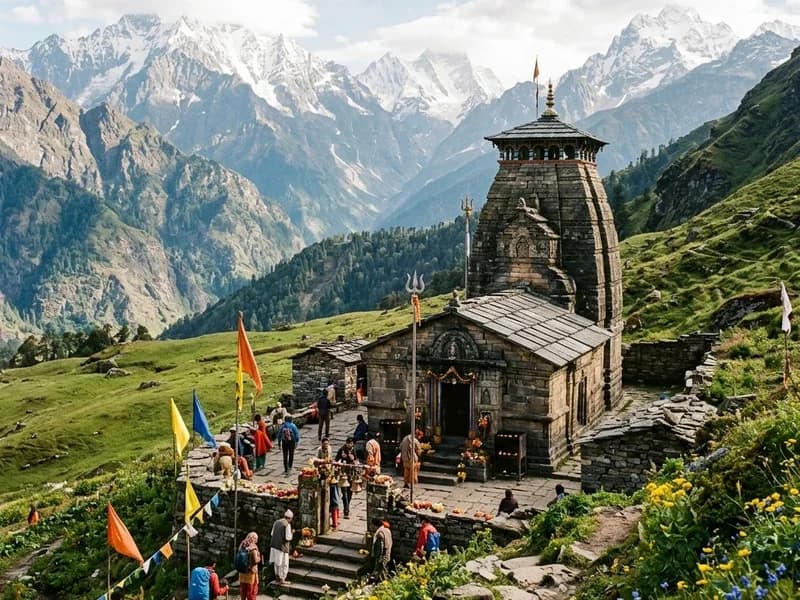
Tungnath
Rudraprayag district, Uttarakhand (above Chopta)
3,680 m (12,073 ft) - highest Shiva temple in the world Arms / Shoulders of the bull
Deity: Tungnath (the Lord of the peaks)
Legend: The arms of Nandi manifested here. Tungnath is the highest of the Pancha Kedaras - and the highest Shiva temple on earth. Arjuna meditated near Chandrashila peak (400 m above Tungnath) to obtain the Pashupatastra.
May (Akshaya Tritiya) to November. Snowbound from December–April.
Trek: 3.5 km from Chopta (2,680 m). One of the easier Pancha Kedara treks. Chandrashila summit (4,130 m) is 1.5 km beyond Tungnath.
Combine with Chandrashila summit (4,130 m) for Himalayan panorama including Trishul, Nanda Devi, Kedarnath peaks. Stay at Chopta (basic lodges).
3
Rudranath
Chamoli district, Uttarakhand
2,286 m (7,500 ft) - the temple; trek passes through higher meadows Face of the bull
Deity: Rudranath (Ekaanana - the single-faced Shiva)
Legend: The face of Nandi manifested at this dense Himalayan meadow. The Neelkantha form (with the blue throat from the halahala poison) is especially venerated at Rudranath. The trek passes through Pitradhar, where ancestral offerings are made - a unique feature among the Pancha Kedaras.
May to November. Accessible only on foot.
Trek: 20–25 km from Sagar village (near Gopeshwar). 2–3 day trek through alpine meadows (bugyal). Considered the most remote and demanding of the five.
Hire a local guide from Gopeshwar. The alpine meadows (bugyals) of Panar Bugyal are spectacular in June (wildflowers) and October (golden grass).
4
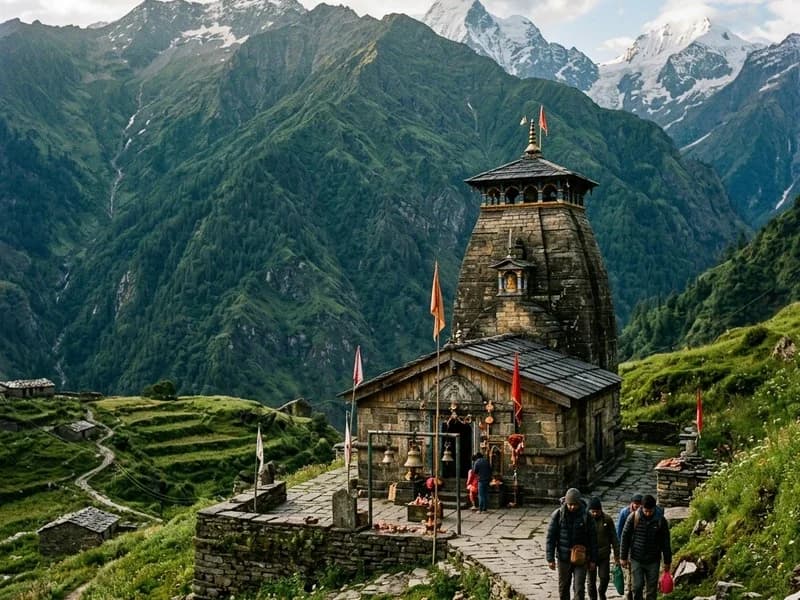
Madhyamaheshwar
Rudraprayag district, Uttarakhand
3,497 m (11,473 ft) Navel / Middle of the bull
Deity: Madhyamaheshwar (Madh-mahesh - Lord of the middle)
Legend: The navel of Nandi manifested here as a round, navel-shaped linga. 'Madhyamaheshwar' literally means the great Lord of the middle. The meadow offers the closest views of the Kedarnath massif and Chaukhamba peaks.
May (Akshaya Tritiya) to November.
Trek: 22 km from Ransi village (near Ukhimath) - 2 days typically.
Buda Madhyamaheshwar meadow (4,100 m, 2 km beyond the main temple) offers a 360° panorama of Kedarnath, Shivling, Chaukhamba - one of the finest viewpoints in Garhwal.
5
Kalpeshwar
Chamoli district, Uttarakhand (Urgam valley)
2,134 m (7,000 ft) Matted hair (Jata) of Shiva
Deity: Kalpeshwar (Kalpnath - the wish-fulfilling Lord)
Legend: Shiva's matted hair (jata) manifested at Urgam. 'Kalpeshwar' means the lord who grants all kalpa (wishes). Durvasa Muni performed tapas here and Shiva appeared to grant his wishes. A cave temple with natural rock ceiling makes this the only Pancha Kedara accessible year-round.
Open year-round - unlike the other four, accessible even in winter.
Trek: 1 km cave path from Urgam village (accessible by road from Helang on NH-58 / Badrinath highway).
The only Pancha Kedara accessible in winter. The Badrinath highway passes within 12 km. Urgam valley also has the Anusuya Devi temple - easily combined.
The origin story - Pandavas and the bull
After the Kurukshetra war, the Pandavas were tormented by the sin of killing kin (gotra-hatya). They sought Shiva to be freed of the sin. Shiva, unwilling to forgive them easily, took the form of a bull (Nandi) and hid in Kedarnath. Bhima, the strongest of the Pandavas, recognized the bull and caught hold of its tail. The bull began to sink into the earth. As it sank, the five parts manifested at five locations. Having thus accepted the Pandavas' penance, Shiva granted them liberation from their sin. The Pandavas built the original shrines at each of the five sites, which were later restored by Adi Shankaracharya in the 8th century CE.